Resource
Theme-Day Planning Poster
Co-plan a balanced theme day with arrival, active, making, quiet and backup choices. Includes a two-page A4 printable, specific educator guidance, adaptations and a cut-off quick-reference card.
Ready for a real OSHC session
Preview both printable pages
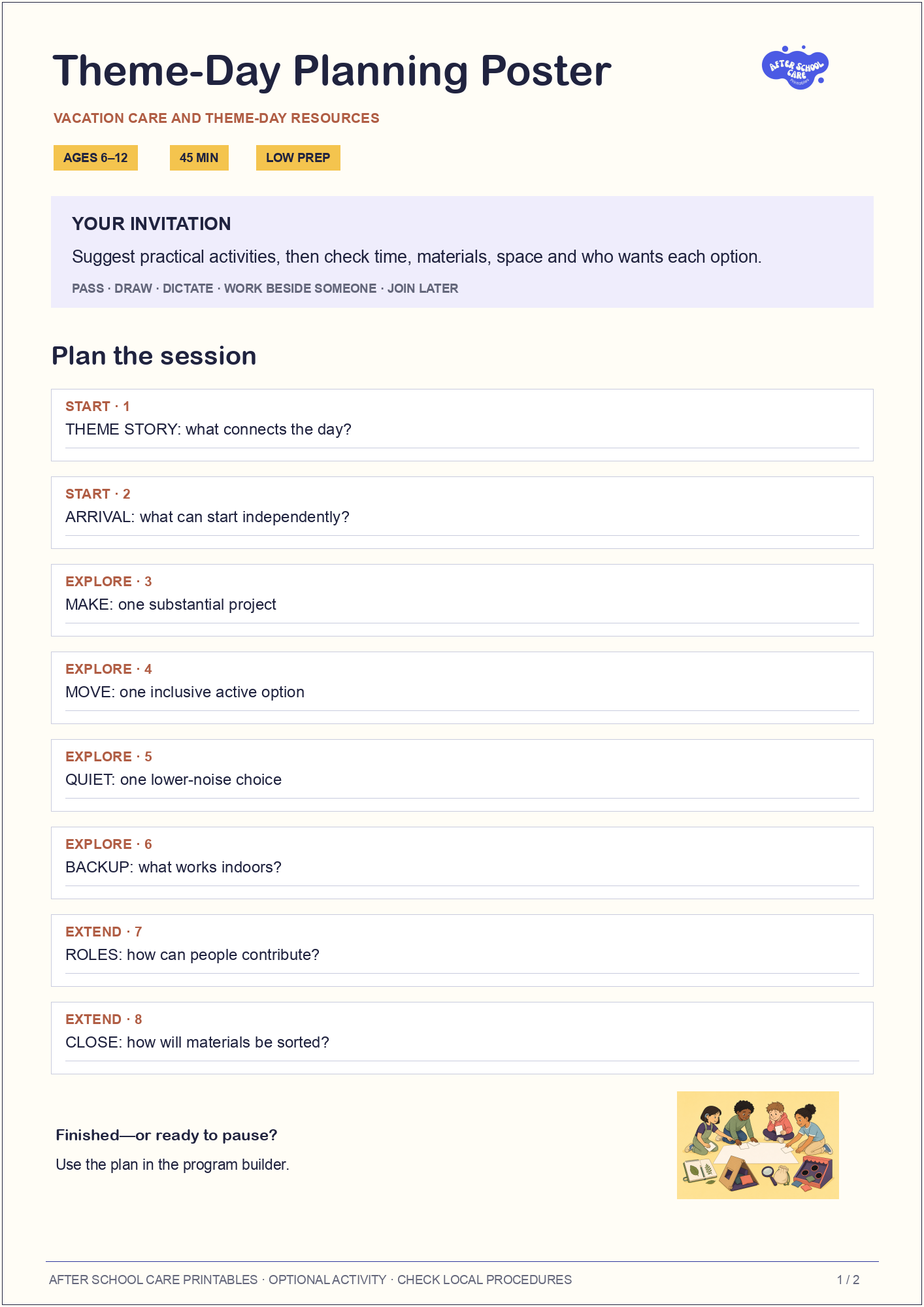
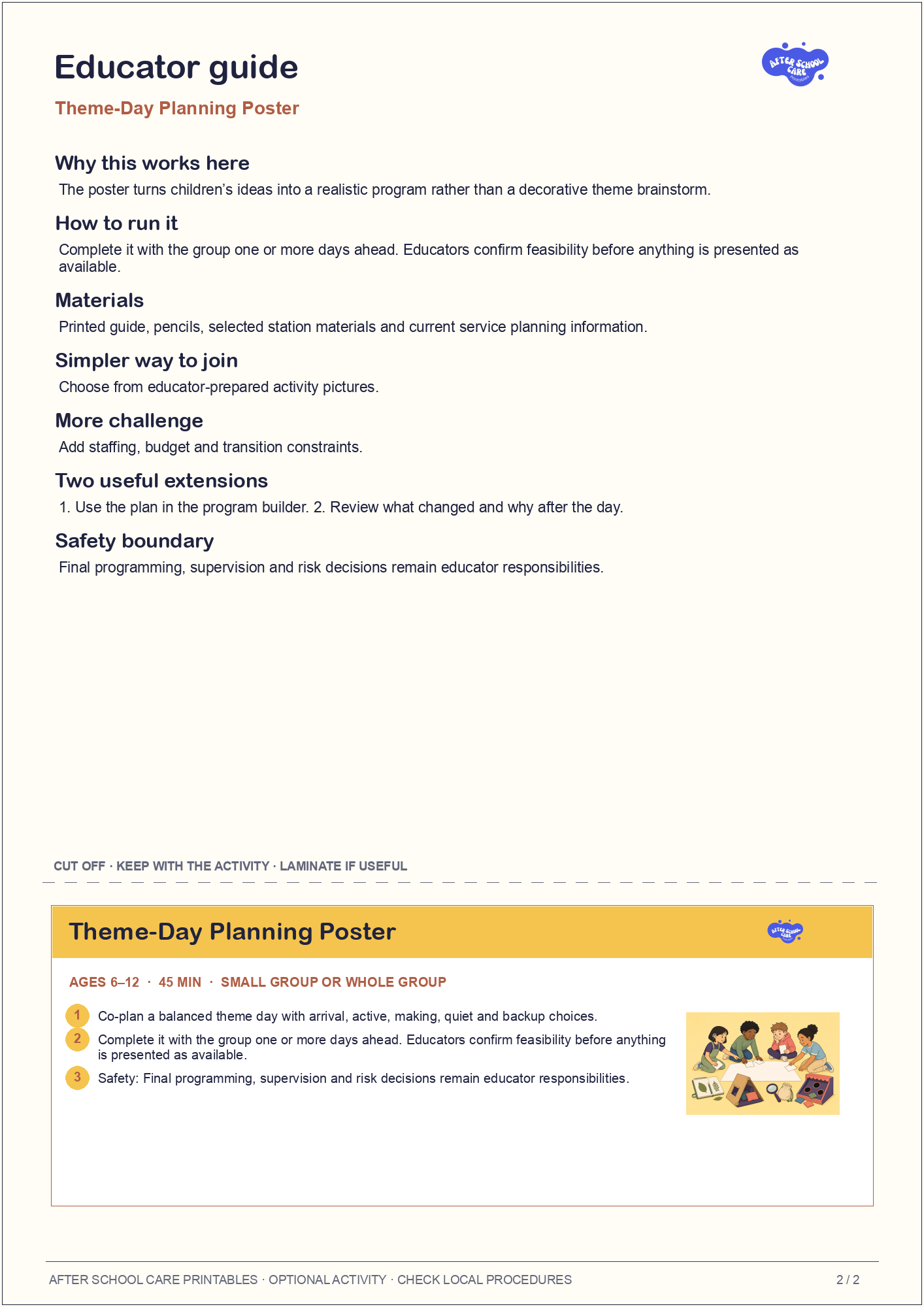
Download 2-page practical printableCheck the preview, printing notes and licence before use.
When this resource is useful
The poster turns children’s ideas into a realistic program rather than a decorative theme brainstorm.
What children do
Suggest practical activities, then check time, materials, space and who wants each option.
Materials and preparation
Materials: Printed guide, pencils, selected station materials and current service planning information.
Allow about 10 minutes to print and place the resource. The activity itself usually takes 45 minutes and can pause when the group needs to transition.
Run the activity
Complete it with the group one or more days ahead. Educators confirm feasibility before anything is presented as available.
The child-facing prompts are:
- THEME STORY: what connects the day?
- ARRIVAL: what can start independently?
- MAKE: one substantial project
- MOVE: one inclusive active option
- QUIET: one lower-noise choice
- BACKUP: what works indoors?
- ROLES: how can people contribute?
- CLOSE: how will materials be sorted?
Adapt participation
Simpler way to join: Choose from educator-prepared activity pictures.
More challenge: Add staffing, budget and transition constraints.
Children may draw, dictate, point, work beside a peer, observe or join later. Start, Explore and Extend labels describe task routes, not children.
Extend the idea
- Use the plan in the program builder.
- Review what changed and why after the day.
Safety and privacy
Final programming, supervision and risk decisions remain educator responsibilities.
Learning opportunities
Look for program participation, planning, collaboration and reflection. Record what children choose, explain, test or revise rather than treating completion as proof of learning.
Checking an open-ended response
There is no single required answer. A useful response follows the printed condition and can be explained, demonstrated or revised by the child.
Printing notes
Print at actual size on A4 paper. Page one is child-facing. Page two contains educator guidance and a dashed cut-off reference card that can be kept with the activity or laminated.