Resource
Mystery Detective Activity Pack
Run a fictional evidence-based mystery using observation, codes and team roles without surveillance play. Includes a two-page A4 printable, specific educator guidance, adaptations and a cut-off quick-reference card.
Ready for a real OSHC session
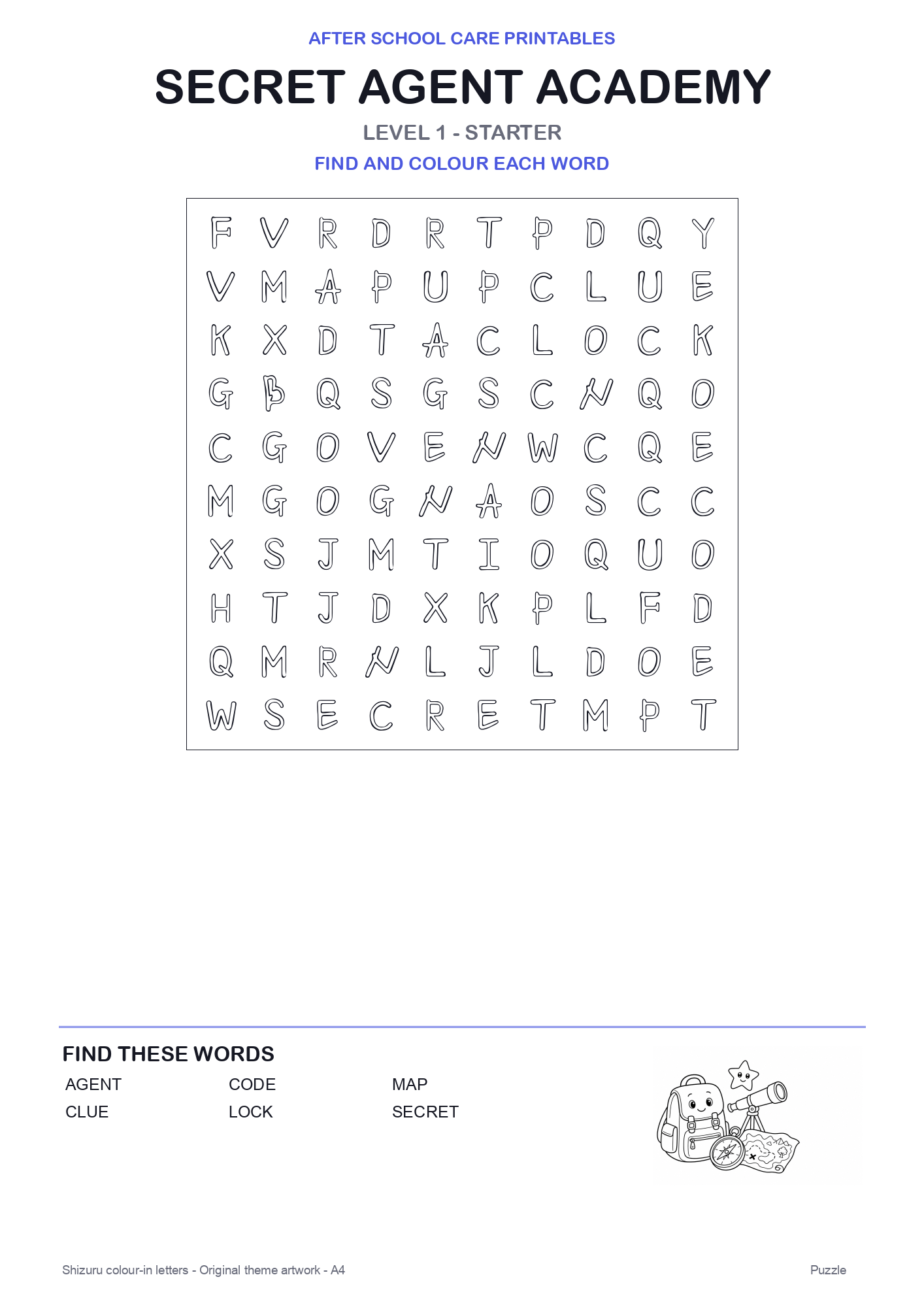
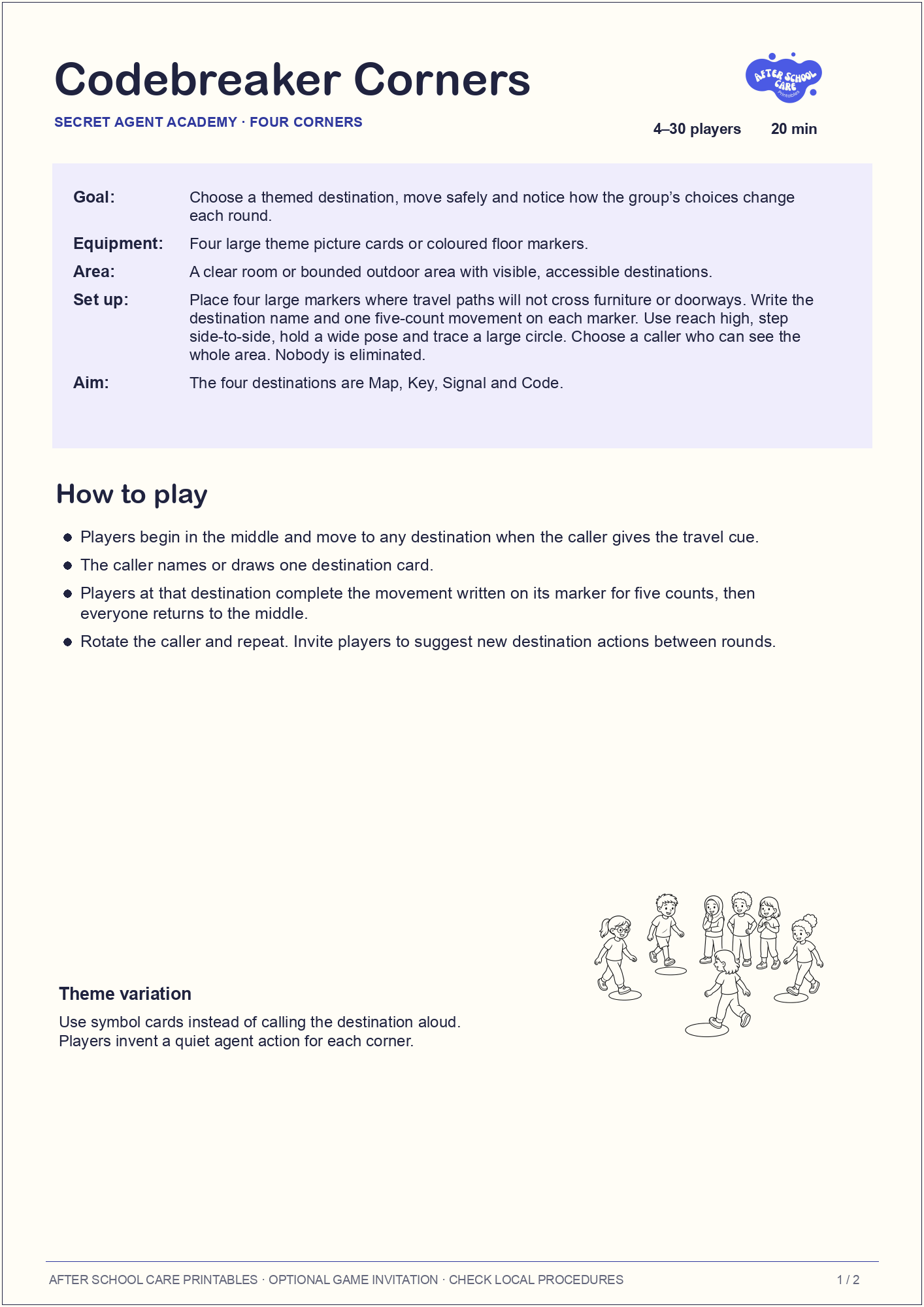
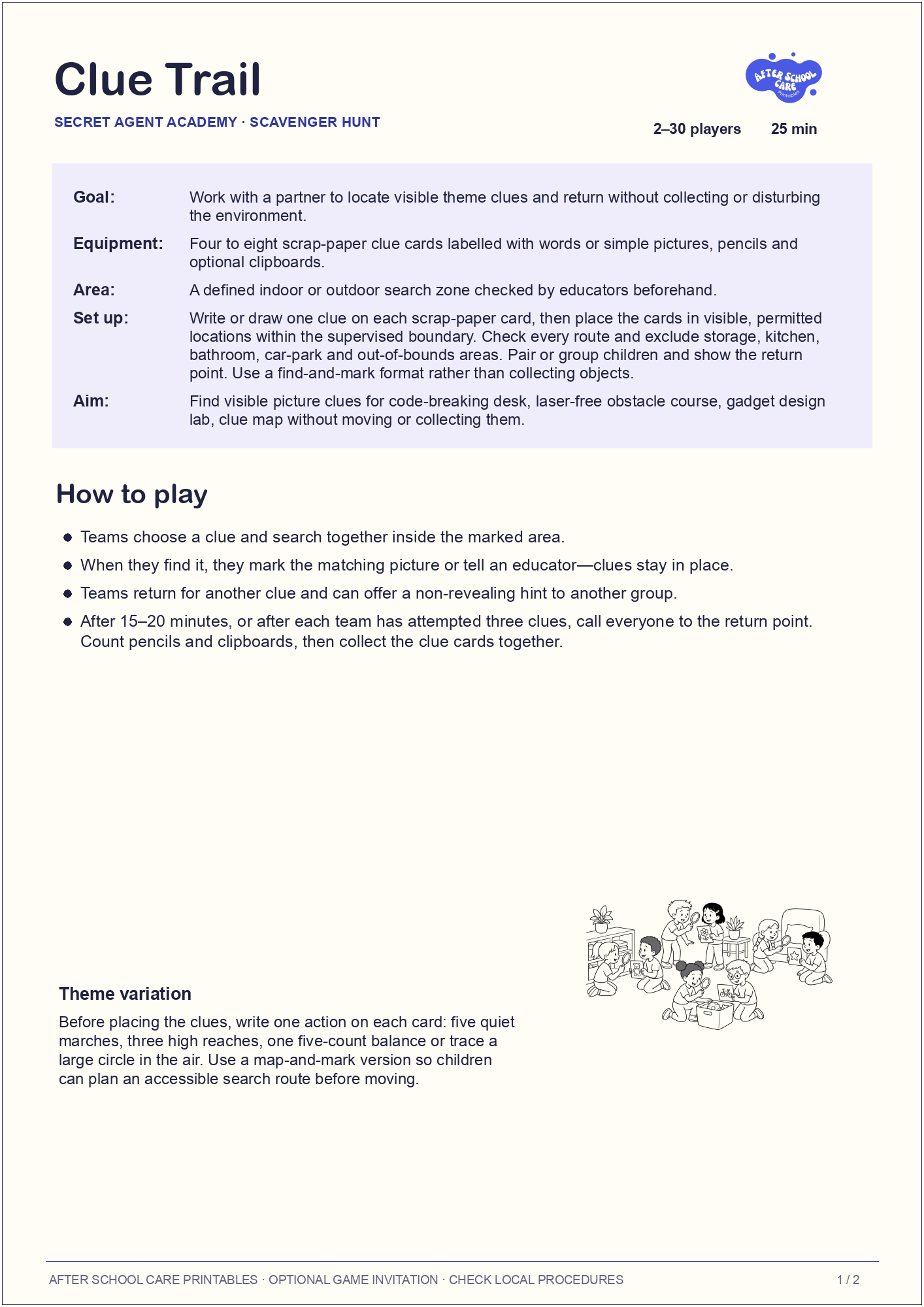
Preview both printable pages
Download 2-page practical printableCheck the preview, printing notes and licence before use.
When this resource is useful
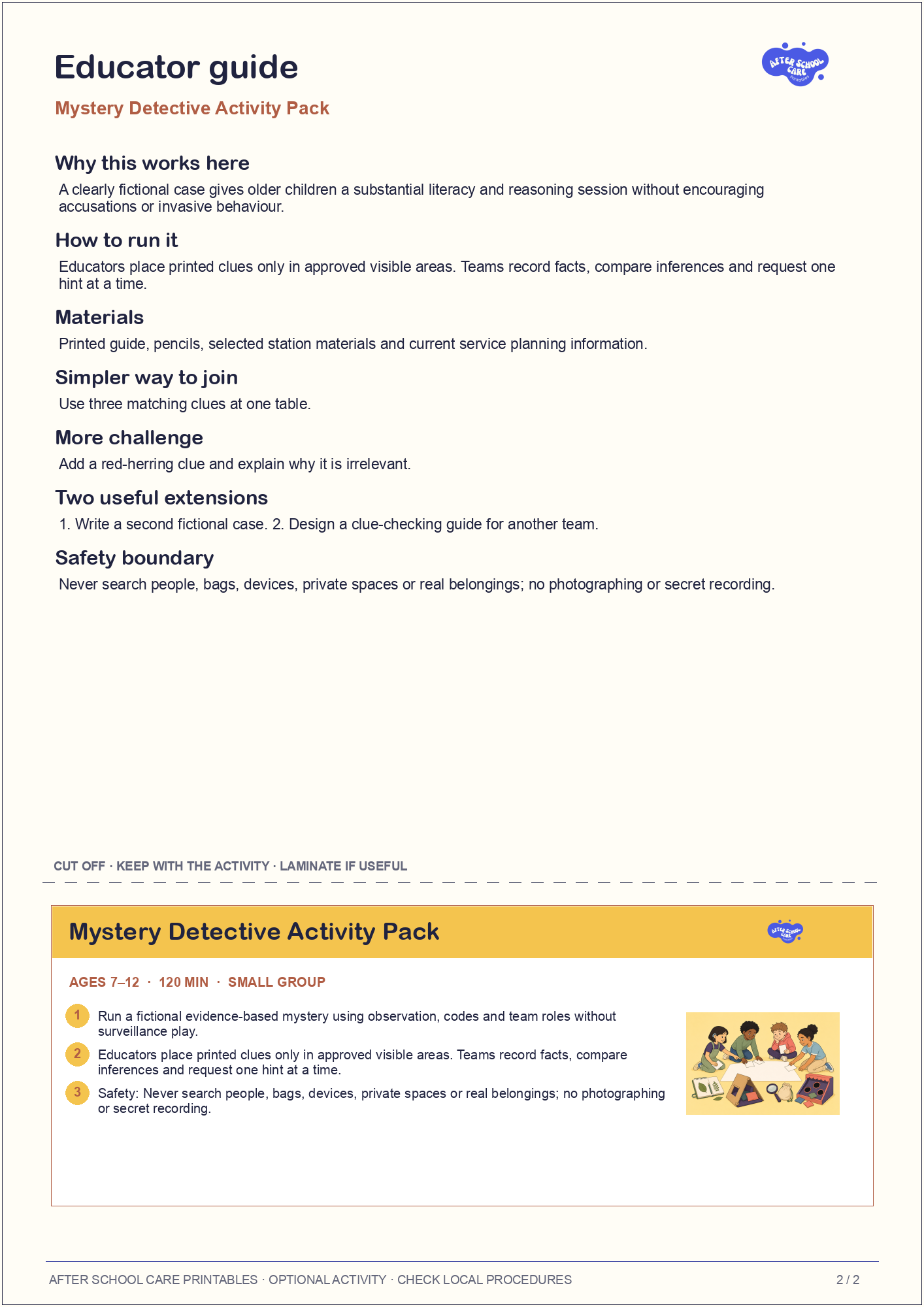
A clearly fictional case gives older children a substantial literacy and reasoning session without encouraging accusations or invasive behaviour.
What children do
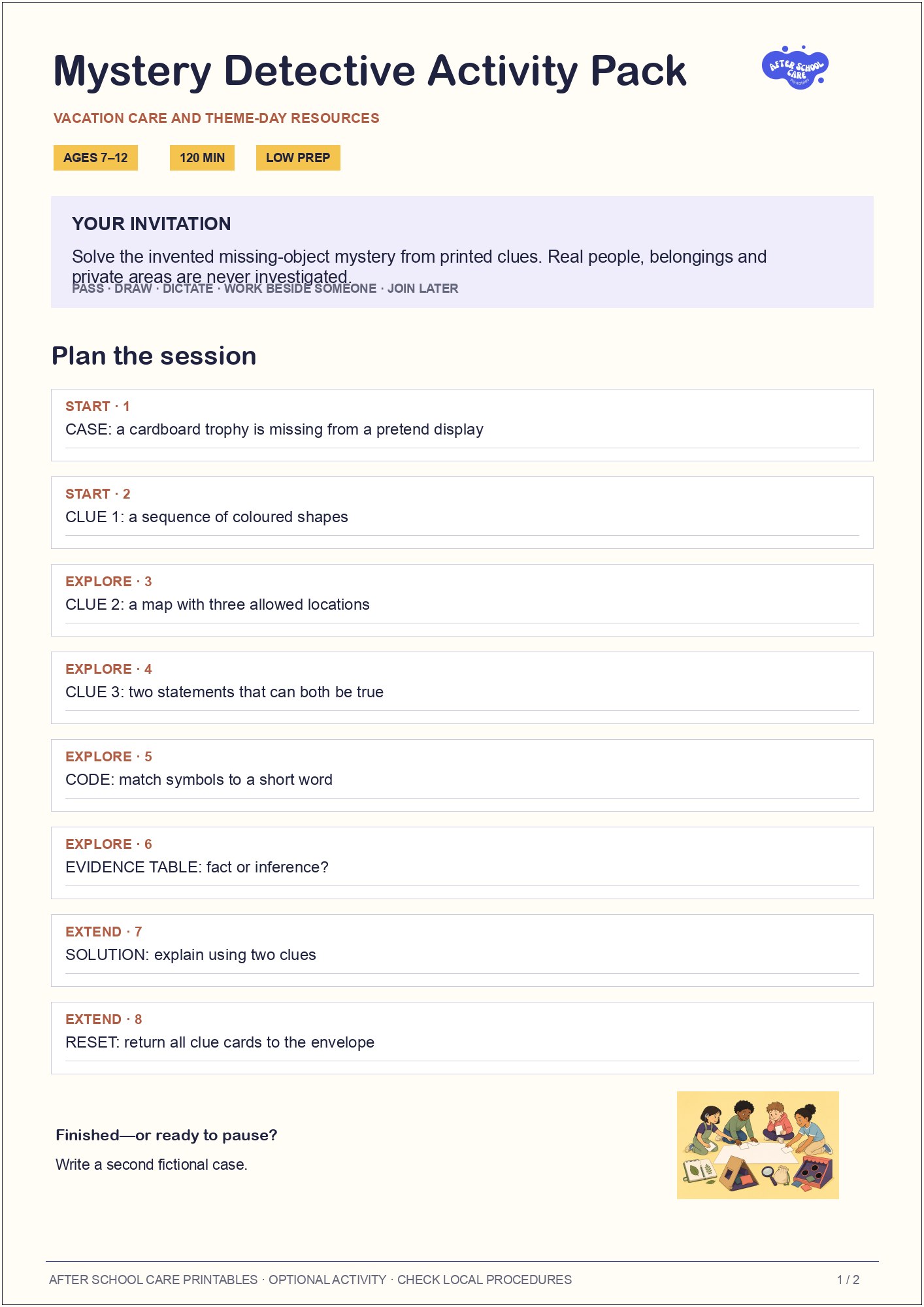
Solve the invented missing-object mystery from printed clues. Real people, belongings and private areas are never investigated.
Materials and preparation
Materials: Printed guide, pencils, selected station materials and current service planning information.
Allow about 10 minutes to print and place the resource. The activity itself usually takes 120 minutes and can pause when the group needs to transition.
Run the activity
Educators place printed clues only in approved visible areas. Teams record facts, compare inferences and request one hint at a time.
The child-facing prompts are:
- CASE: a cardboard trophy is missing from a pretend display
- CLUE 1: a sequence of coloured shapes
- CLUE 2: a map with three allowed locations
- CLUE 3: two statements that can both be true
- CODE: match symbols to a short word
- EVIDENCE TABLE: fact or inference?
- SOLUTION: explain using two clues
- RESET: return all clue cards to the envelope
Adapt participation
Simpler way to join: Use three matching clues at one table.
More challenge: Add a red-herring clue and explain why it is irrelevant.
Children may draw, dictate, point, work beside a peer, observe or join later. Start, Explore and Extend labels describe task routes, not children.
Extend the idea
- Write a second fictional case.
- Design a clue-checking guide for another team.
Safety and privacy
Never search people, bags, devices, private spaces or real belongings; no photographing or secret recording.
Learning opportunities
Look for program participation, planning, collaboration and reflection. Record what children choose, explain, test or revise rather than treating completion as proof of learning.
Checking an open-ended response
There is no single required answer. A useful response follows the printed condition and can be explained, demonstrated or revised by the child.
Printing notes
Print at actual size on A4 paper. Page one is child-facing. Page two contains educator guidance and a dashed cut-off reference card that can be kept with the activity or laminated.