Resource
Team Mime Prompt Cards
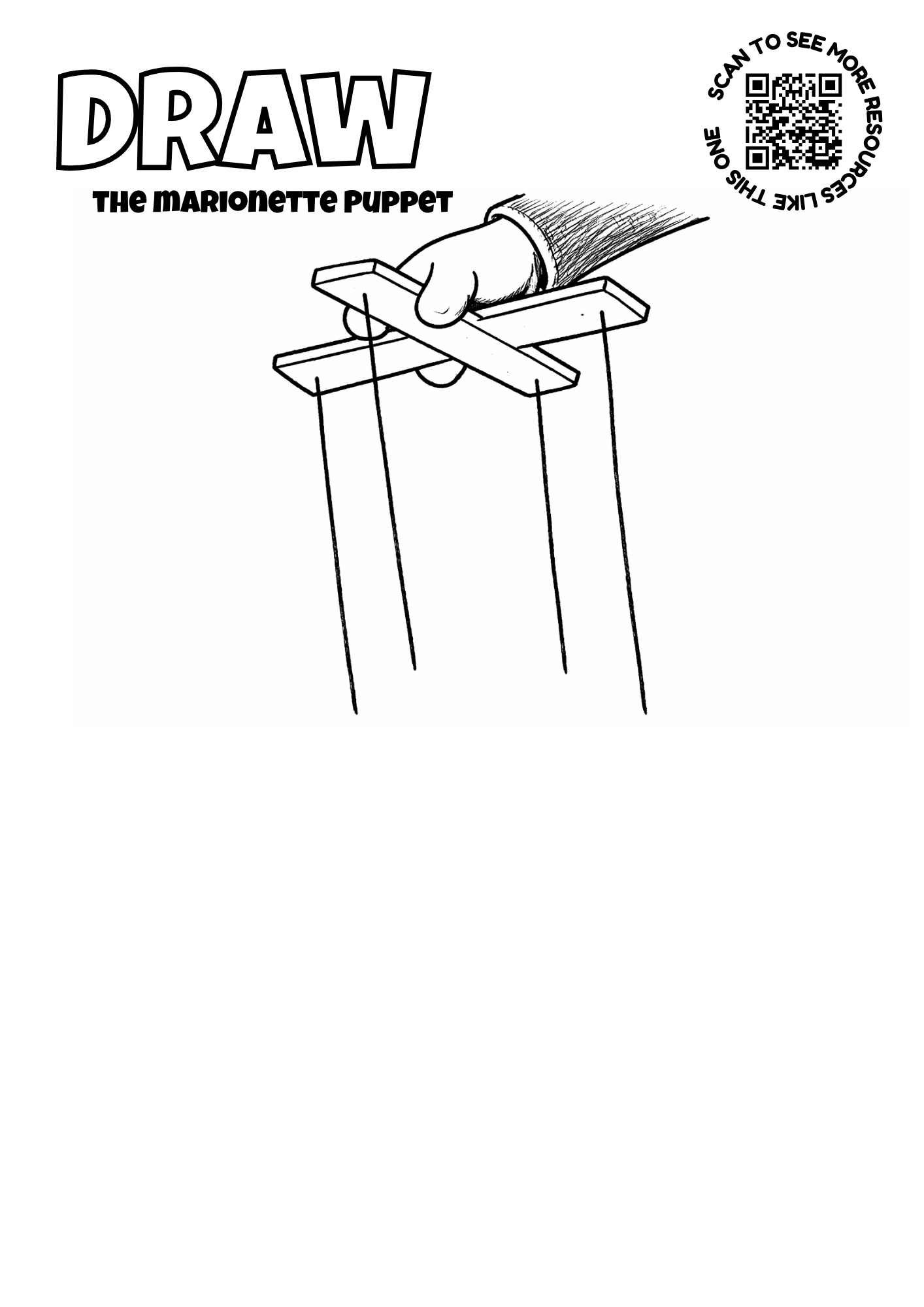
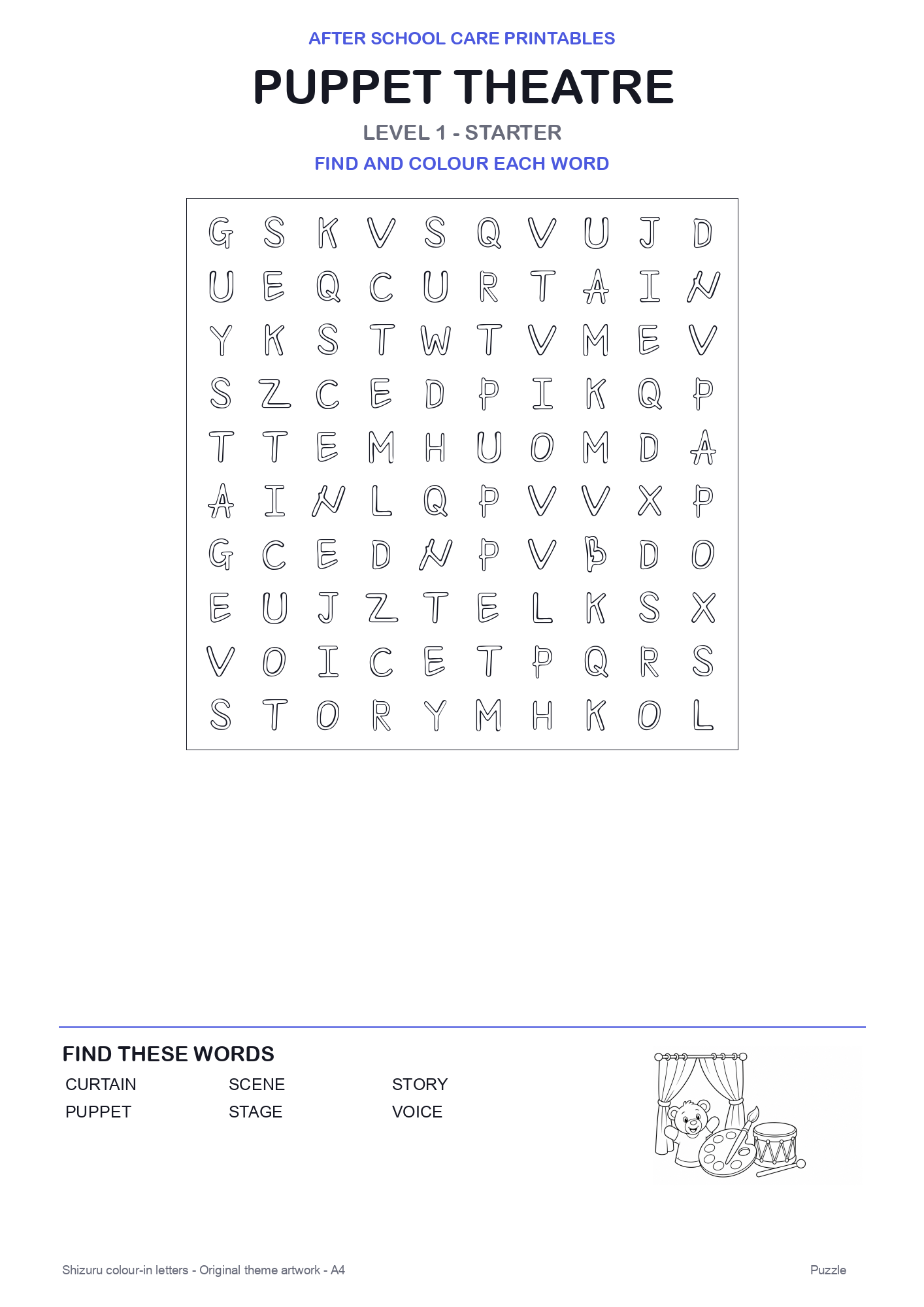
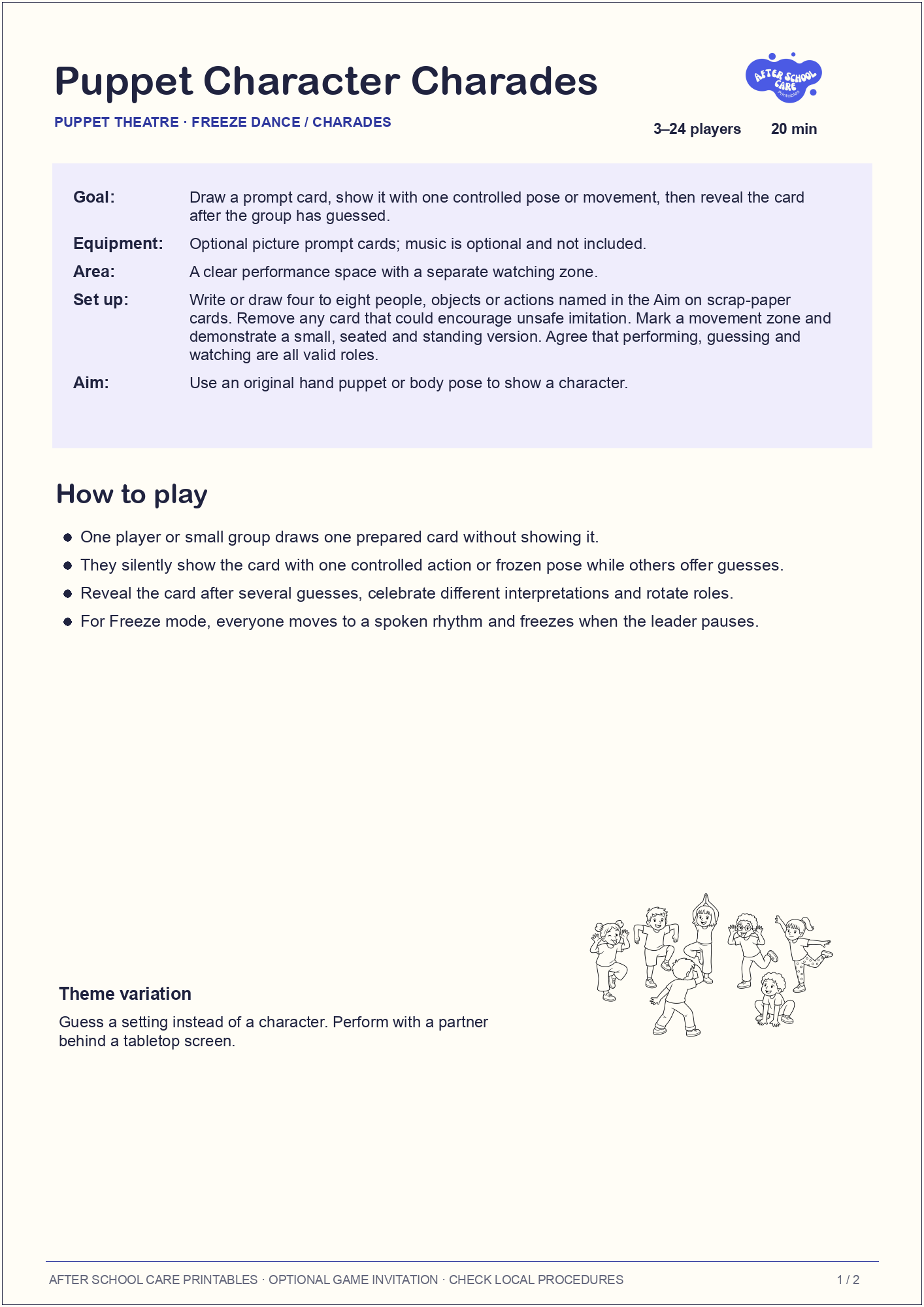
Plan and show a short silent action as a team while others observe and guess. Includes a two-page A4 printable, specific educator guidance, adaptations and a cut-off quick-reference card.
Ready for a real OSHC session
Preview both printable pages
Download 2-page practical printableCheck the preview, printing notes and licence before use.
When this resource is useful
Team mime supports non-written communication and quick collaboration without solo performance.
What children do
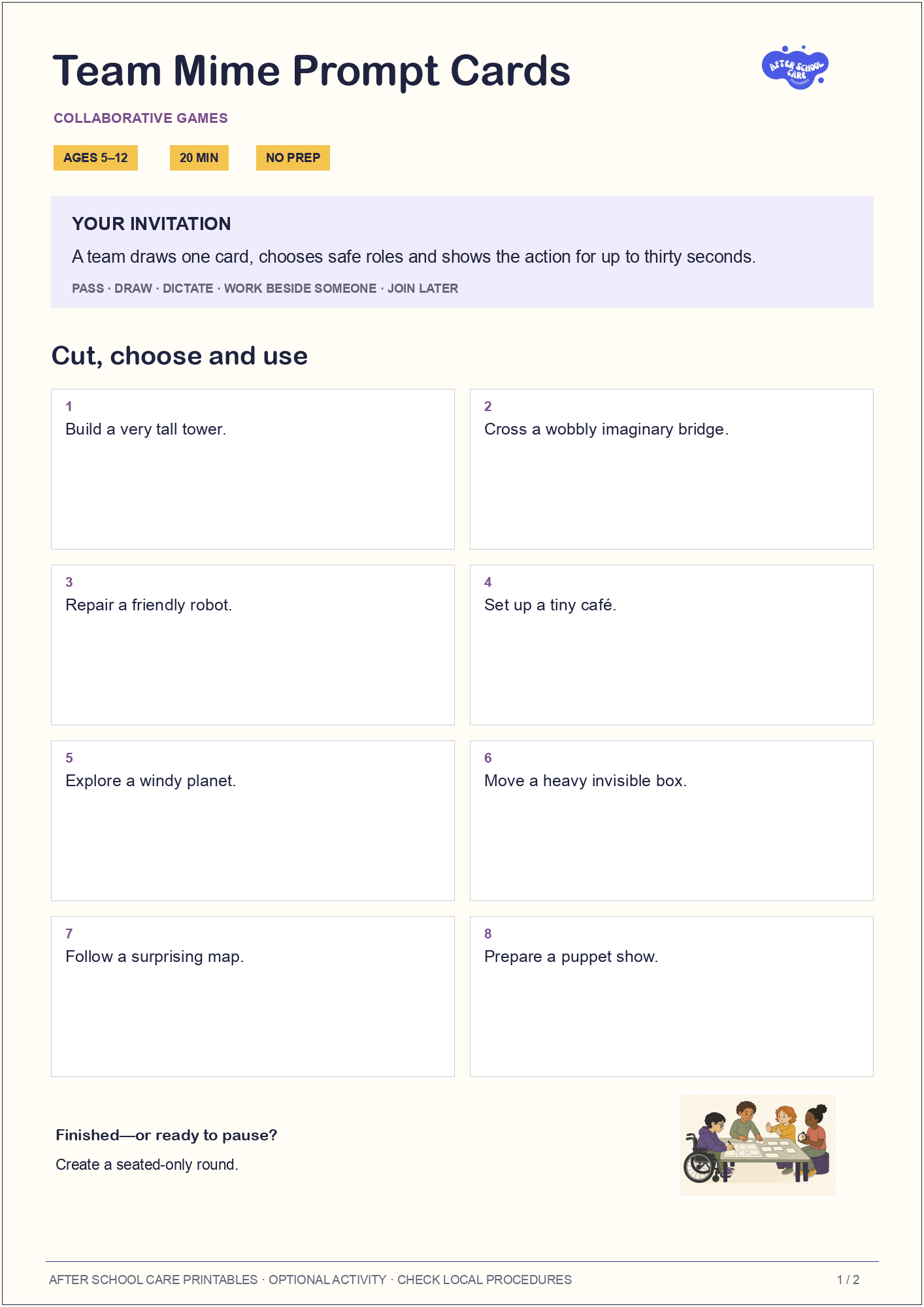
A team draws one card, chooses safe roles and shows the action for up to thirty seconds.
Materials and preparation
Materials: Printed pages and pencils; use only the optional ordinary materials named on the page.
Allow about 2 minutes to print and place the resource. The activity itself usually takes 20 minutes and can pause when the group needs to transition.
Run the activity
Mark a performance space. Groups get two minutes to plan; guessing stops after three attempts and the card is revealed.
The child-facing prompts are:
- Build a very tall tower.
- Cross a wobbly imaginary bridge.
- Repair a friendly robot.
- Set up a tiny café.
- Explore a windy planet.
- Move a heavy invisible box.
- Follow a surprising map.
- Prepare a puppet show.
Adapt participation
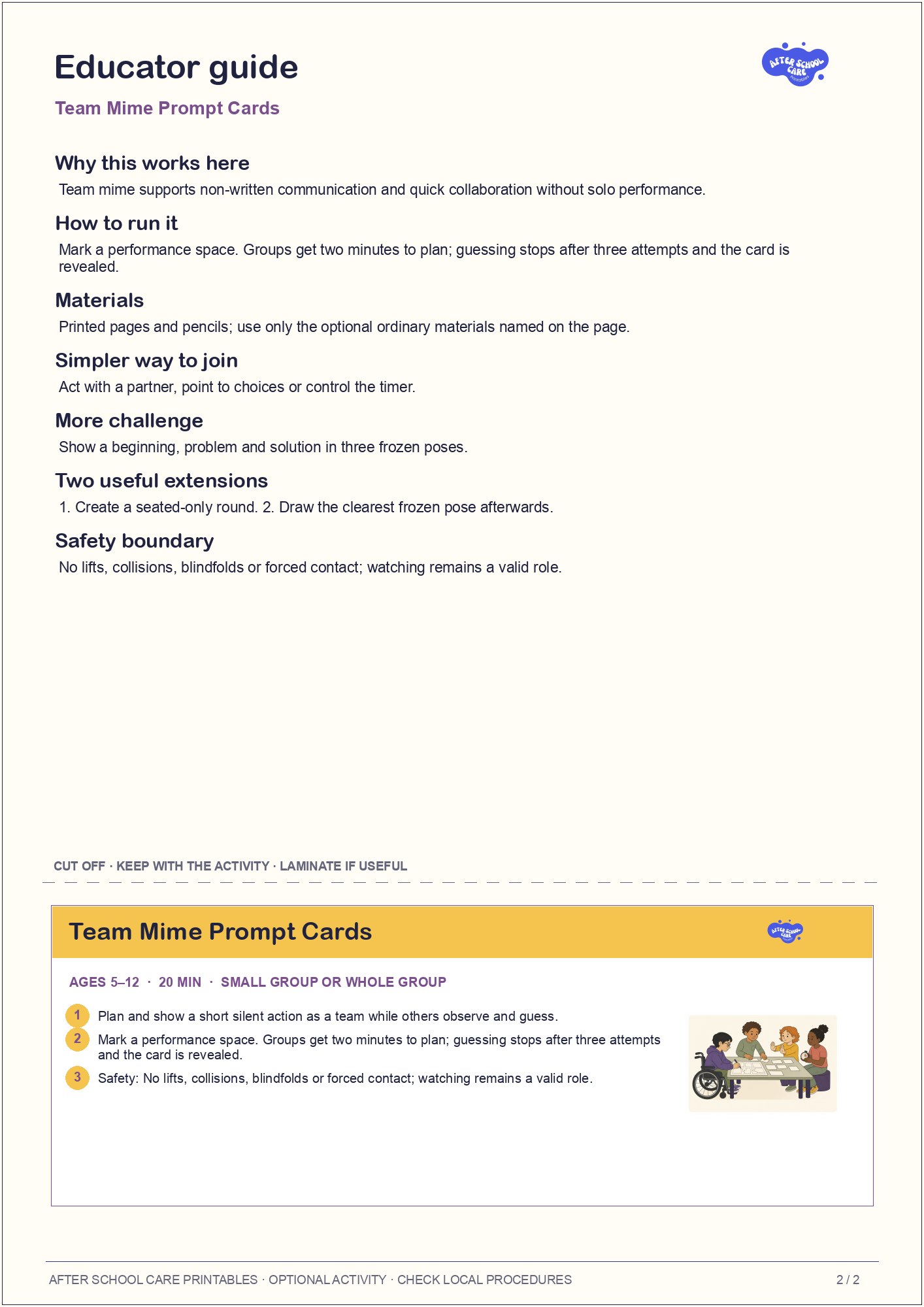
Simpler way to join: Act with a partner, point to choices or control the timer.
More challenge: Show a beginning, problem and solution in three frozen poses.
Children may draw, dictate, point, work beside a peer, observe or join later. Start, Explore and Extend labels describe task routes, not children.
Extend the idea
- Create a seated-only round.
- Draw the clearest frozen pose afterwards.
Safety and privacy
No lifts, collisions, blindfolds or forced contact; watching remains a valid role.
Learning opportunities
Look for collaboration, communication, fair participation and shared problem-solving. Record what children choose, explain, test or revise rather than treating completion as proof of learning.
Checking an open-ended response
There is no single required answer. A useful response follows the printed condition and can be explained, demonstrated or revised by the child.
Printing notes
Print at actual size on A4 paper. Page one is child-facing. Page two contains educator guidance and a dashed cut-off reference card that can be kept with the activity or laminated.