Resource
Talent-Show Planning Cards
Plan a voluntary, inclusive sharing event with performance and non-performance roles. Includes a two-page A4 printable, specific educator guidance, adaptations and a cut-off quick-reference card.
Ready for a real OSHC session
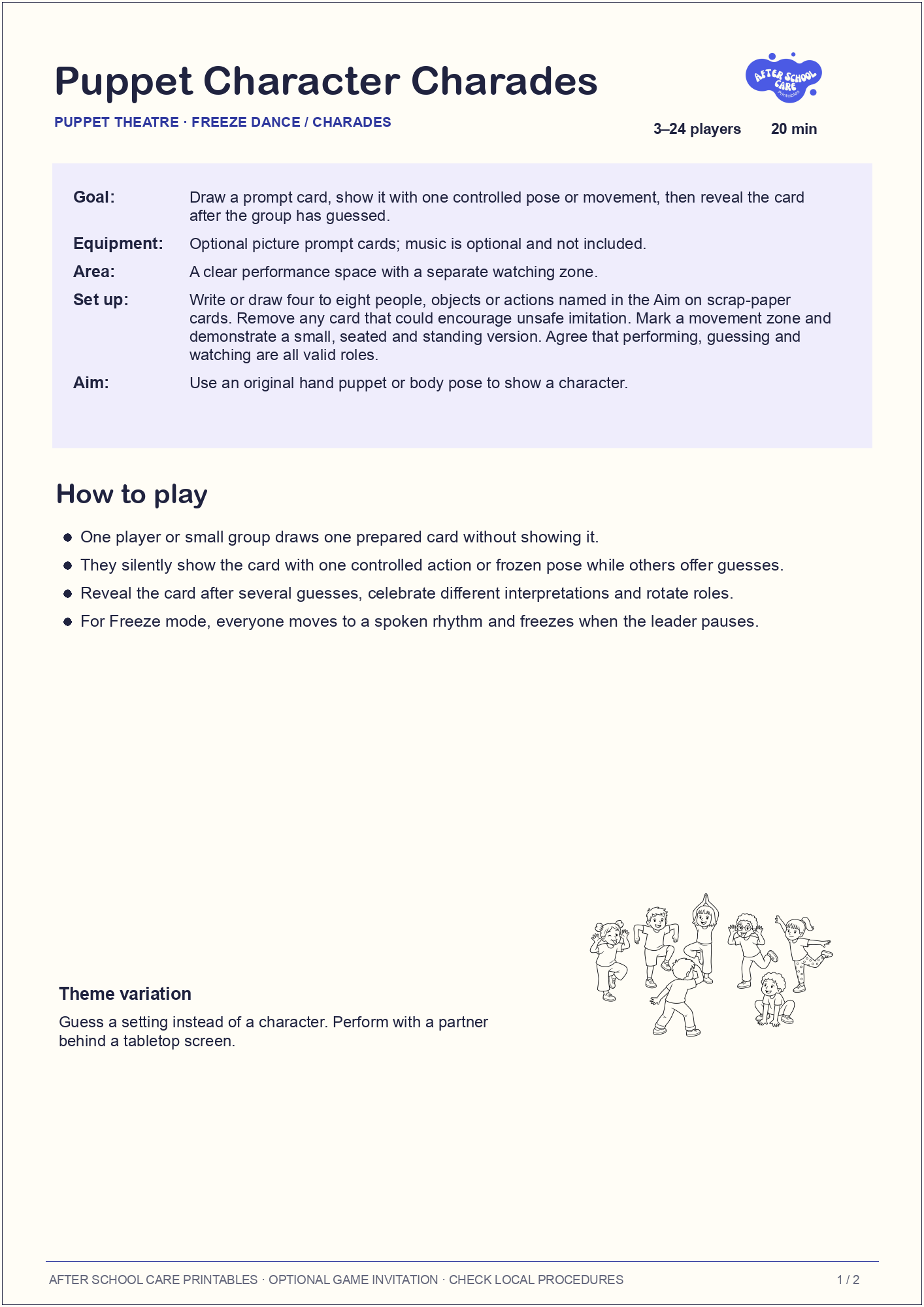
Preview both printable pages
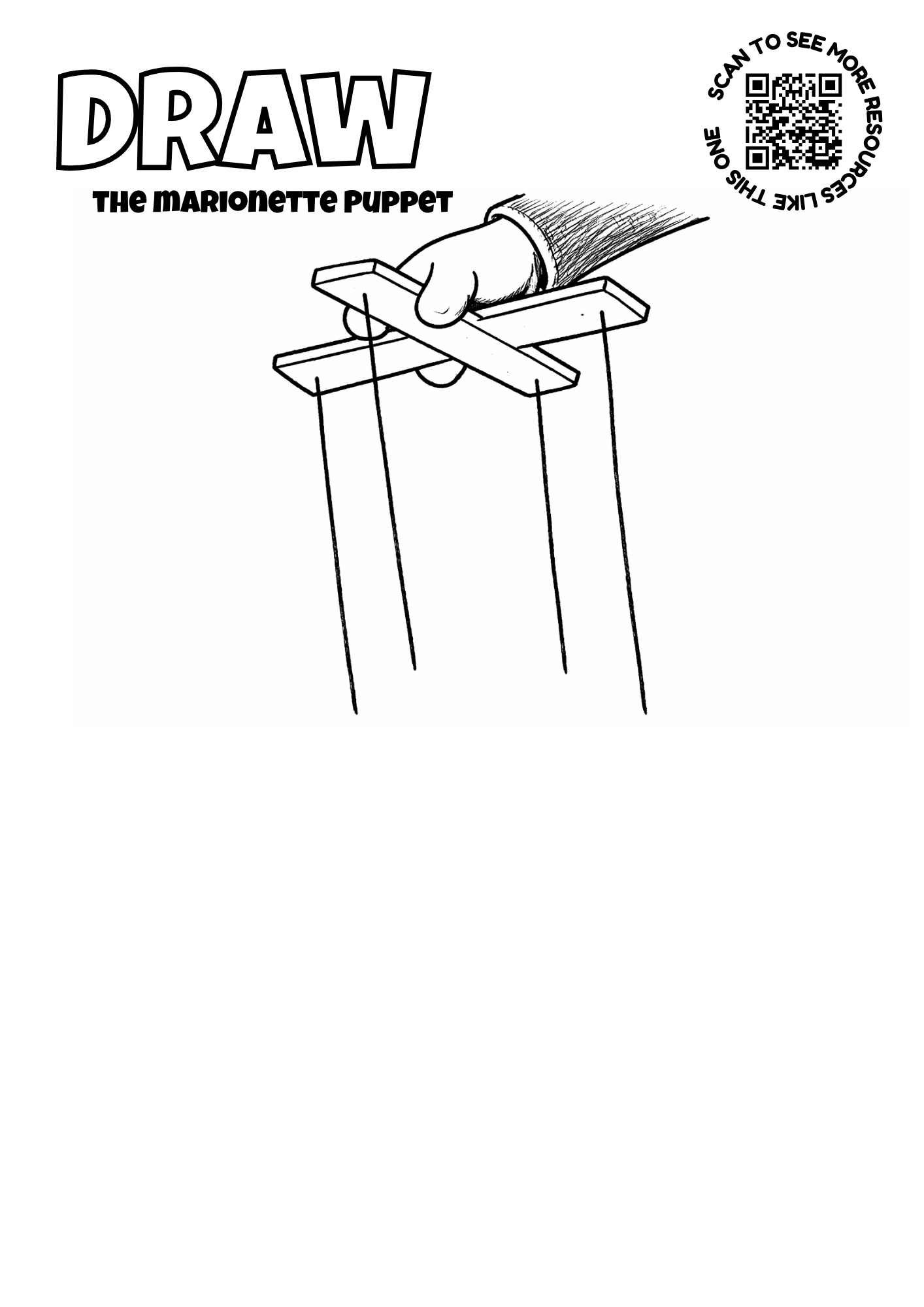
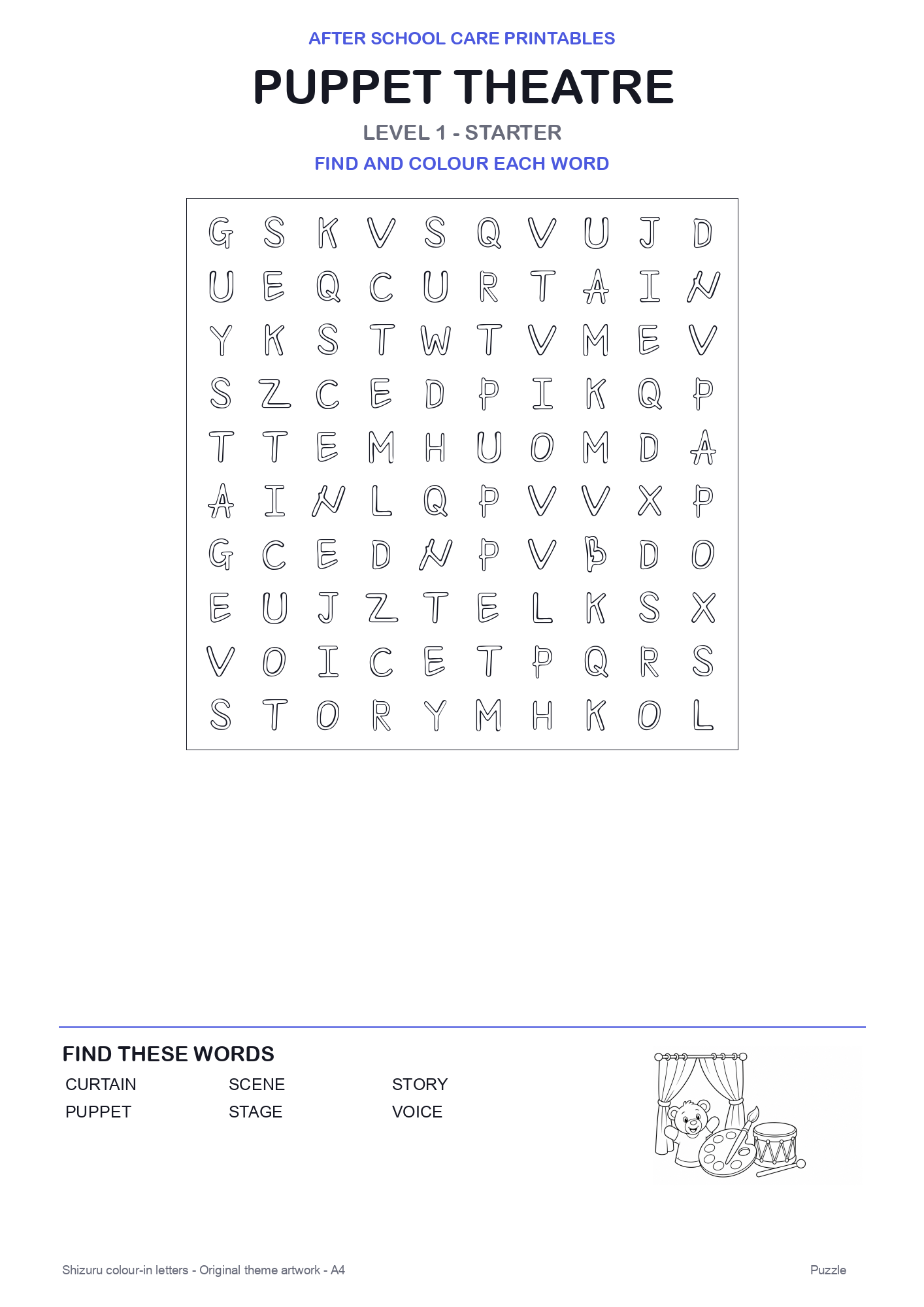
Download 2-page practical printableCheck the preview, printing notes and licence before use.
When this resource is useful
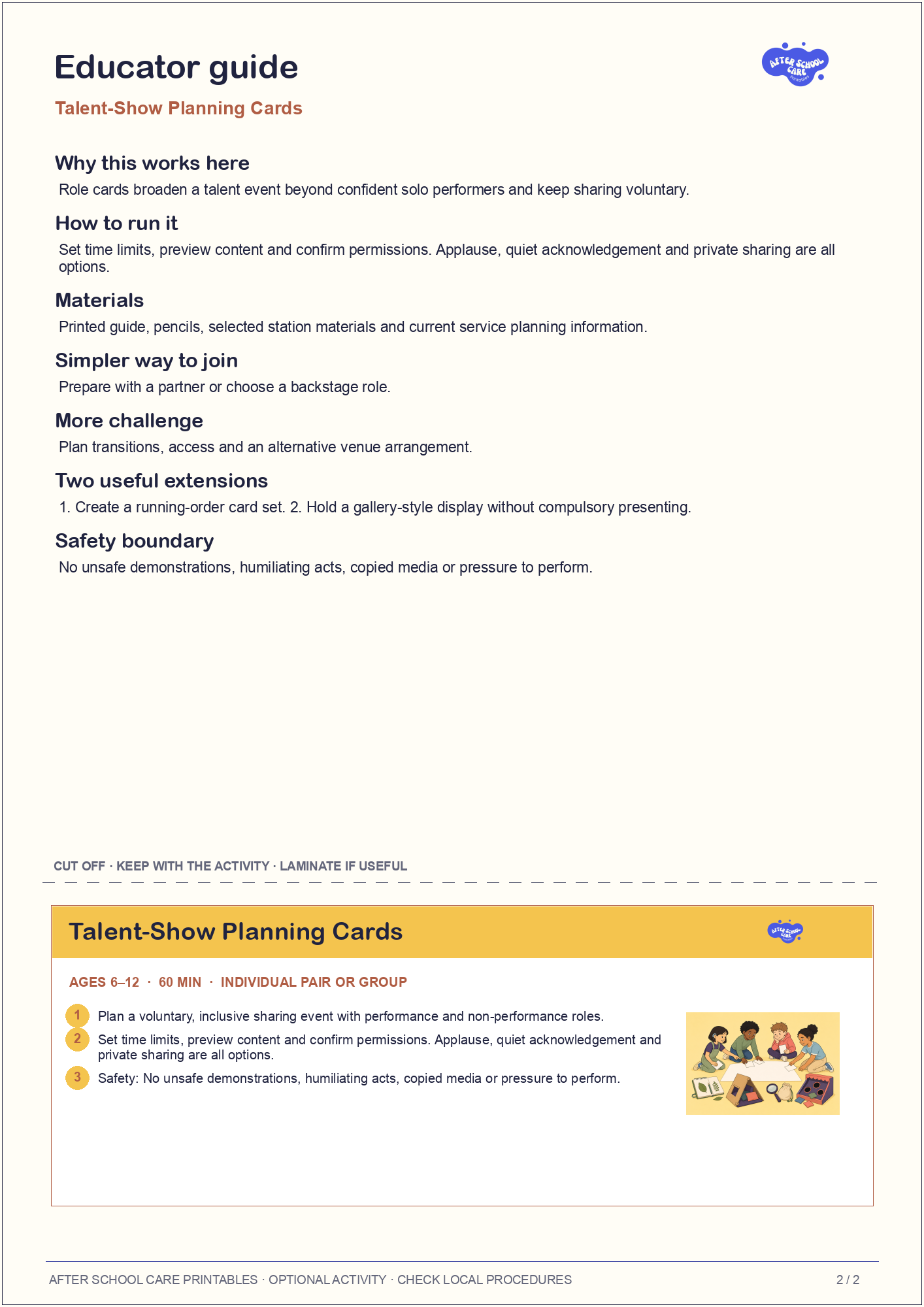
Role cards broaden a talent event beyond confident solo performers and keep sharing voluntary.
What children do
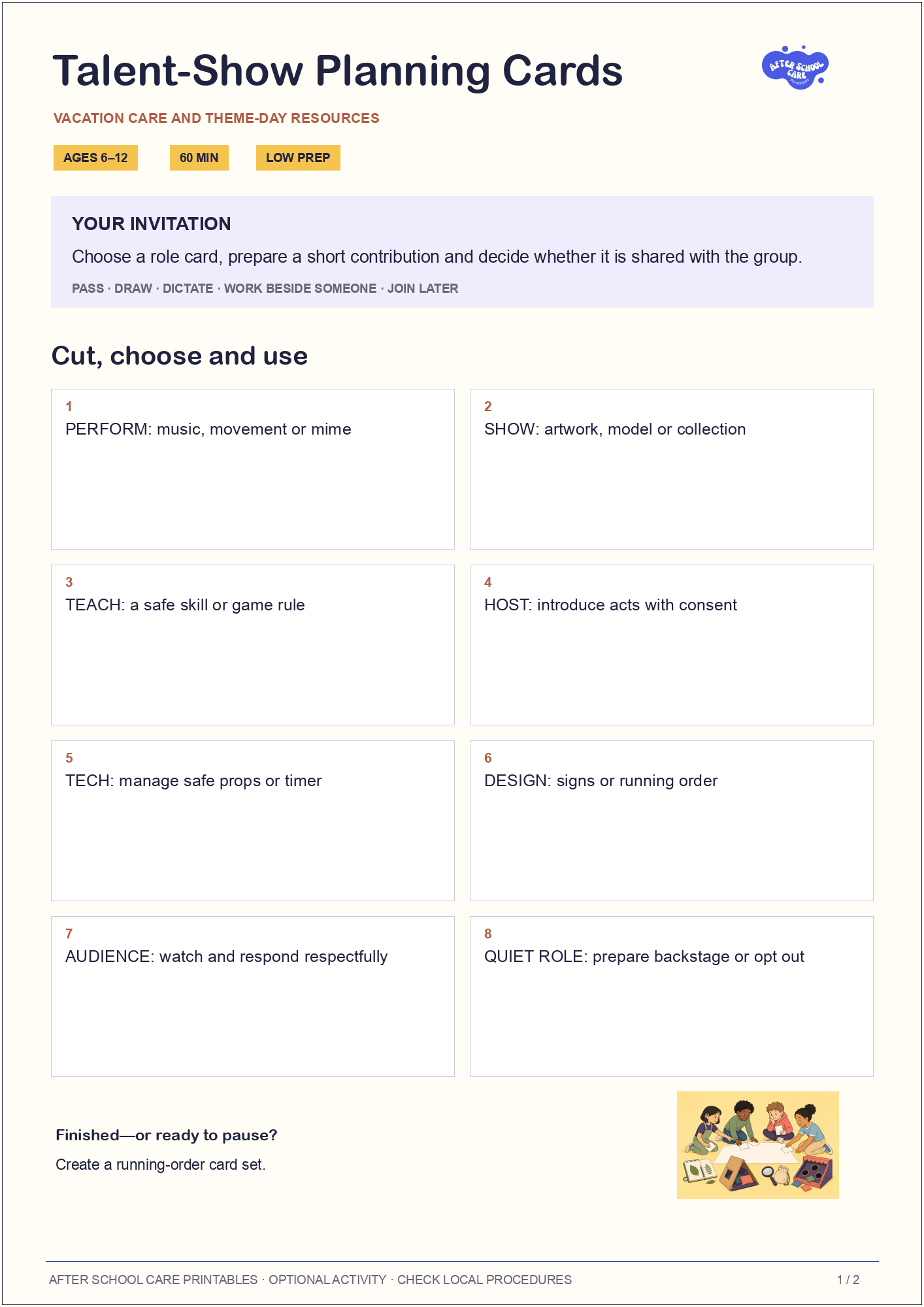
Choose a role card, prepare a short contribution and decide whether it is shared with the group.
Materials and preparation
Materials: Printed guide, pencils, selected station materials and current service planning information.
Allow about 10 minutes to print and place the resource. The activity itself usually takes 60 minutes and can pause when the group needs to transition.
Run the activity
Set time limits, preview content and confirm permissions. Applause, quiet acknowledgement and private sharing are all options.
The child-facing prompts are:
- PERFORM: music, movement or mime
- SHOW: artwork, model or collection
- TEACH: a safe skill or game rule
- HOST: introduce acts with consent
- TECH: manage safe props or timer
- DESIGN: signs or running order
- AUDIENCE: watch and respond respectfully
- QUIET ROLE: prepare backstage or opt out
Adapt participation
Simpler way to join: Prepare with a partner or choose a backstage role.
More challenge: Plan transitions, access and an alternative venue arrangement.
Children may draw, dictate, point, work beside a peer, observe or join later. Start, Explore and Extend labels describe task routes, not children.
Extend the idea
- Create a running-order card set.
- Hold a gallery-style display without compulsory presenting.
Safety and privacy
No unsafe demonstrations, humiliating acts, copied media or pressure to perform.
Learning opportunities
Look for program participation, planning, collaboration and reflection. Record what children choose, explain, test or revise rather than treating completion as proof of learning.
Checking an open-ended response
There is no single required answer. A useful response follows the printed condition and can be explained, demonstrated or revised by the child.
Printing notes
Print at actual size on A4 paper. Page one is child-facing. Page two contains educator guidance and a dashed cut-off reference card that can be kept with the activity or laminated.