Resource
Table-Team Mini Olympics
Complete tabletop skill stations and improve a shared team total without ranking teams. Includes a two-page A4 printable, specific educator guidance, adaptations and a cut-off quick-reference card.
Ready for a real OSHC session
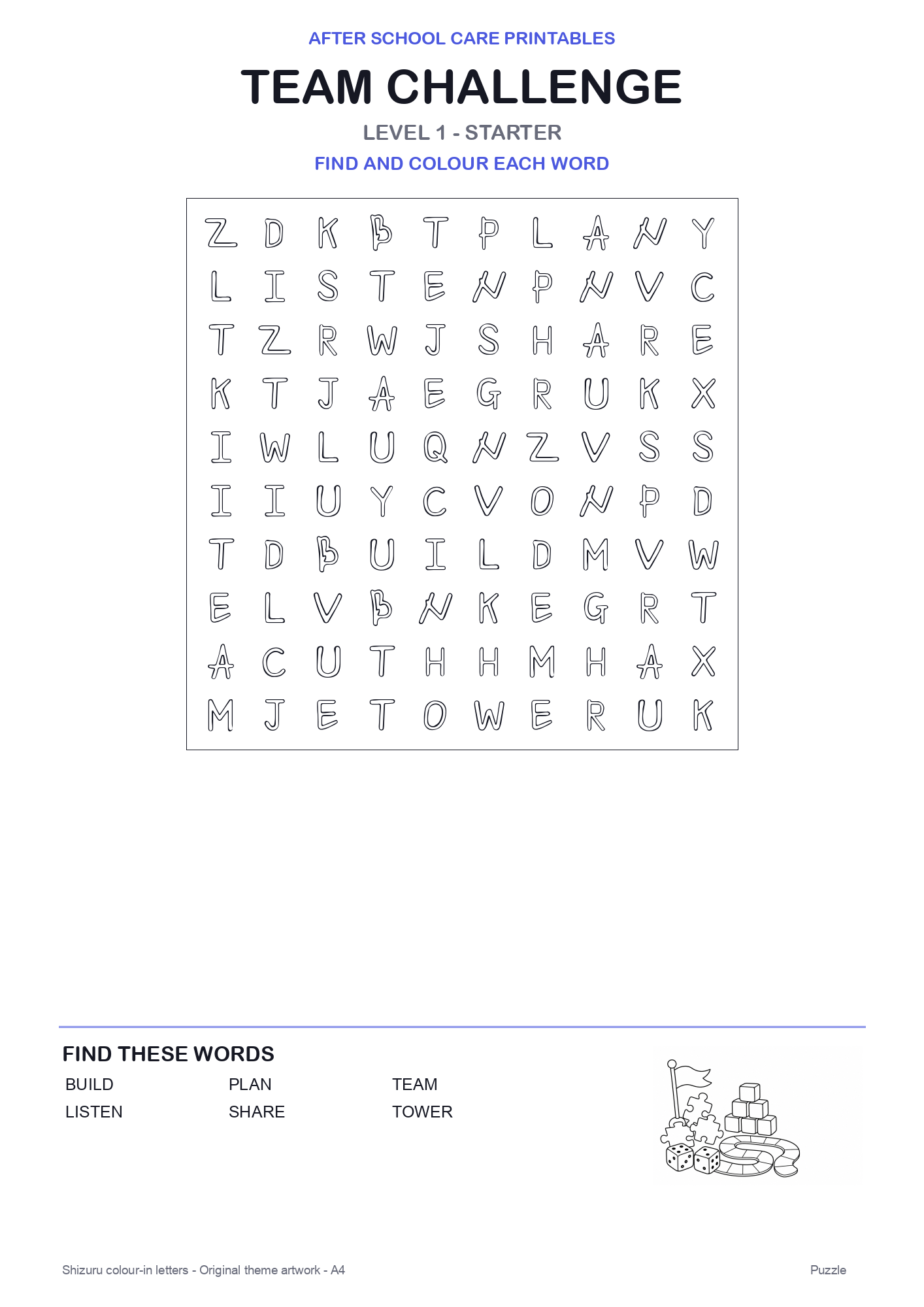
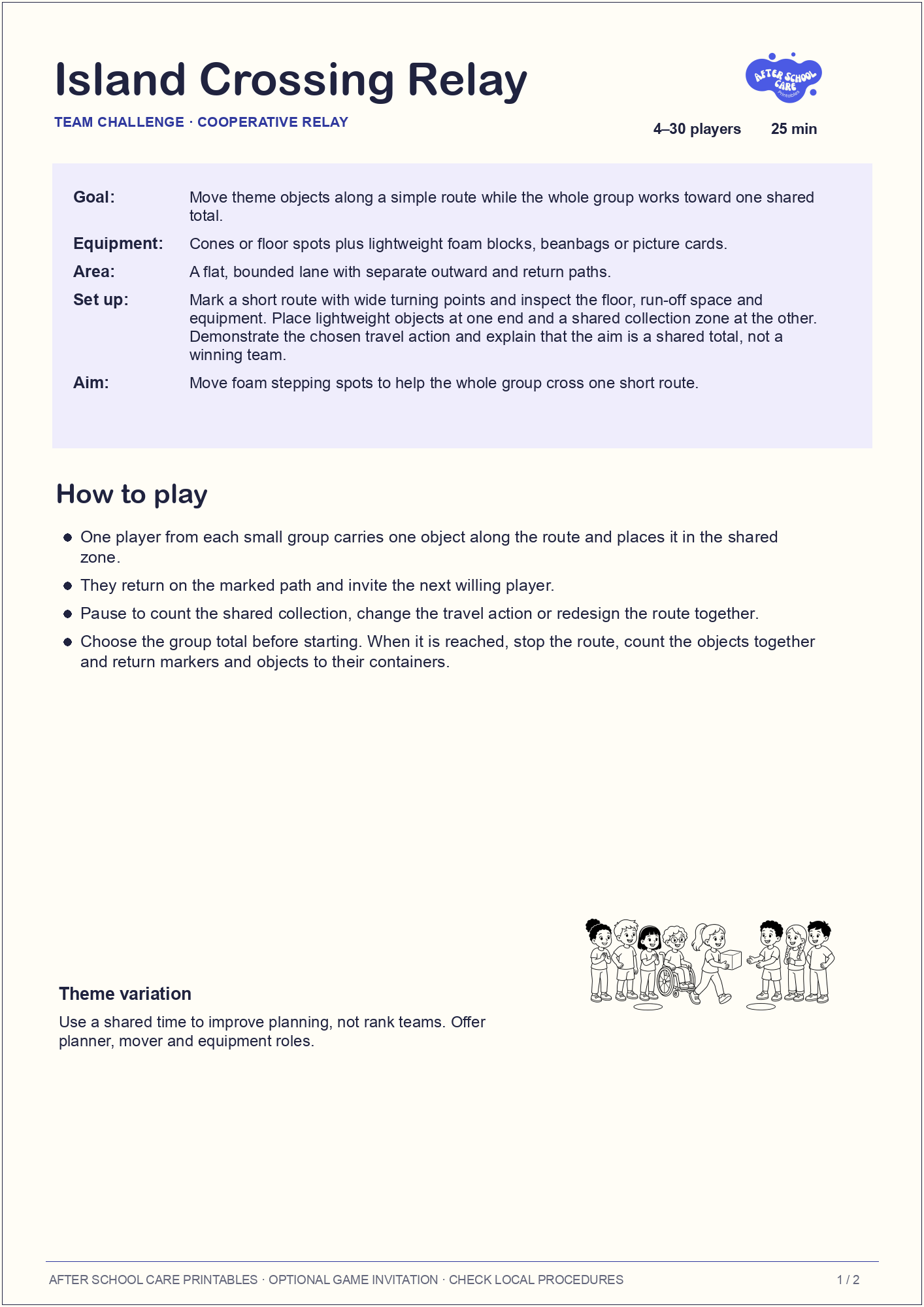
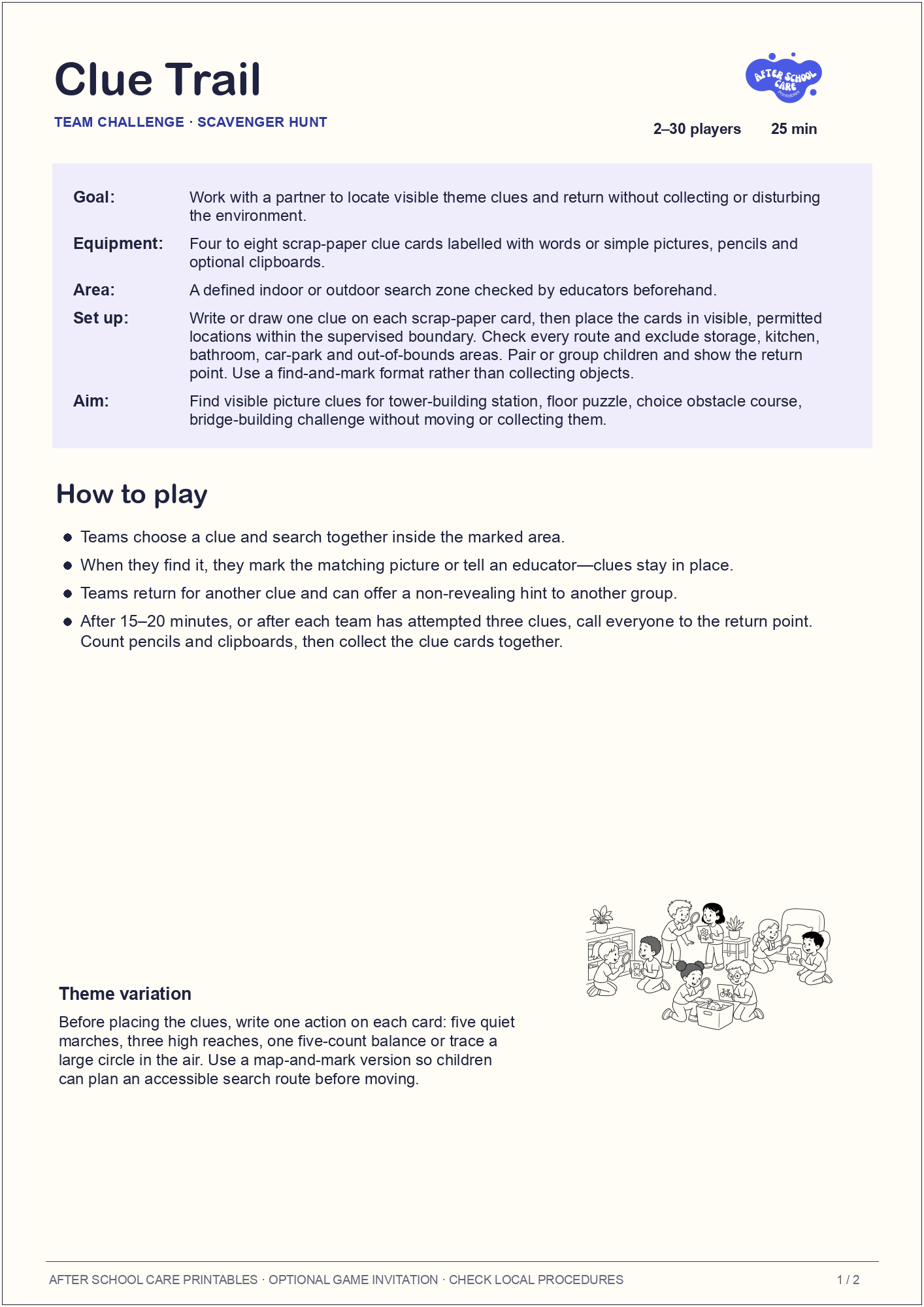
Preview both printable pages
Download 2-page practical printableCheck the preview, printing notes and licence before use.
When this resource is useful
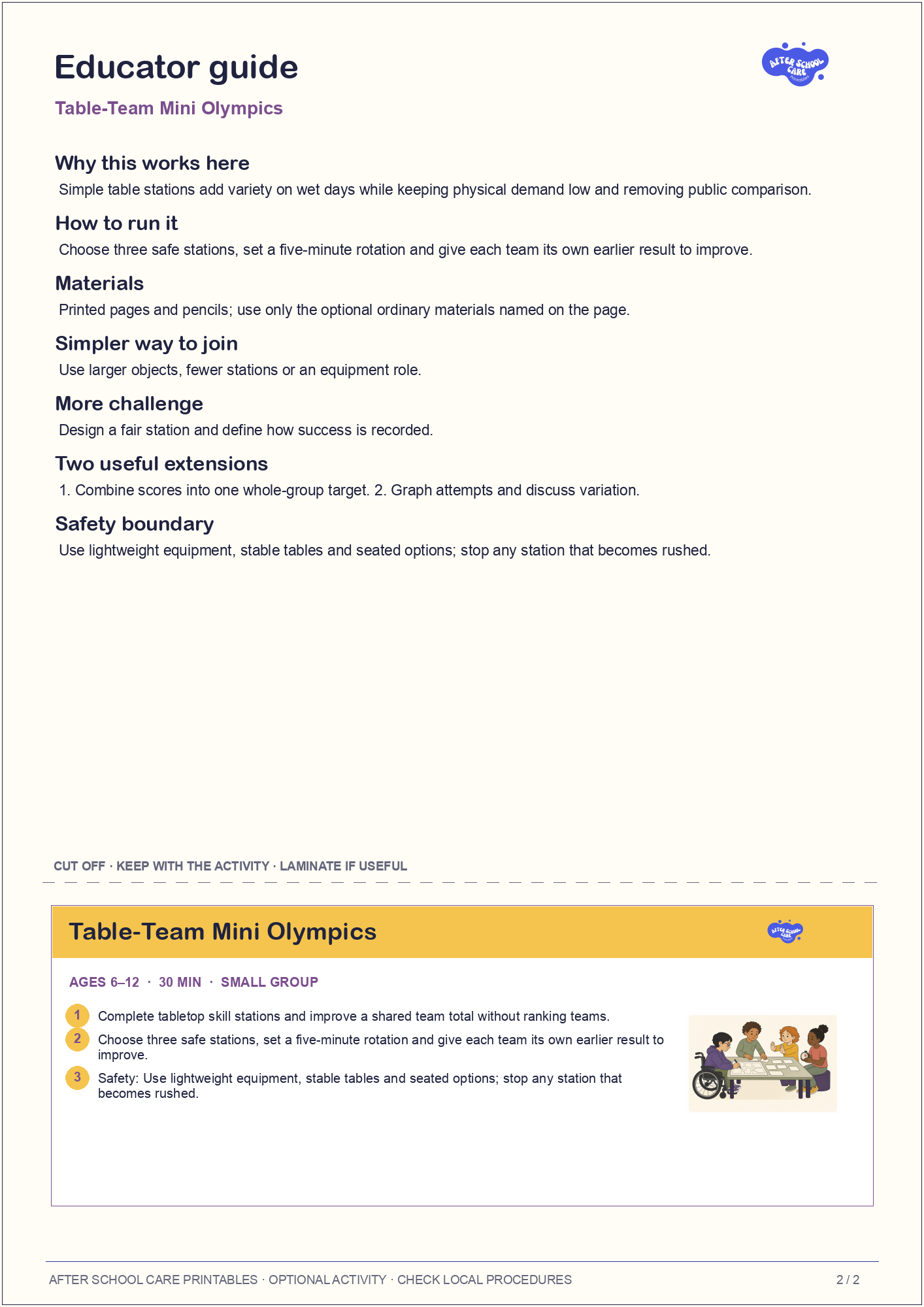
Simple table stations add variety on wet days while keeping physical demand low and removing public comparison.
What children do
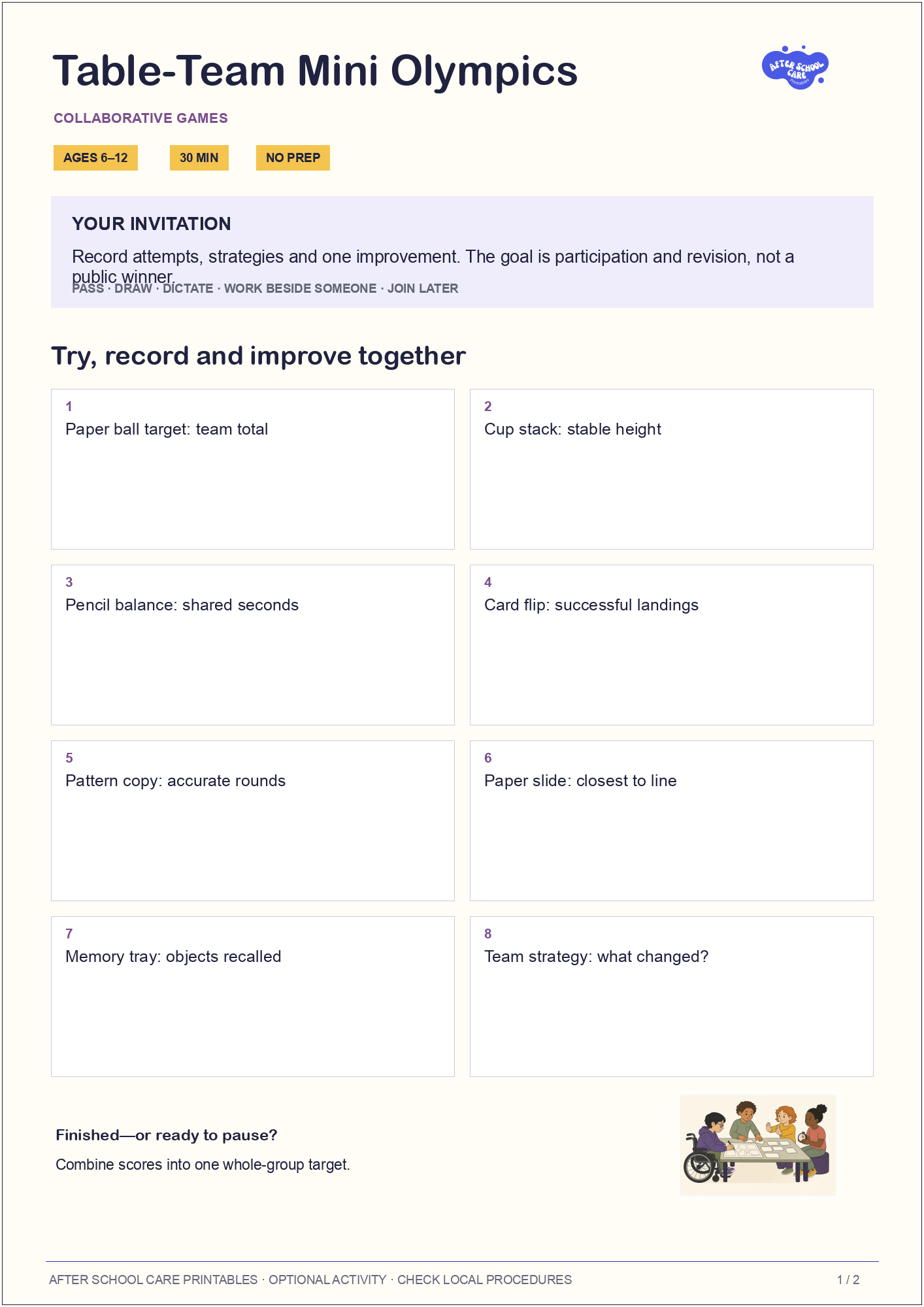
Record attempts, strategies and one improvement. The goal is participation and revision, not a public winner.
Materials and preparation
Materials: Printed pages and pencils; use only the optional ordinary materials named on the page.
Allow about 2 minutes to print and place the resource. The activity itself usually takes 30 minutes and can pause when the group needs to transition.
Run the activity
Choose three safe stations, set a five-minute rotation and give each team its own earlier result to improve.
The child-facing prompts are:
- Paper ball target: team total
- Cup stack: stable height
- Pencil balance: shared seconds
- Card flip: successful landings
- Pattern copy: accurate rounds
- Paper slide: closest to line
- Memory tray: objects recalled
- Team strategy: what changed?
Adapt participation
Simpler way to join: Use larger objects, fewer stations or an equipment role.
More challenge: Design a fair station and define how success is recorded.
Children may draw, dictate, point, work beside a peer, observe or join later. Start, Explore and Extend labels describe task routes, not children.
Extend the idea
- Combine scores into one whole-group target.
- Graph attempts and discuss variation.
Safety and privacy
Use lightweight equipment, stable tables and seated options; stop any station that becomes rushed.
Learning opportunities
Look for collaboration, communication, fair participation and shared problem-solving. Record what children choose, explain, test or revise rather than treating completion as proof of learning.
Checking an open-ended response
There is no single required answer. A useful response follows the printed condition and can be explained, demonstrated or revised by the child.
Printing notes
Print at actual size on A4 paper. Page one is child-facing. Page two contains educator guidance and a dashed cut-off reference card that can be kept with the activity or laminated.