Resource
Straw Tower Engineering Challenge
Build a freestanding tower from paper straws and tape, then improve stability. Includes a two-page A4 printable, specific educator guidance, adaptations and a cut-off quick-reference card.
Ready for a real OSHC session
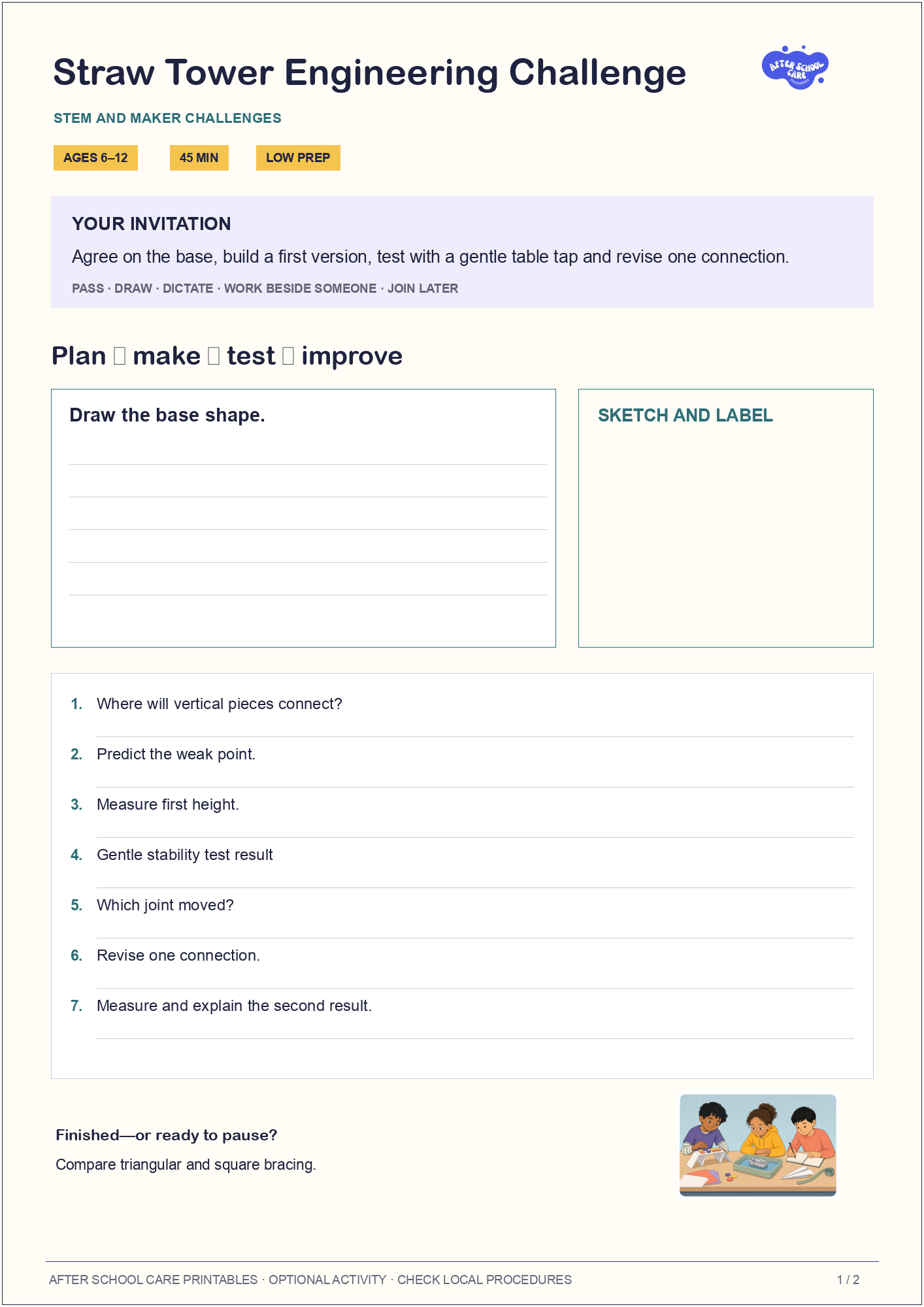
Preview both printable pages
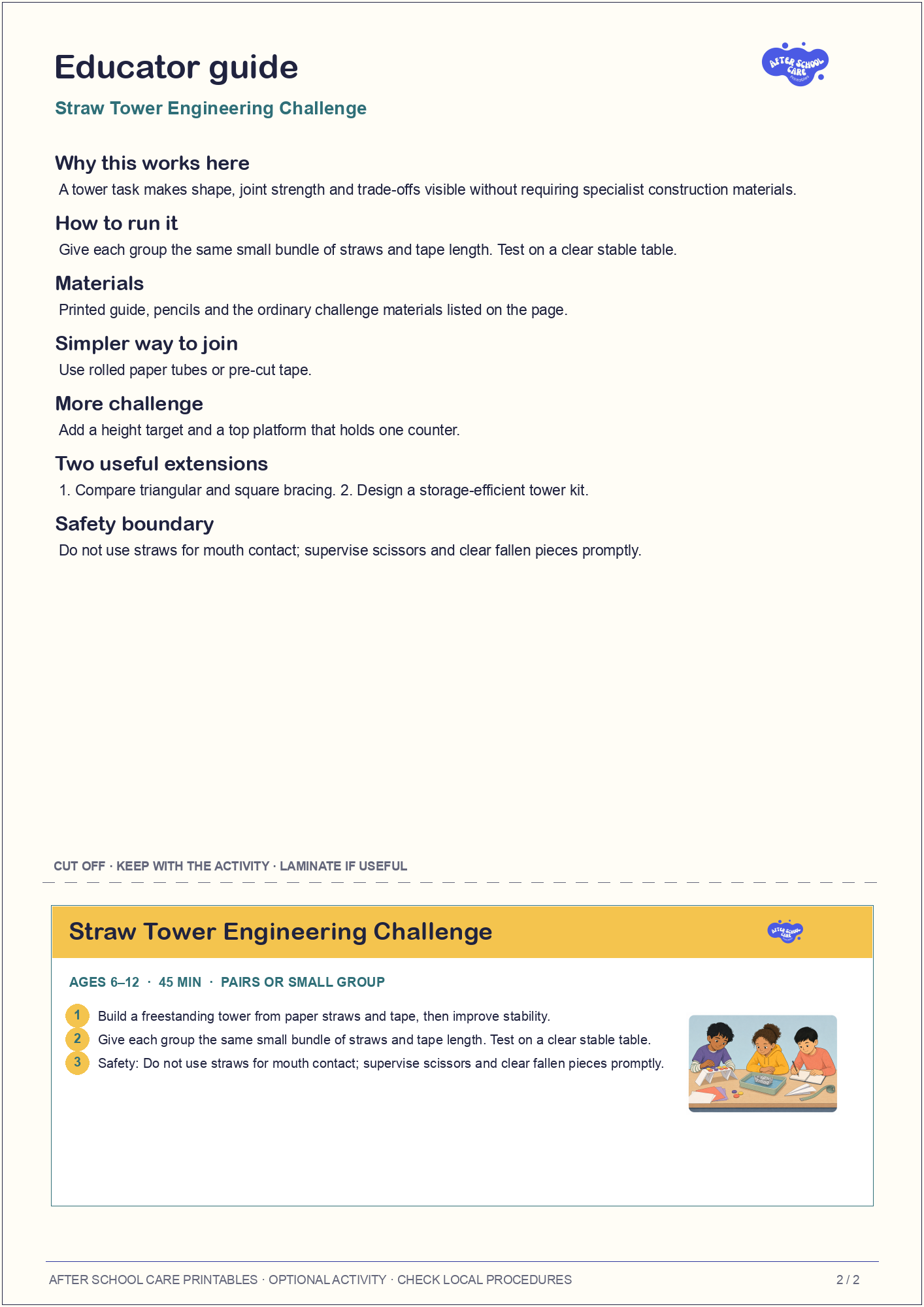
Download 2-page practical printableCheck the preview, printing notes and licence before use.
When this resource is useful
A tower task makes shape, joint strength and trade-offs visible without requiring specialist construction materials.
What children do
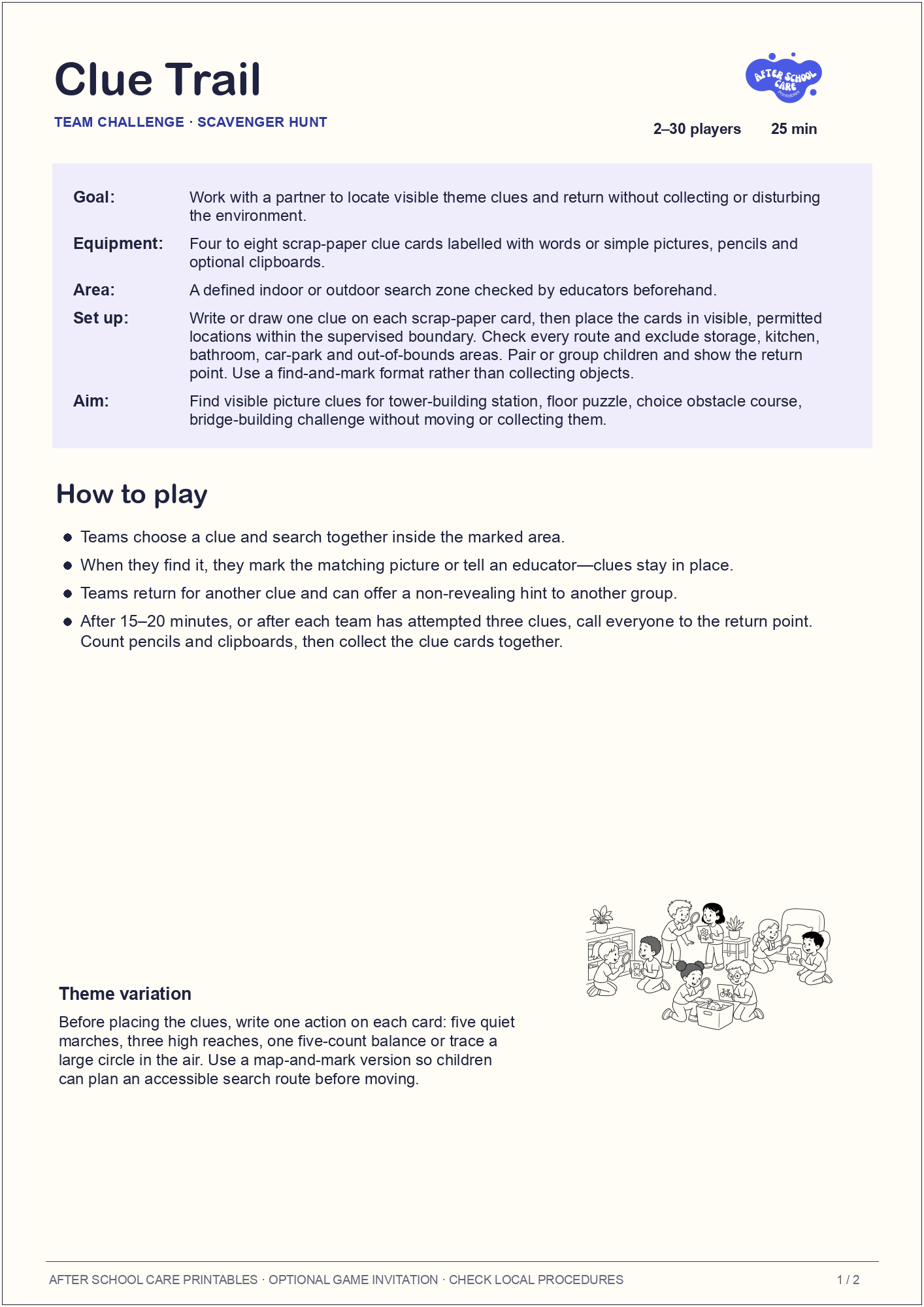
Agree on the base, build a first version, test with a gentle table tap and revise one connection.
Materials and preparation
Materials: Printed guide, pencils and the ordinary challenge materials listed on the page.
Allow about 10 minutes to print and place the resource. The activity itself usually takes 45 minutes and can pause when the group needs to transition.
Run the activity
Give each group the same small bundle of straws and tape length. Test on a clear stable table.
The child-facing prompts are:
- Draw the base shape.
- Where will vertical pieces connect?
- Predict the weak point.
- Measure first height.
- Gentle stability test result
- Which joint moved?
- Revise one connection.
- Measure and explain the second result.
Adapt participation
Simpler way to join: Use rolled paper tubes or pre-cut tape.
More challenge: Add a height target and a top platform that holds one counter.
Children may draw, dictate, point, work beside a peer, observe or join later. Start, Explore and Extend labels describe task routes, not children.
Extend the idea
- Compare triangular and square bracing.
- Design a storage-efficient tower kit.
Safety and privacy
Do not use straws for mouth contact; supervise scissors and clear fallen pieces promptly.
Learning opportunities
Look for planning, testing, evidence, measurement and design revision. Record what children choose, explain, test or revise rather than treating completion as proof of learning.
Checking an open-ended response
There is no single required answer. A useful response follows the printed condition and can be explained, demonstrated or revised by the child.
Printing notes
Print at actual size on A4 paper. Page one is child-facing. Page two contains educator guidance and a dashed cut-off reference card that can be kept with the activity or laminated.