Resource
Protect-the-Egg Planning Worksheet
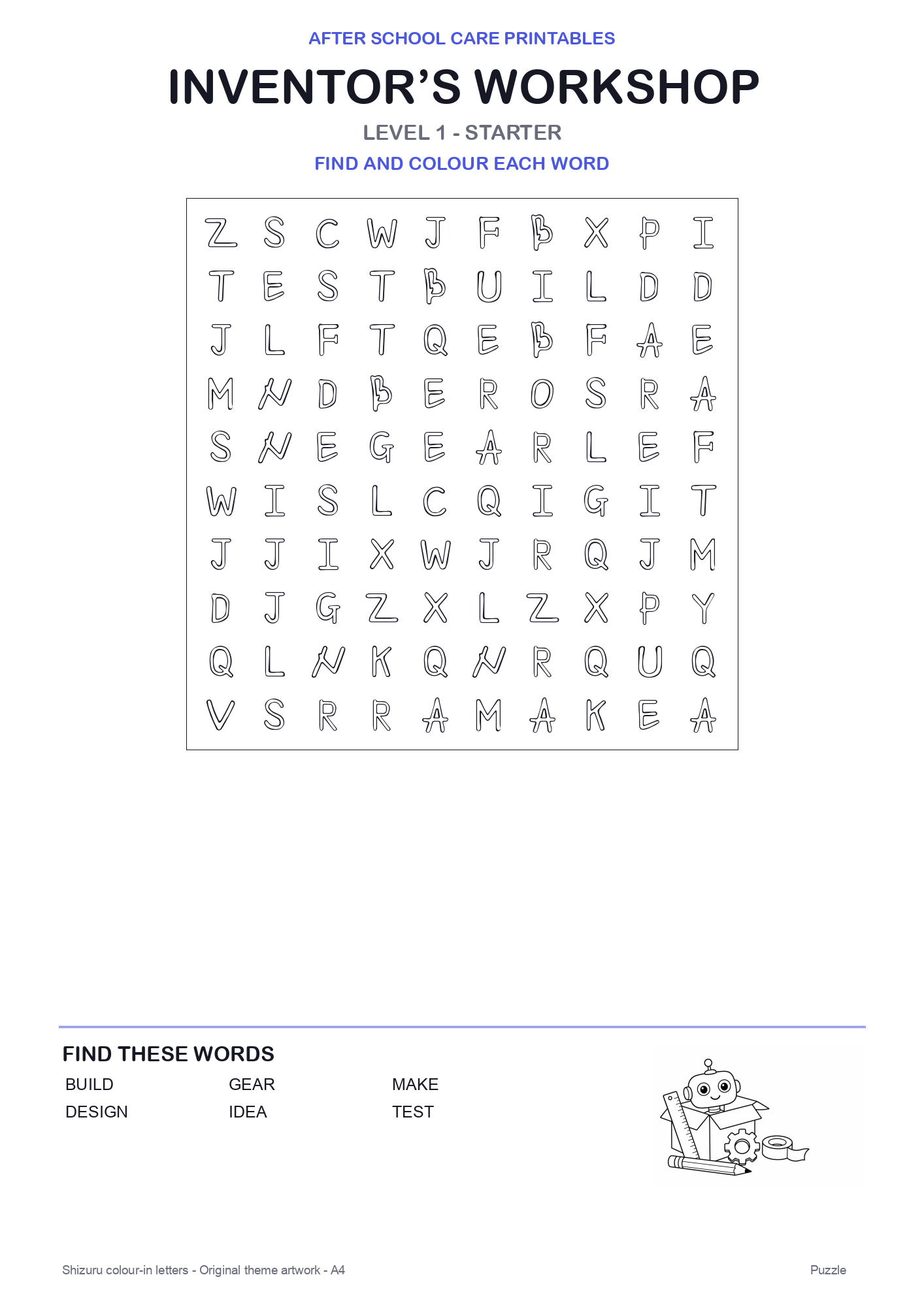
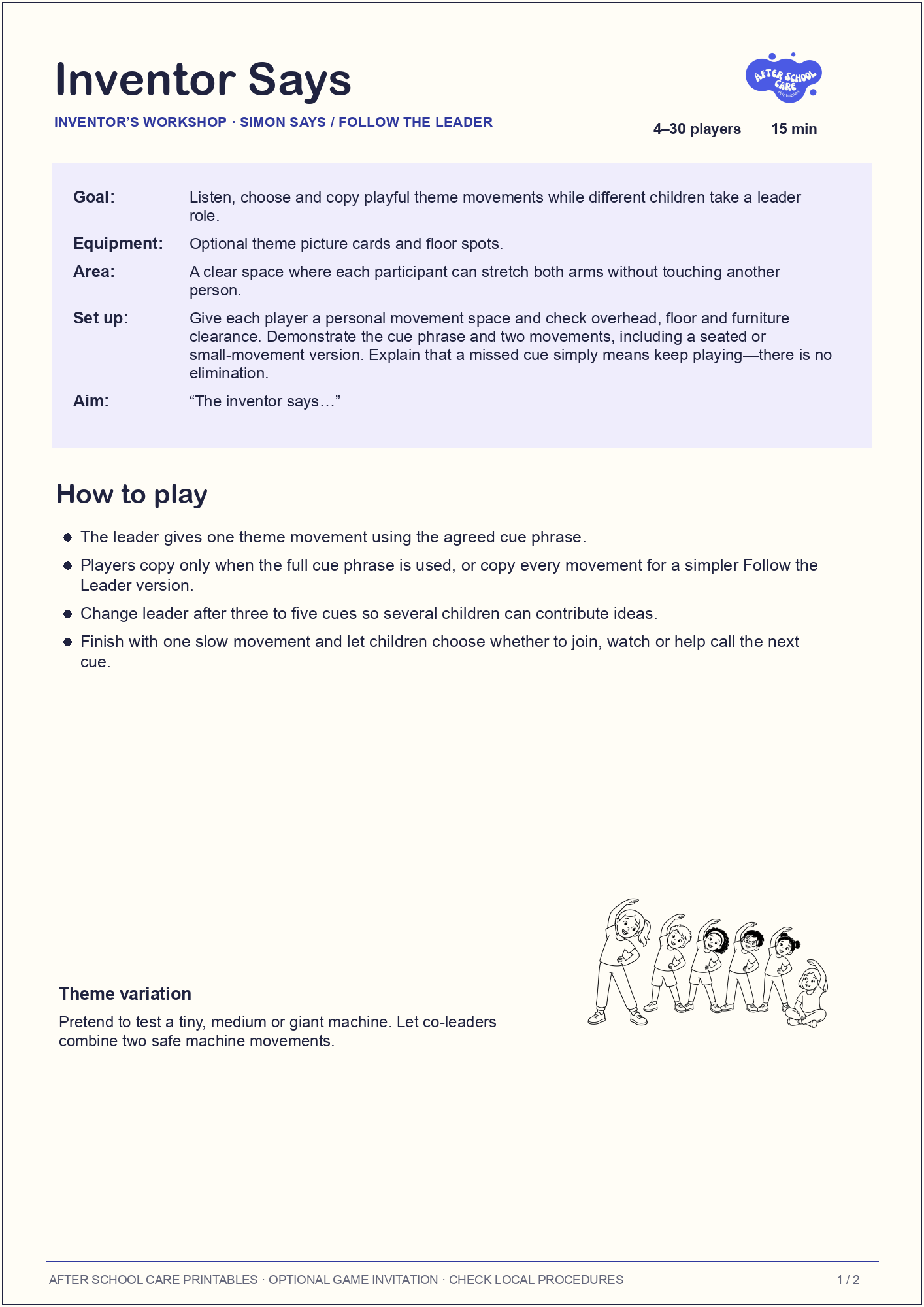
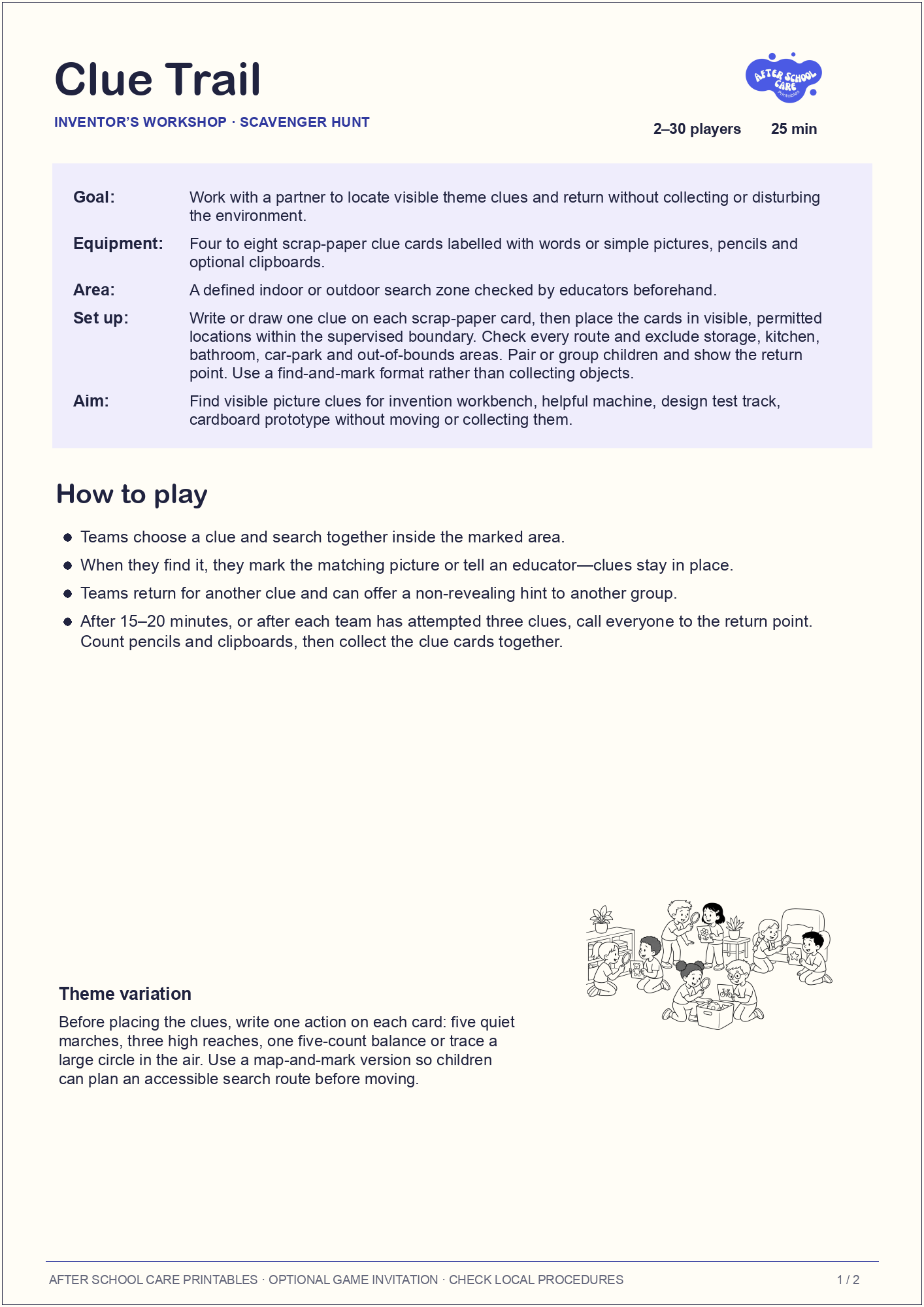
Plan a protective container using a model object before any educator-approved drop test. Includes a two-page A4 printable, specific educator guidance, adaptations and a cut-off quick-reference card.
Ready for a real OSHC session
Preview both printable pages
Download 2-page practical printableCheck the preview, printing notes and licence before use.
When this resource is useful
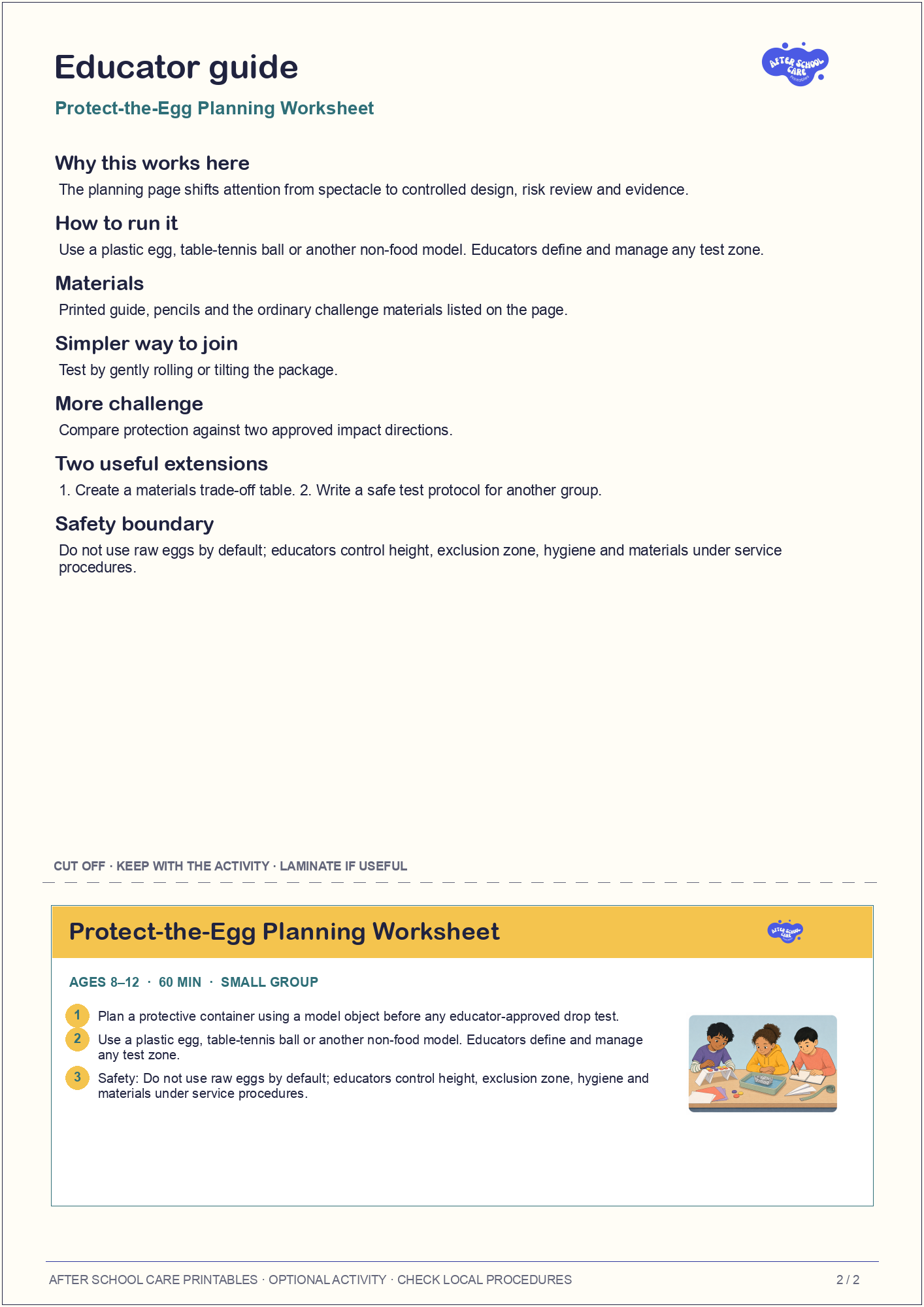
The planning page shifts attention from spectacle to controlled design, risk review and evidence.
What children do
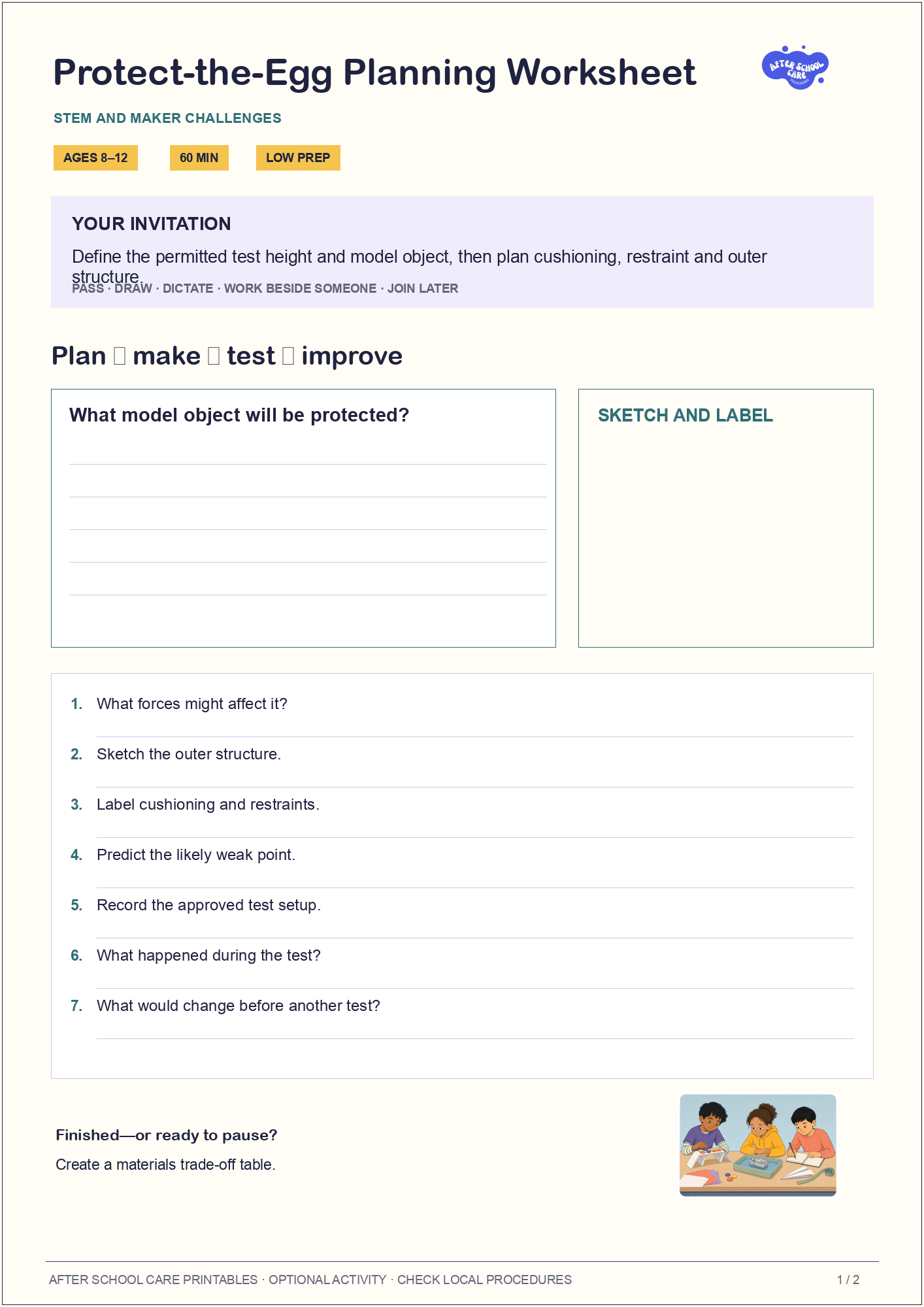
Define the permitted test height and model object, then plan cushioning, restraint and outer structure.
Materials and preparation
Materials: Printed guide, pencils and the ordinary challenge materials listed on the page.
Allow about 10 minutes to print and place the resource. The activity itself usually takes 60 minutes and can pause when the group needs to transition.
Run the activity
Use a plastic egg, table-tennis ball or another non-food model. Educators define and manage any test zone.
The child-facing prompts are:
- What model object will be protected?
- What forces might affect it?
- Sketch the outer structure.
- Label cushioning and restraints.
- Predict the likely weak point.
- Record the approved test setup.
- What happened during the test?
- What would change before another test?
Adapt participation
Simpler way to join: Test by gently rolling or tilting the package.
More challenge: Compare protection against two approved impact directions.
Children may draw, dictate, point, work beside a peer, observe or join later. Start, Explore and Extend labels describe task routes, not children.
Extend the idea
- Create a materials trade-off table.
- Write a safe test protocol for another group.
Safety and privacy
Do not use raw eggs by default; educators control height, exclusion zone, hygiene and materials under service procedures.
Learning opportunities
Look for planning, testing, evidence, measurement and design revision. Record what children choose, explain, test or revise rather than treating completion as proof of learning.
Checking an open-ended response
There is no single required answer. A useful response follows the printed condition and can be explained, demonstrated or revised by the child.
Printing notes
Print at actual size on A4 paper. Page one is child-facing. Page two contains educator guidance and a dashed cut-off reference card that can be kept with the activity or laminated.