Resource
Foil Boat Capacity Challenge
Shape one sheet of foil into a boat and compare how design changes affect capacity. Includes a two-page A4 printable, specific educator guidance, adaptations and a cut-off quick-reference card.
Ready for a real OSHC session
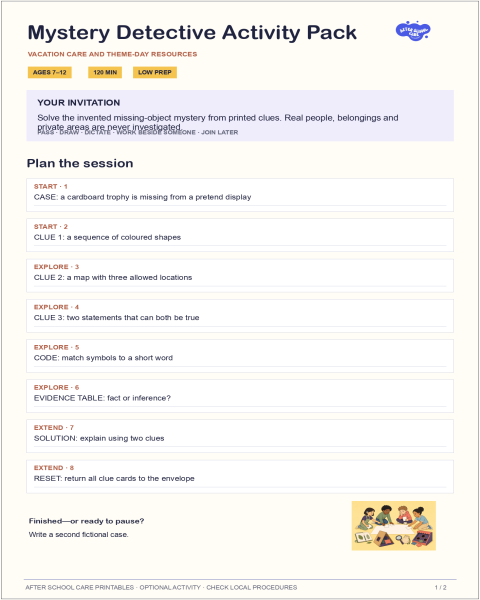
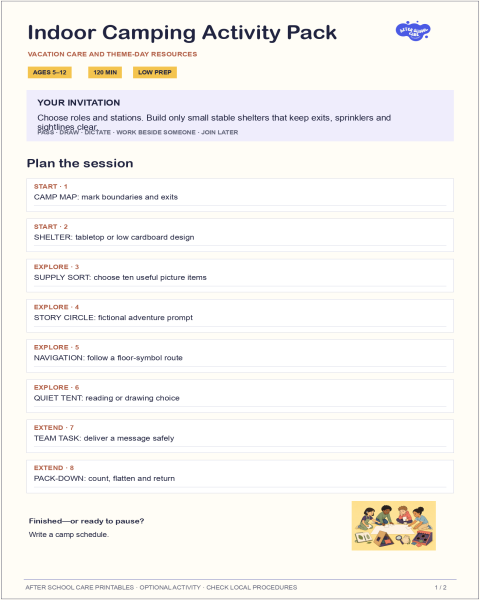
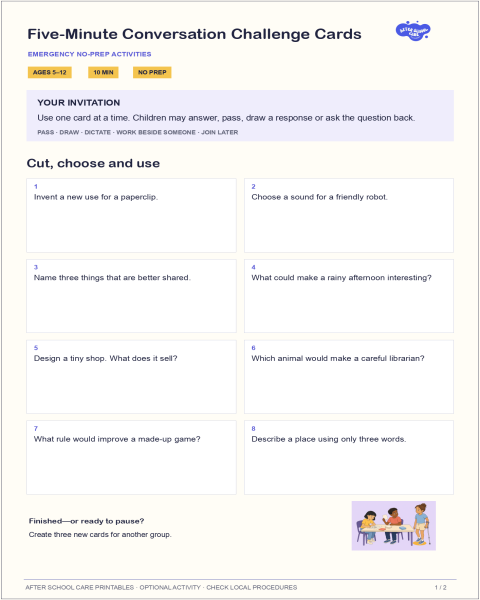
Preview both printable pages
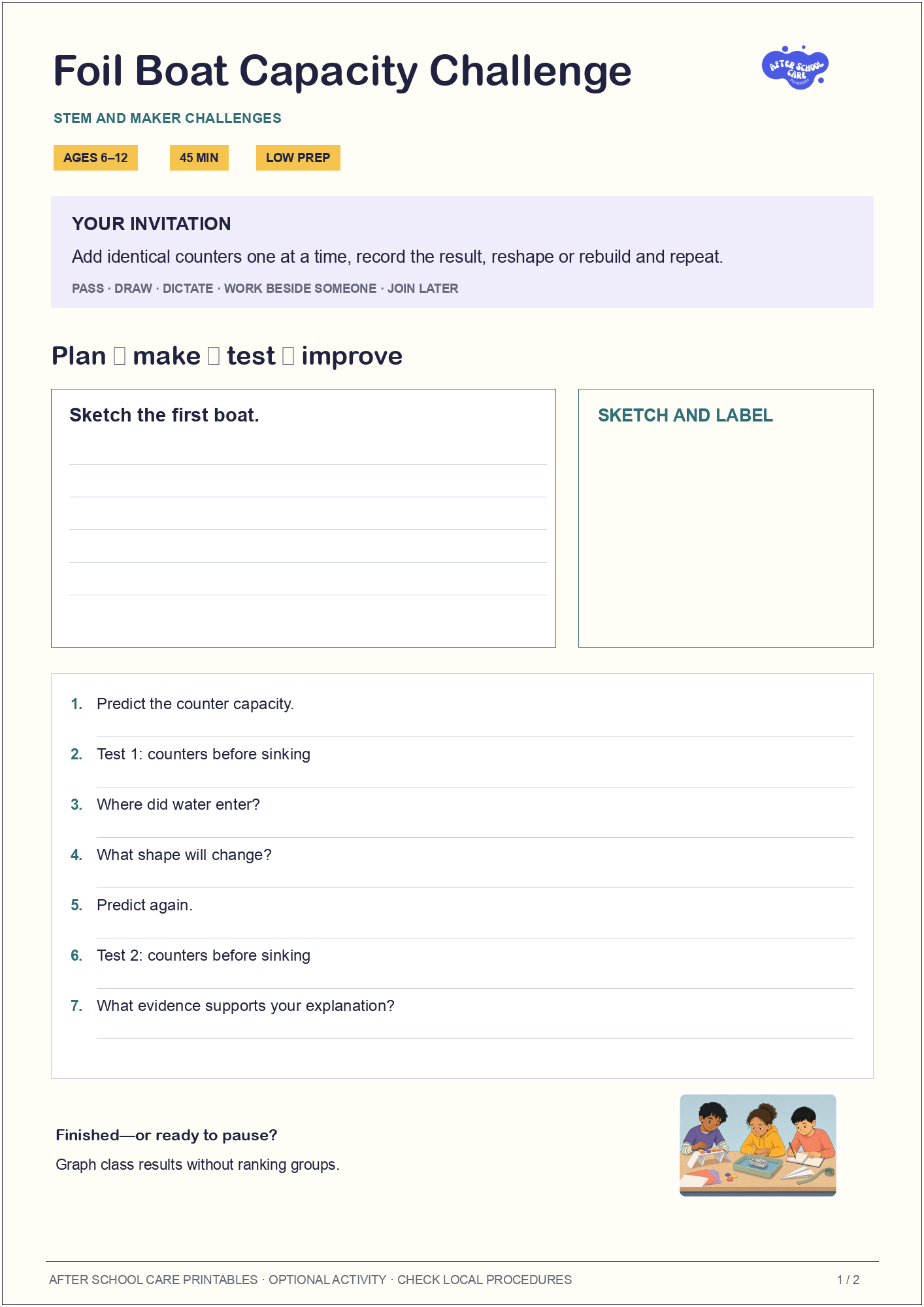
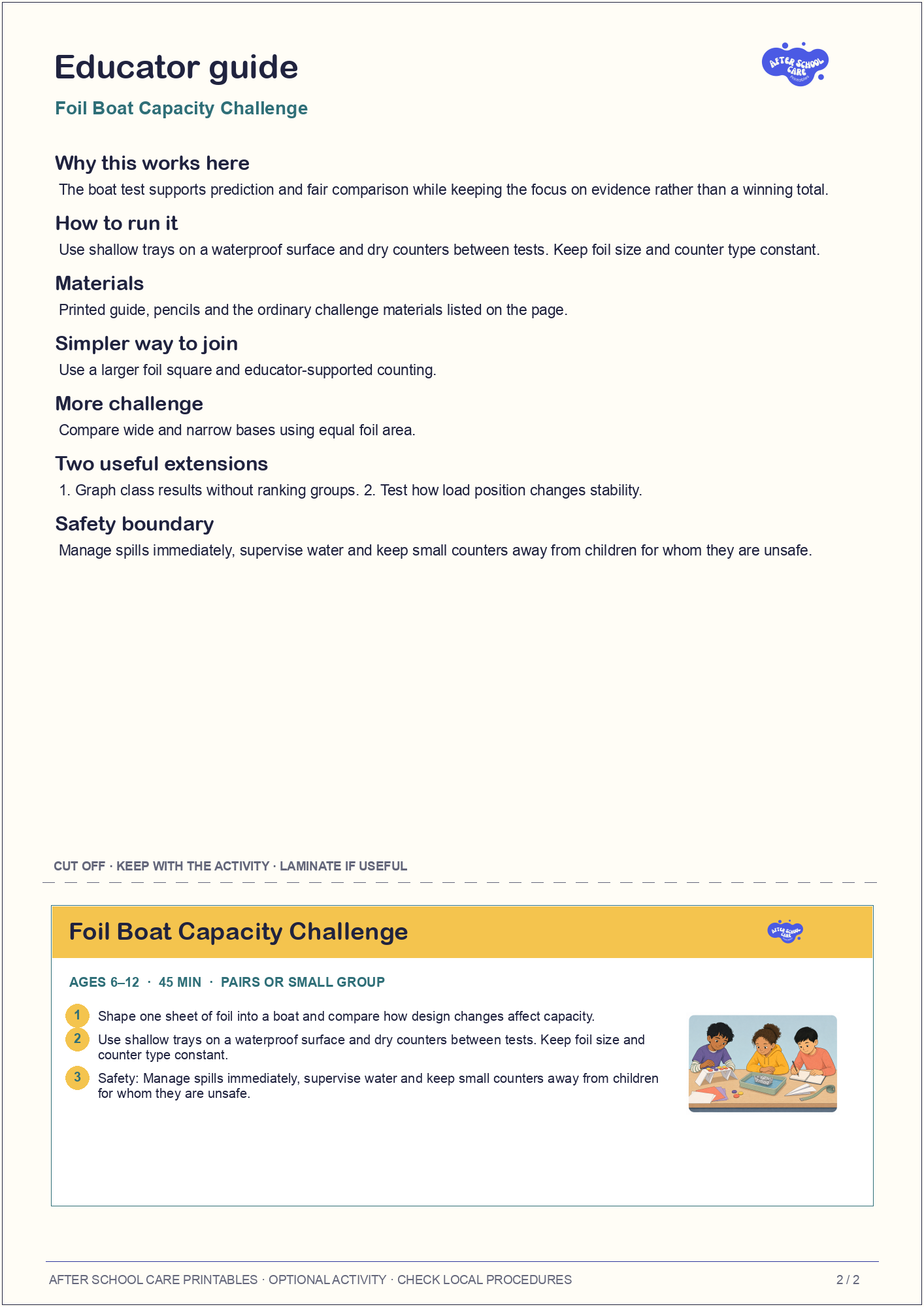
Download 2-page practical printableCheck the preview, printing notes and licence before use.
When this resource is useful
The boat test supports prediction and fair comparison while keeping the focus on evidence rather than a winning total.
What children do
Add identical counters one at a time, record the result, reshape or rebuild and repeat.
Materials and preparation
Materials: Printed guide, pencils and the ordinary challenge materials listed on the page.
Allow about 10 minutes to print and place the resource. The activity itself usually takes 45 minutes and can pause when the group needs to transition.
Run the activity
Use shallow trays on a waterproof surface and dry counters between tests. Keep foil size and counter type constant.
The child-facing prompts are:
- Sketch the first boat.
- Predict the counter capacity.
- Test 1: counters before sinking
- Where did water enter?
- What shape will change?
- Predict again.
- Test 2: counters before sinking
- What evidence supports your explanation?
Adapt participation
Simpler way to join: Use a larger foil square and educator-supported counting.
More challenge: Compare wide and narrow bases using equal foil area.
Children may draw, dictate, point, work beside a peer, observe or join later. Use the planning and sketch spaces first, then record each test or change in the numbered spaces. A partner can write down an explanation.
Extend the idea
- Graph class results without ranking groups.
- Test how load position changes stability.
Safety and privacy
Manage spills immediately, supervise water and keep small counters away from children for whom they are unsafe.
Learning opportunities
Look for planning, testing, evidence, measurement and design revision. Record what children choose, explain, test or revise rather than treating completion as proof of learning.
Checking an open-ended response
There is no single required answer. A useful response follows the printed condition and can be explained, demonstrated or revised by the child.
Printing notes
Print at actual size on A4 paper. Page one is child-facing. Page two contains educator guidance and a dashed cut-off reference card that can be kept with the activity or laminated.