Resource
Five-Senses Noticing Page
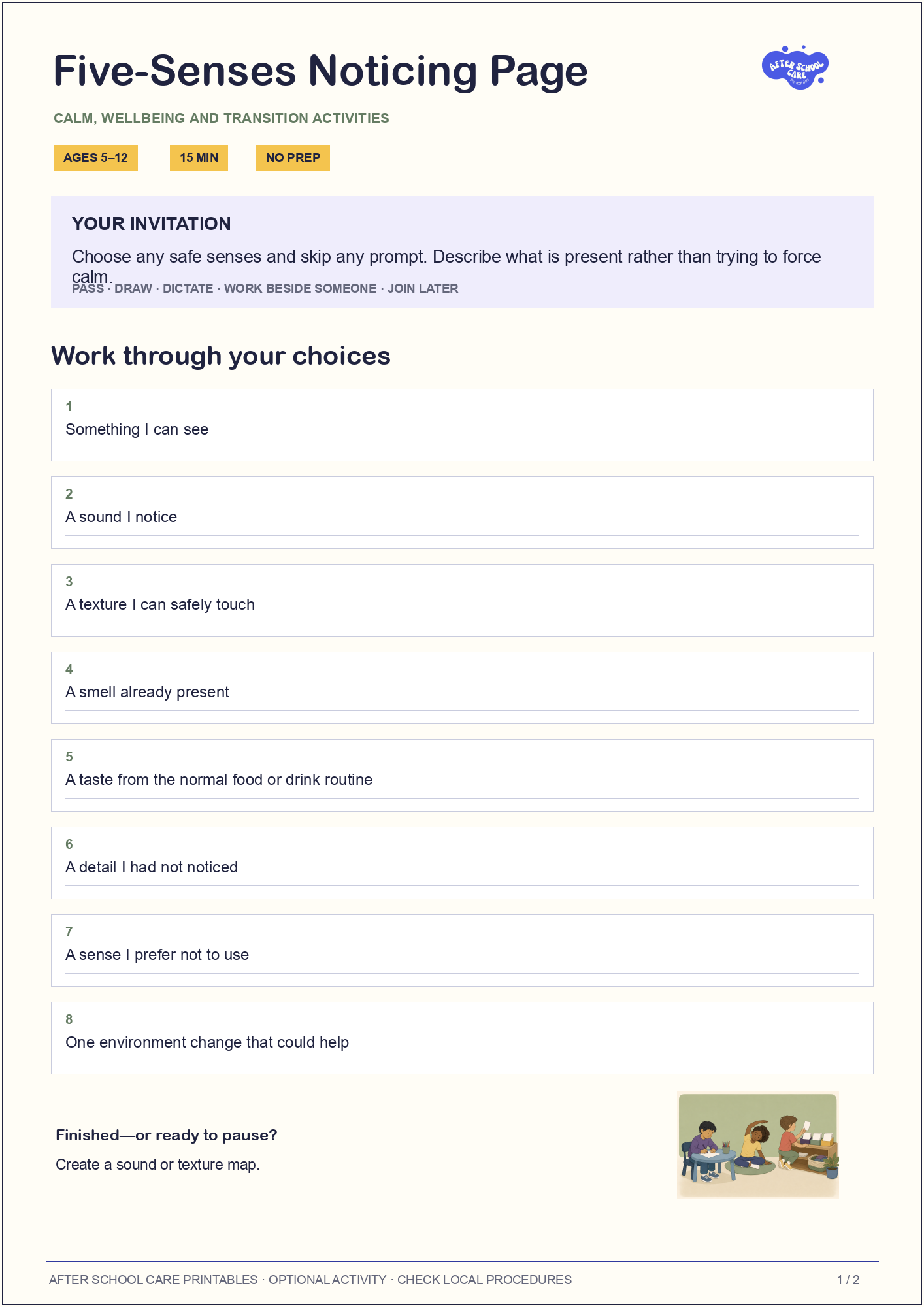
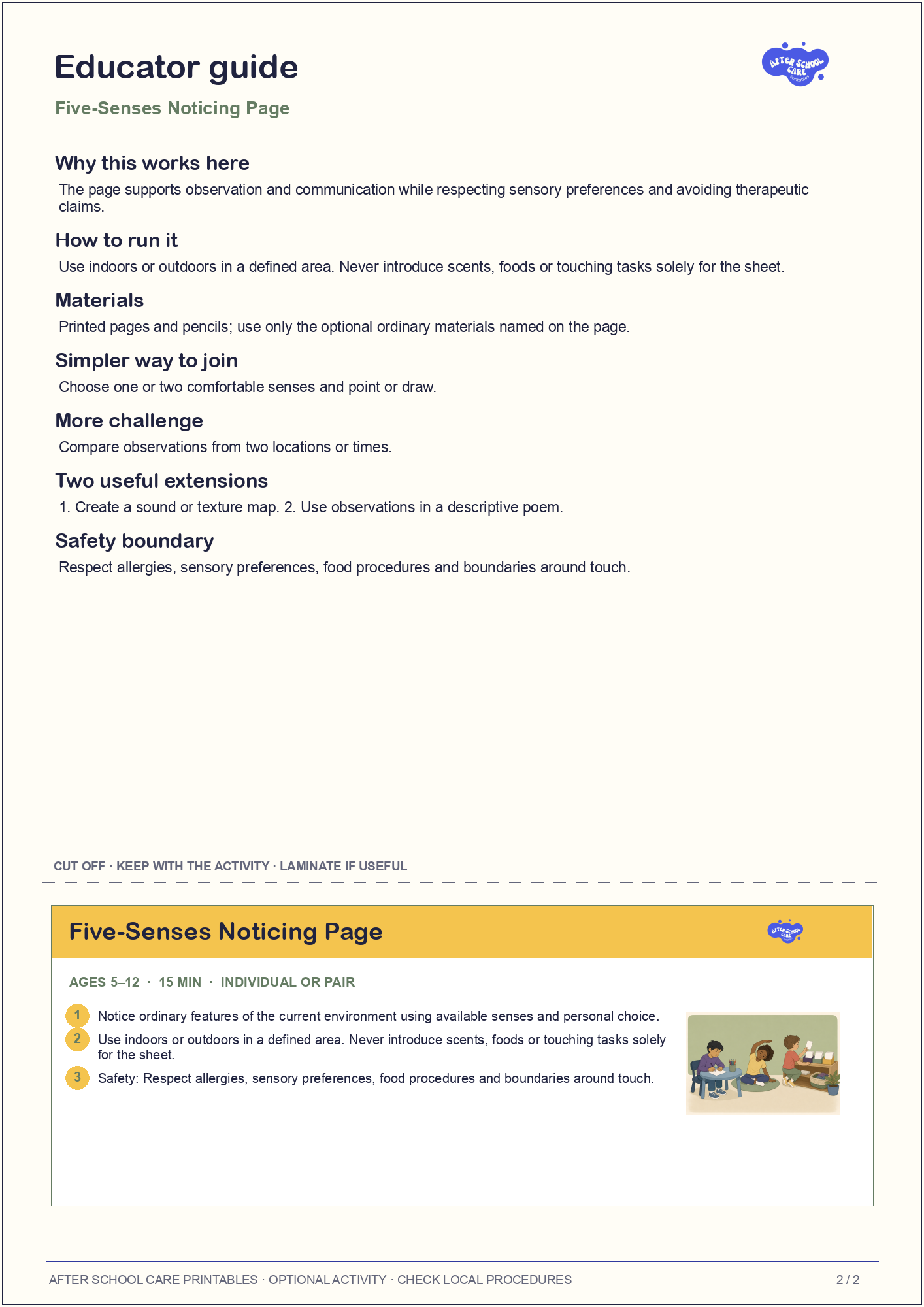
Notice ordinary features of the current environment using available senses and personal choice. Includes a two-page A4 printable, specific educator guidance, adaptations and a cut-off quick-reference card.
Ready for a real OSHC session
Preview both printable pages
Download 2-page practical printableCheck the preview, printing notes and licence before use.
When this resource is useful
The page supports observation and communication while respecting sensory preferences and avoiding therapeutic claims.
What children do
Choose any safe senses and skip any prompt. Describe what is present rather than trying to force calm.
Materials and preparation
Materials: Printed pages and pencils; use only the optional ordinary materials named on the page.
Allow about 2 minutes to print and place the resource. The activity itself usually takes 15 minutes and can pause when the group needs to transition.
Run the activity
Use indoors or outdoors in a defined area. Never introduce scents, foods or touching tasks solely for the sheet.
The child-facing prompts are:
- Something I can see
- A sound I notice
- A texture I can safely touch
- A smell already present
- A taste from the normal food or drink routine
- A detail I had not noticed
- A sense I prefer not to use
- One environment change that could help
Adapt participation
Simpler way to join: Choose one or two comfortable senses and point or draw.
More challenge: Compare observations from two locations or times.
Children may draw, dictate, point, work beside a peer, observe or join later. Start, Explore and Extend labels describe task routes, not children.
Extend the idea
- Create a sound or texture map.
- Use observations in a descriptive poem.
Safety and privacy
Respect allergies, sensory preferences, food procedures and boundaries around touch.
Learning opportunities
Look for agency, communication, environmental awareness and help-seeking choices. Record what children choose, explain, test or revise rather than treating completion as proof of learning.
Checking an open-ended response
There is no single required answer. A useful response follows the printed condition and can be explained, demonstrated or revised by the child.
Printing notes
Print at actual size on A4 paper. Page one is child-facing. Page two contains educator guidance and a dashed cut-off reference card that can be kept with the activity or laminated.