Resource
Finish-the-Picture Mystery Scenes
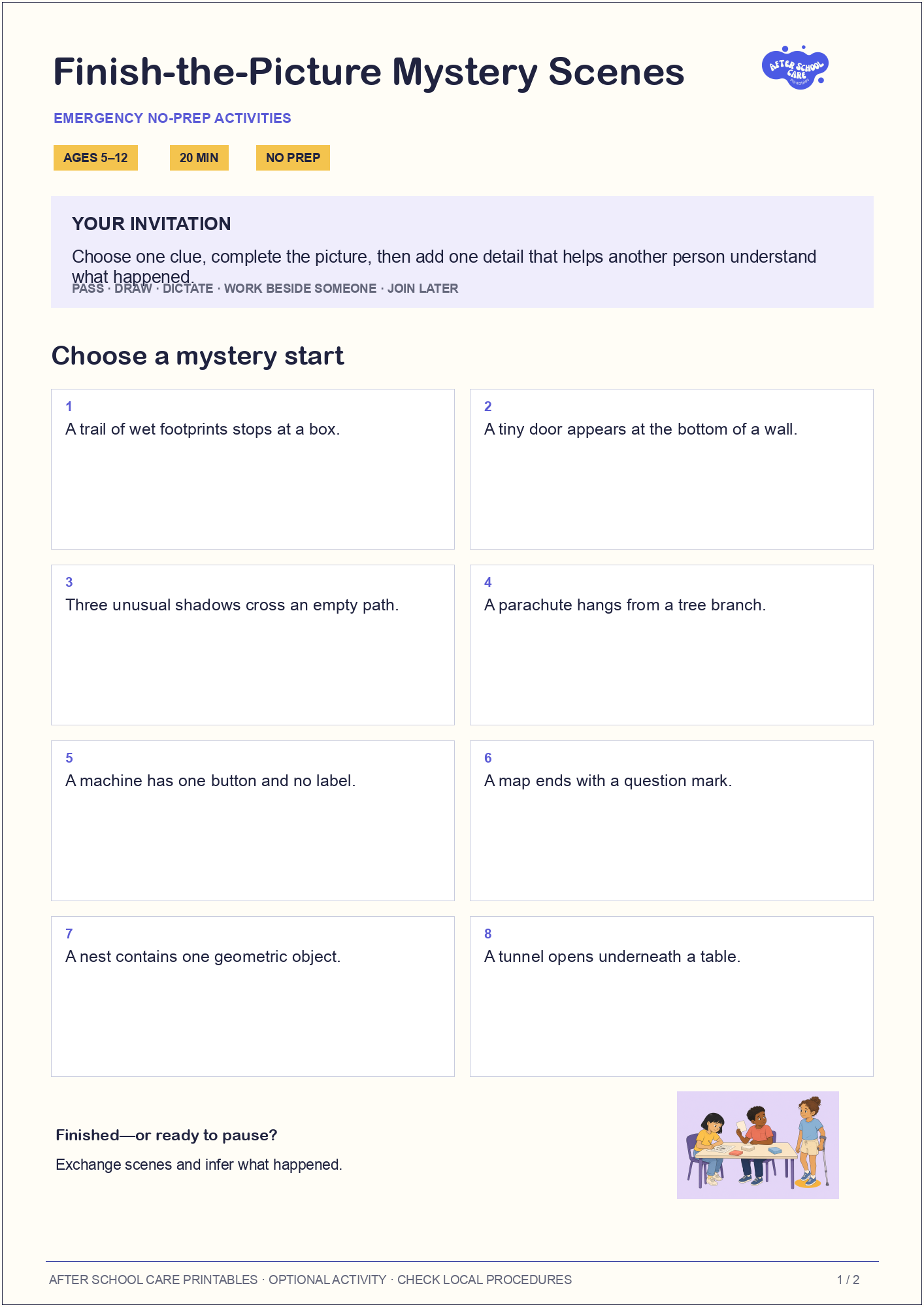
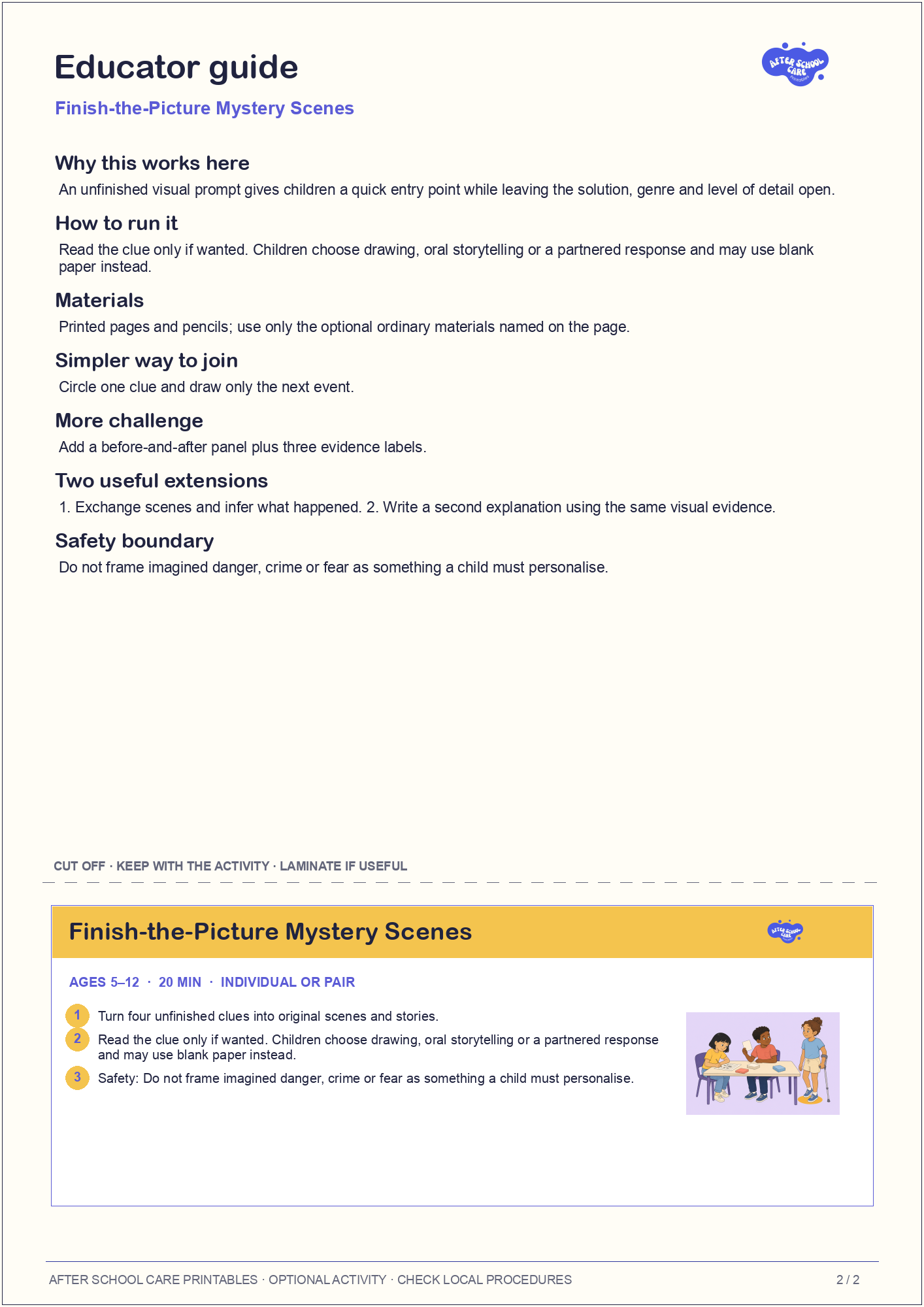
Turn four unfinished clues into original scenes and stories. Includes a two-page A4 printable, specific educator guidance, adaptations and a cut-off quick-reference card.
Ready for a real OSHC session
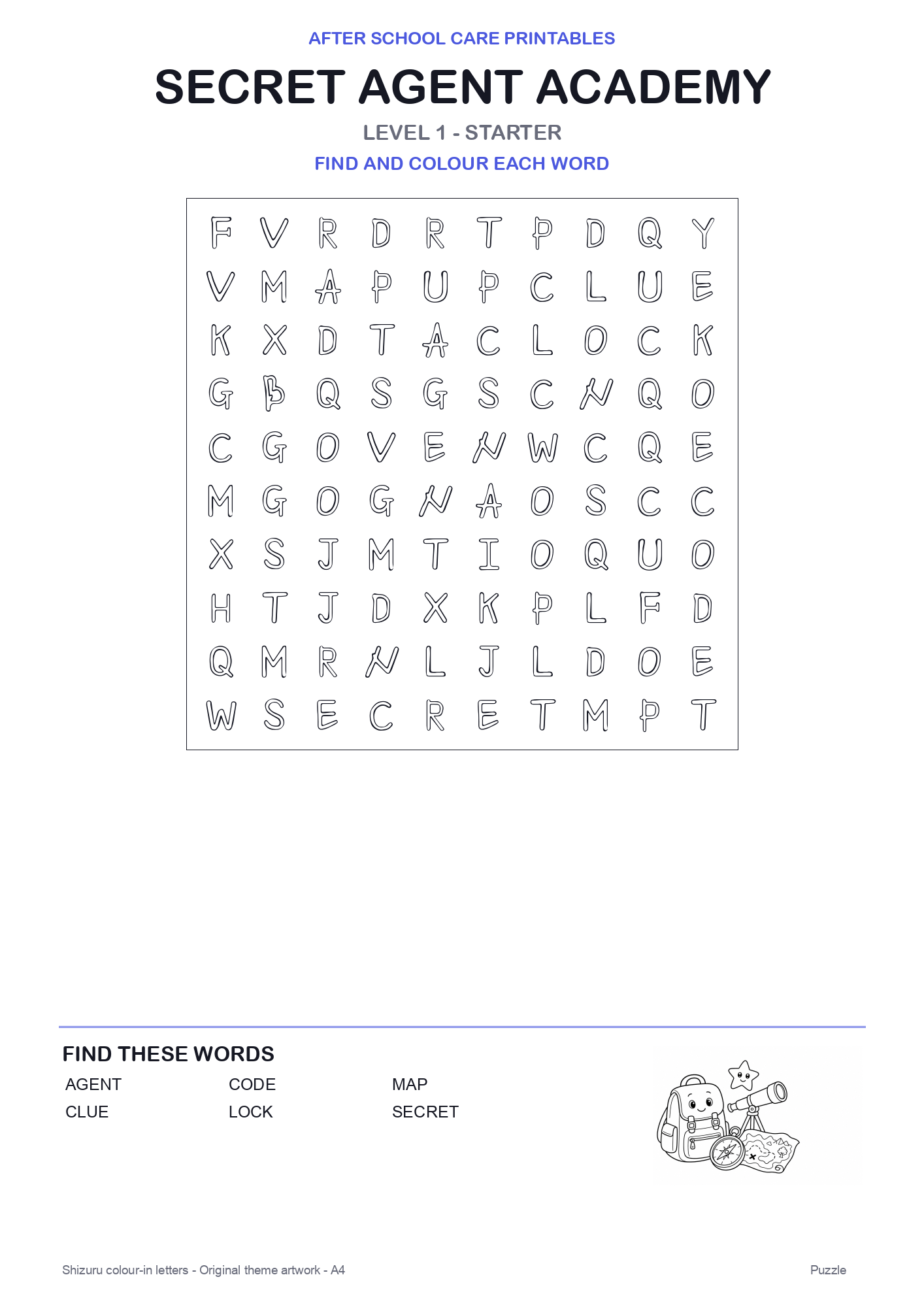
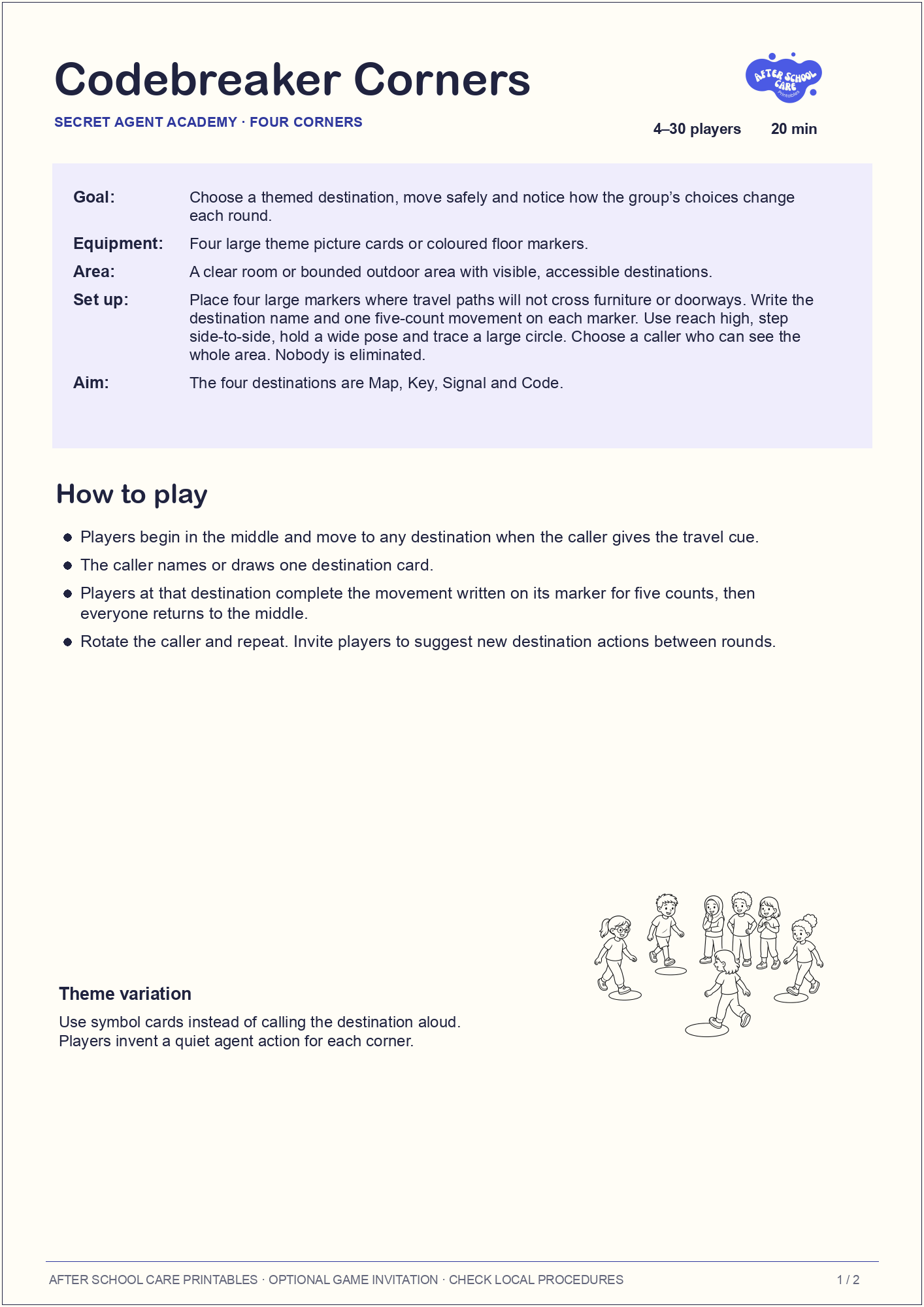
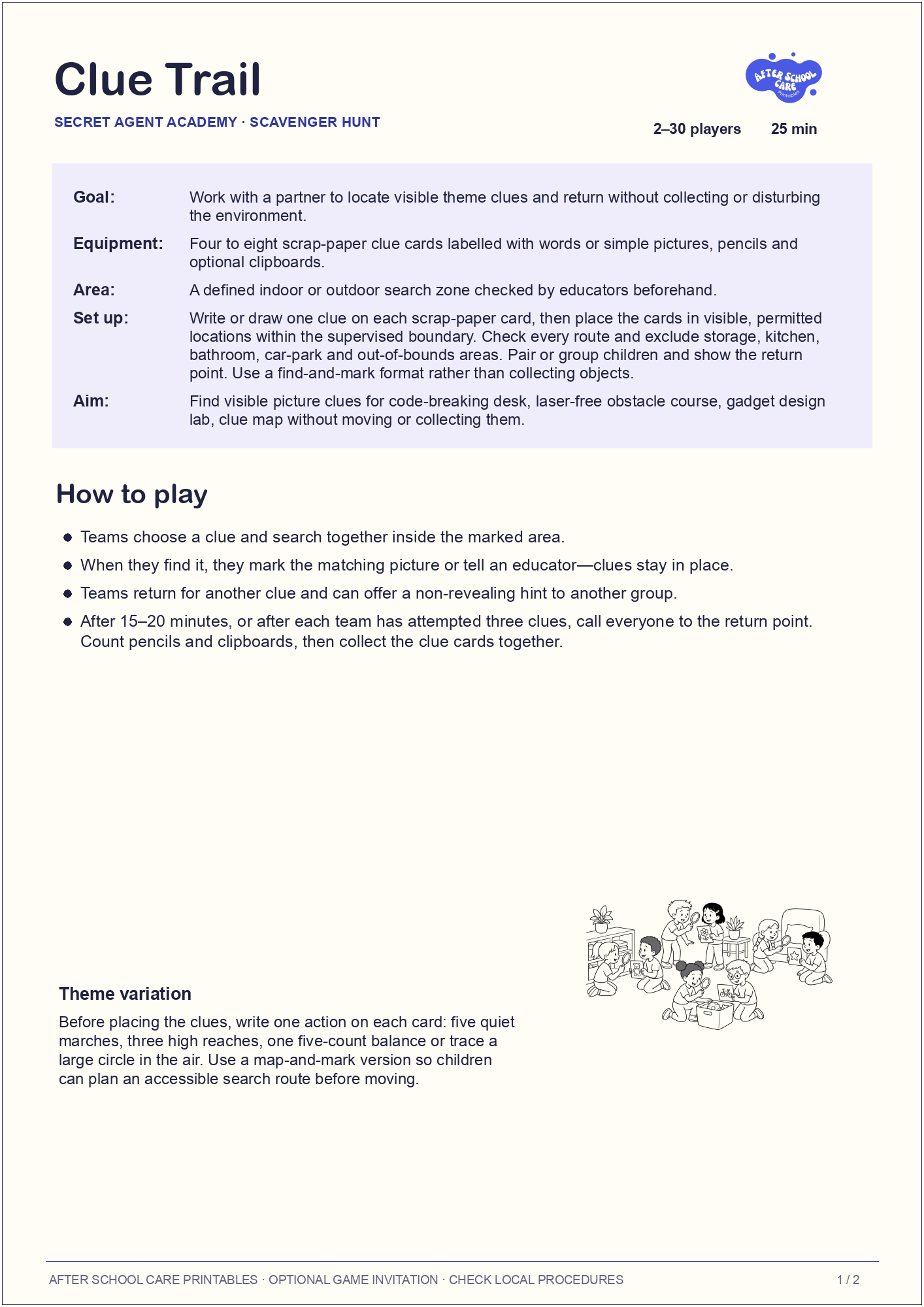
Preview both printable pages
Download 2-page practical printableCheck the preview, printing notes and licence before use.
When this resource is useful
An unfinished visual prompt gives children a quick entry point while leaving the solution, genre and level of detail open.
What children do
Choose one clue, complete the picture, then add one detail that helps another person understand what happened.
Materials and preparation
Materials: Printed pages and pencils; use only the optional ordinary materials named on the page.
Allow about 2 minutes to print and place the resource. The activity itself usually takes 20 minutes and can pause when the group needs to transition.
Run the activity
Read the clue only if wanted. Children choose drawing, oral storytelling or a partnered response and may use blank paper instead.
The child-facing prompts are:
- A trail of wet footprints stops at a box.
- A tiny door appears at the bottom of a wall.
- Three unusual shadows cross an empty path.
- A parachute hangs from a tree branch.
- A machine has one button and no label.
- A map ends with a question mark.
- A nest contains one geometric object.
- A tunnel opens underneath a table.
Adapt participation
Simpler way to join: Circle one clue and draw only the next event.
More challenge: Add a before-and-after panel plus three evidence labels.
Children may draw, dictate, point, work beside a peer, observe or join later. Start, Explore and Extend labels describe task routes, not children.
Extend the idea
- Exchange scenes and infer what happened.
- Write a second explanation using the same visual evidence.
Safety and privacy
Do not frame imagined danger, crime or fear as something a child must personalise.
Learning opportunities
Look for choice, communication, creative thinking and independent engagement. Record what children choose, explain, test or revise rather than treating completion as proof of learning.
Checking an open-ended response
There is no single required answer. A useful response follows the printed condition and can be explained, demonstrated or revised by the child.
Printing notes
Print at actual size on A4 paper. Page one is child-facing. Page two contains educator guidance and a dashed cut-off reference card that can be kept with the activity or laminated.