
Complete themed day · ages 5–12
Puzzle Masters
Build a flexible Puzzle Masters day with quick table choices, a physical game and substantial projects children can shape, test and revisit.
A usable session order
A practical Puzzle Masters day
Use this as a menu, not a checklist. For a typical three-hour block, choose one arrival printable, one main activity and one physical game. Open the second major activity only when there is enough time, space, staffing and genuine interest.
- 1Settle in · 10–20 min
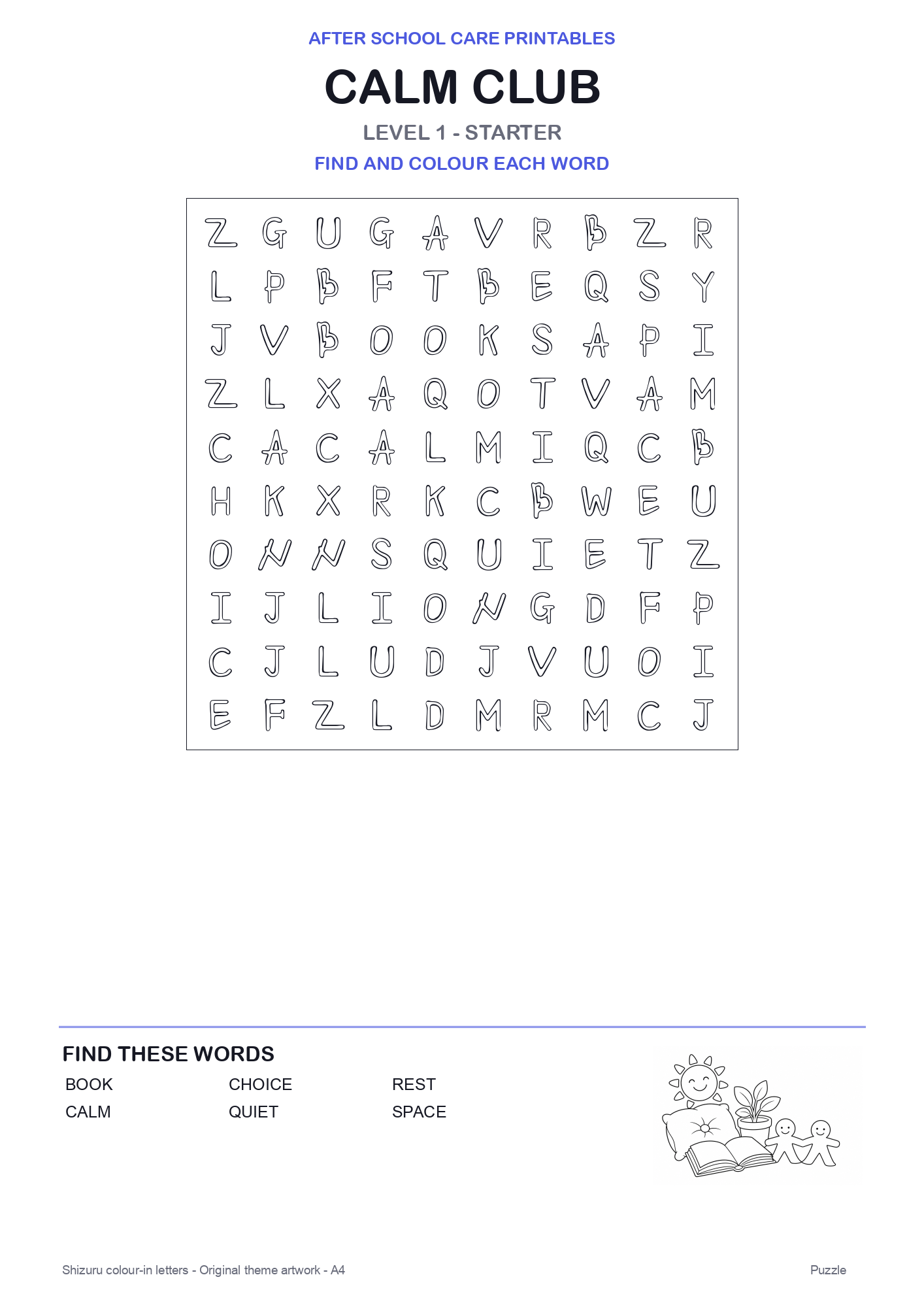
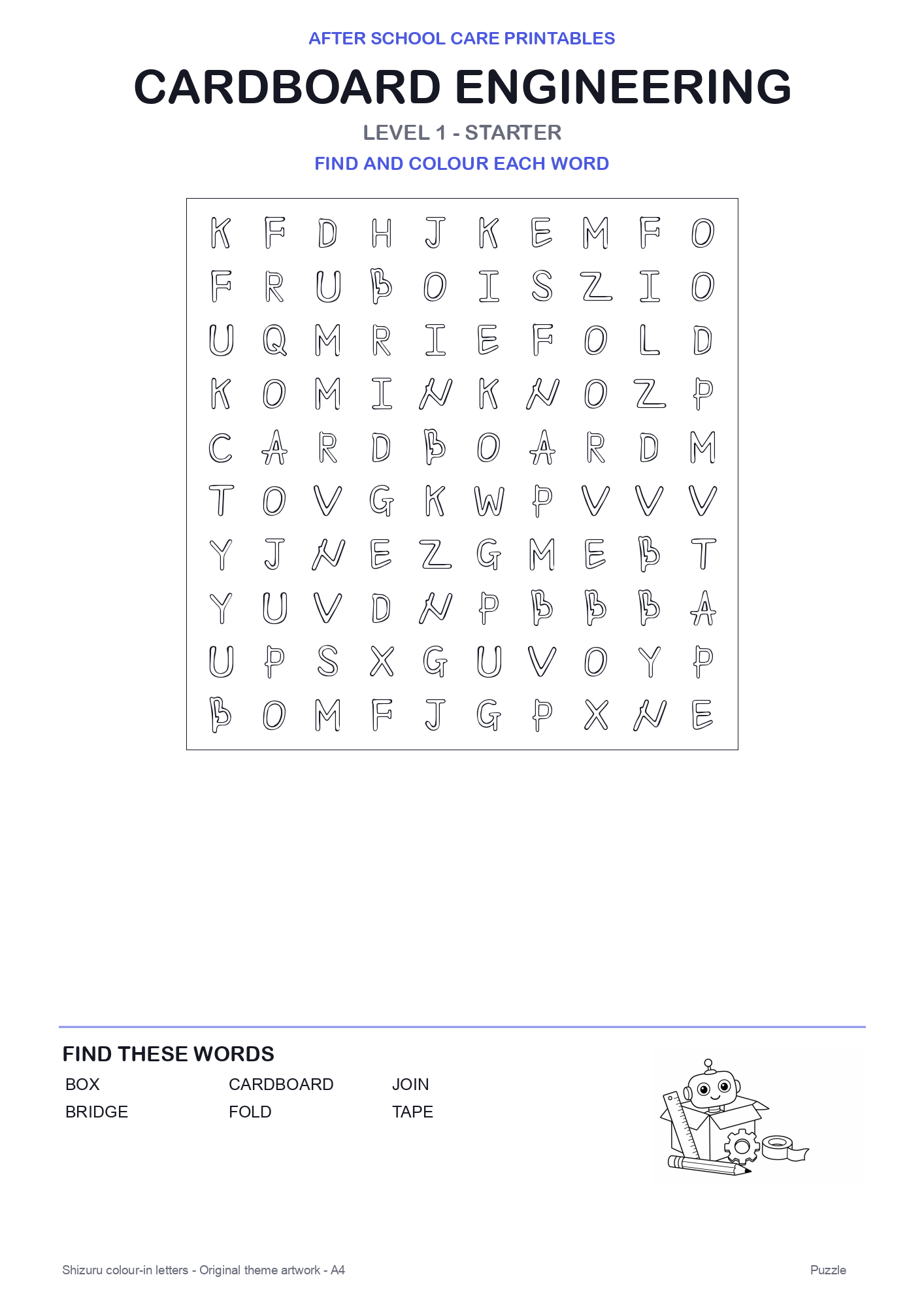
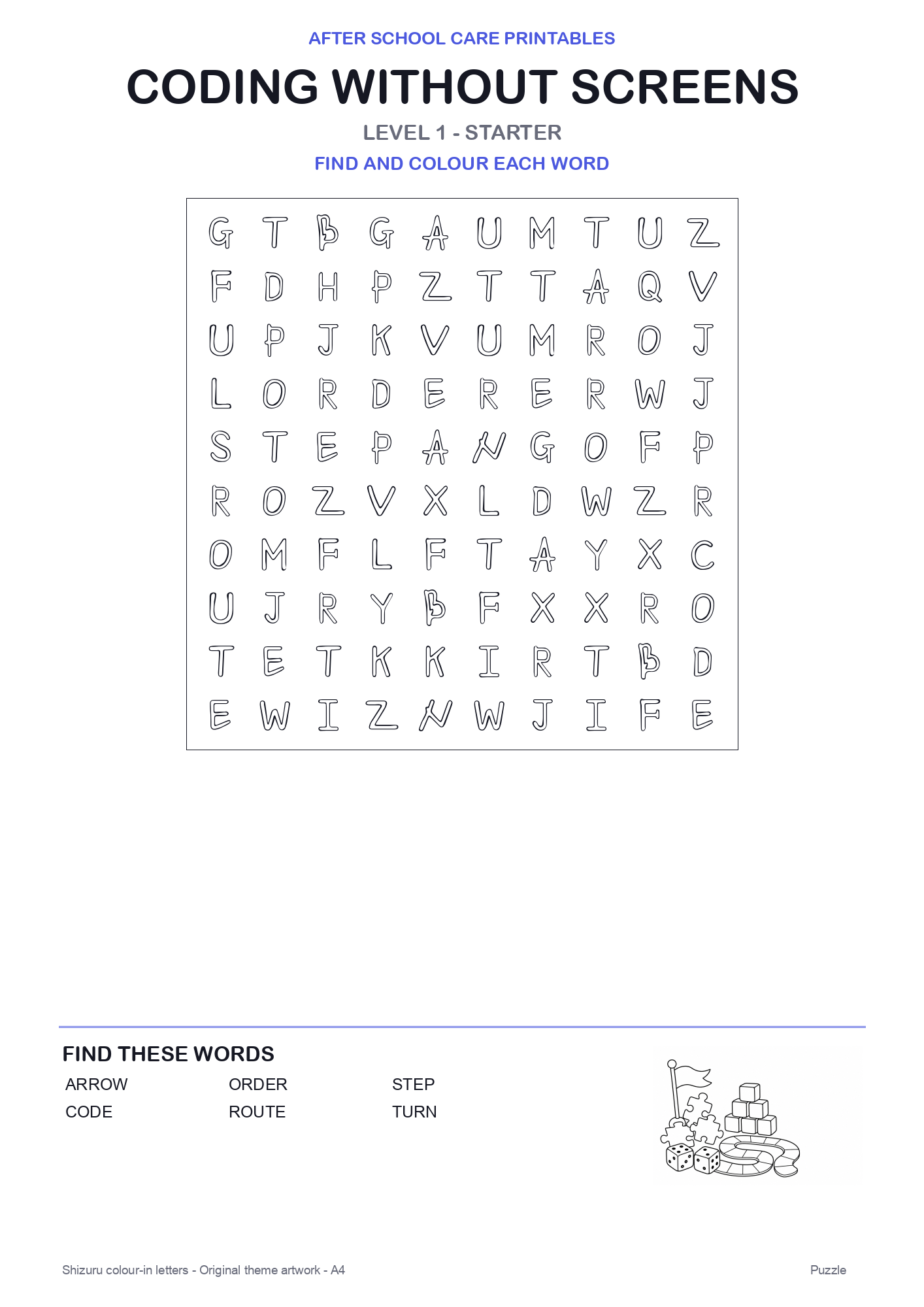
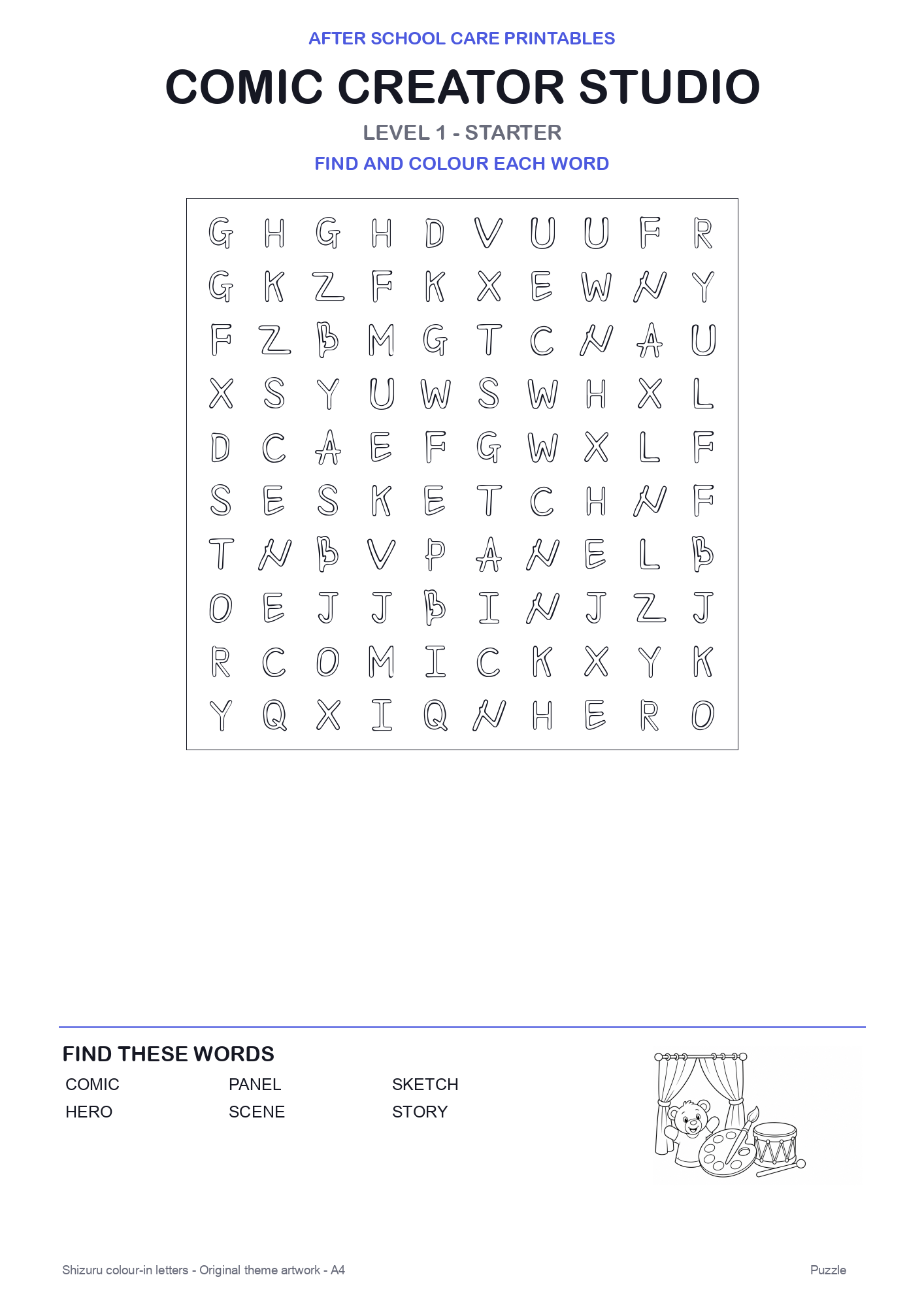
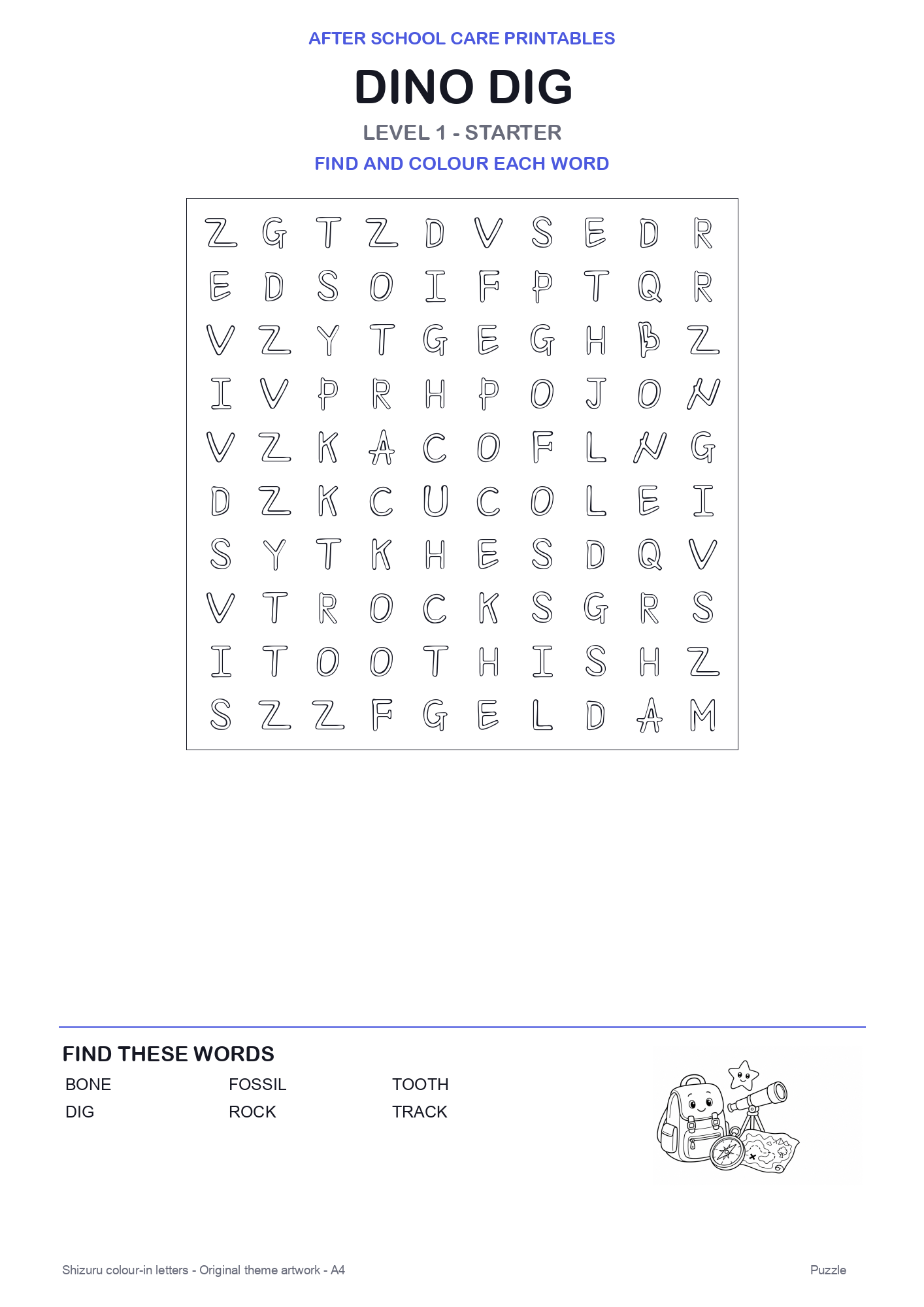
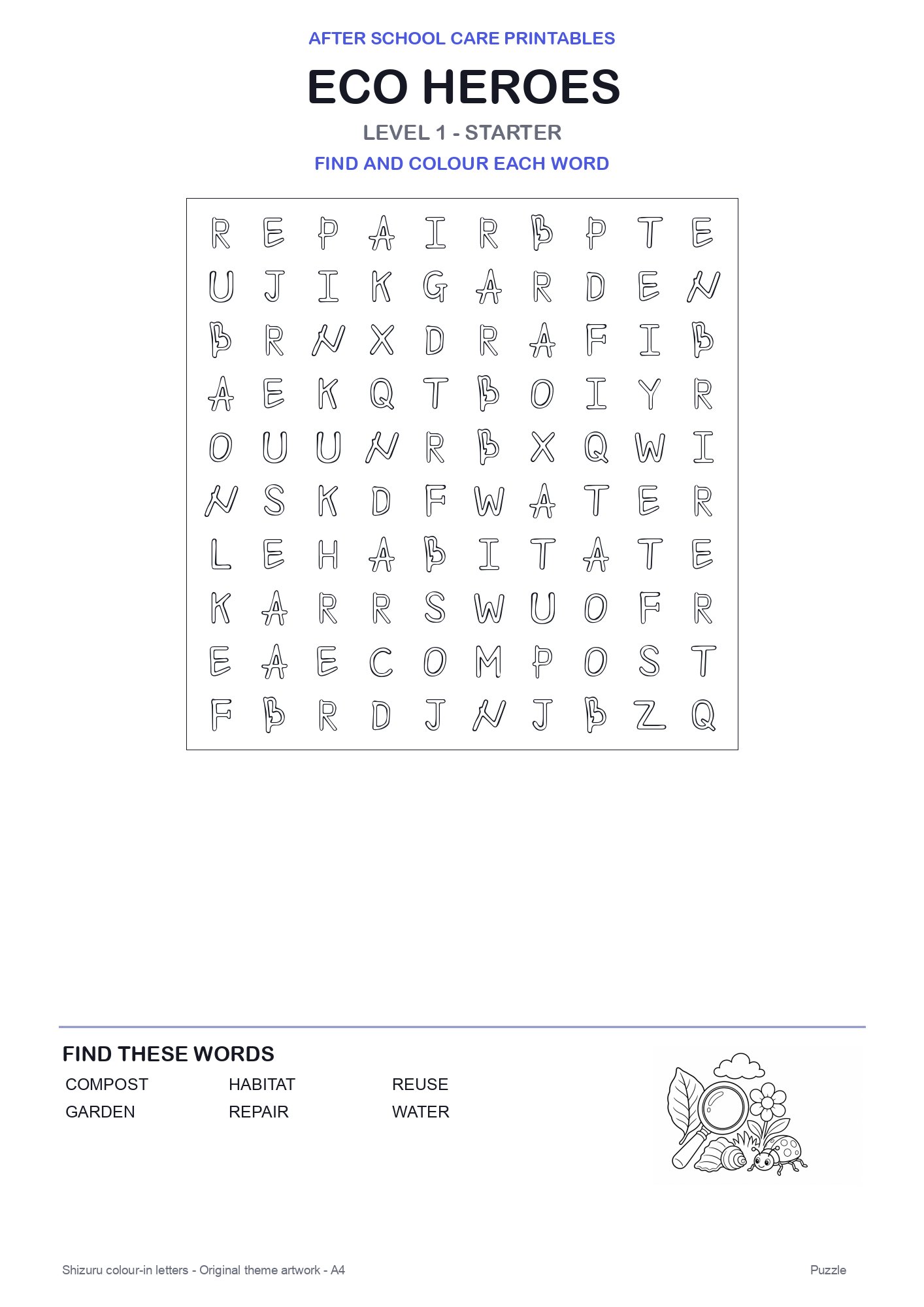
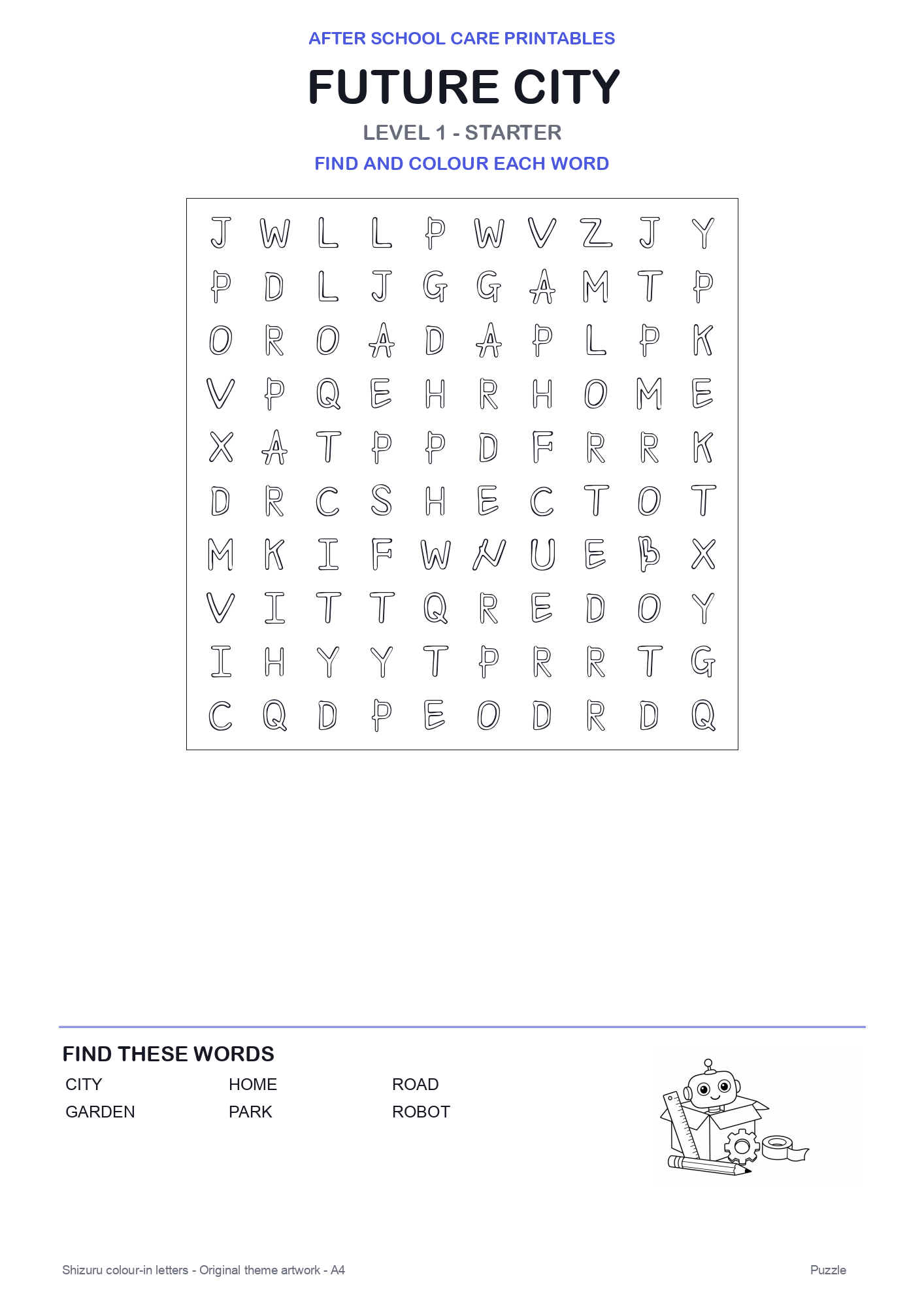
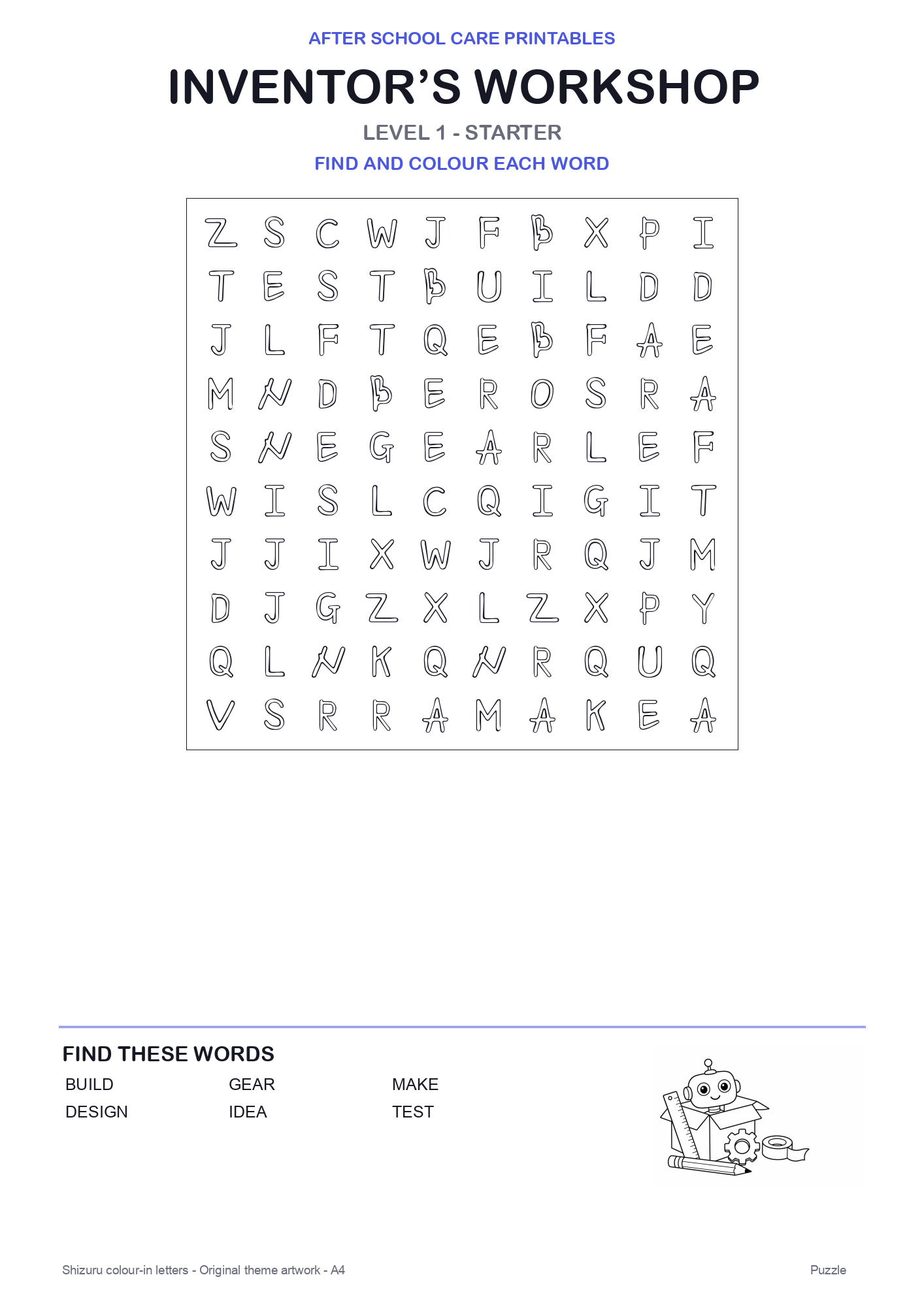
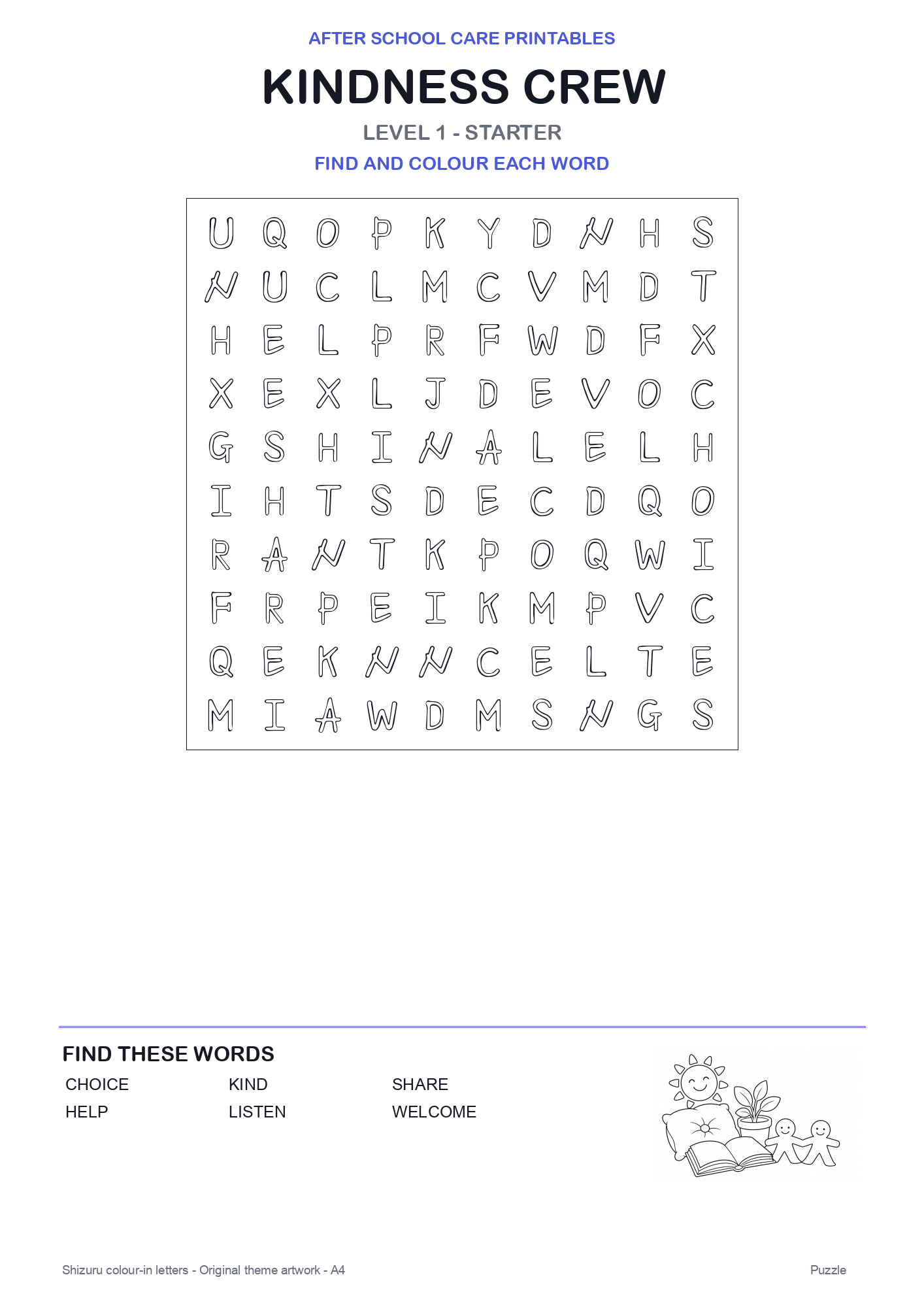
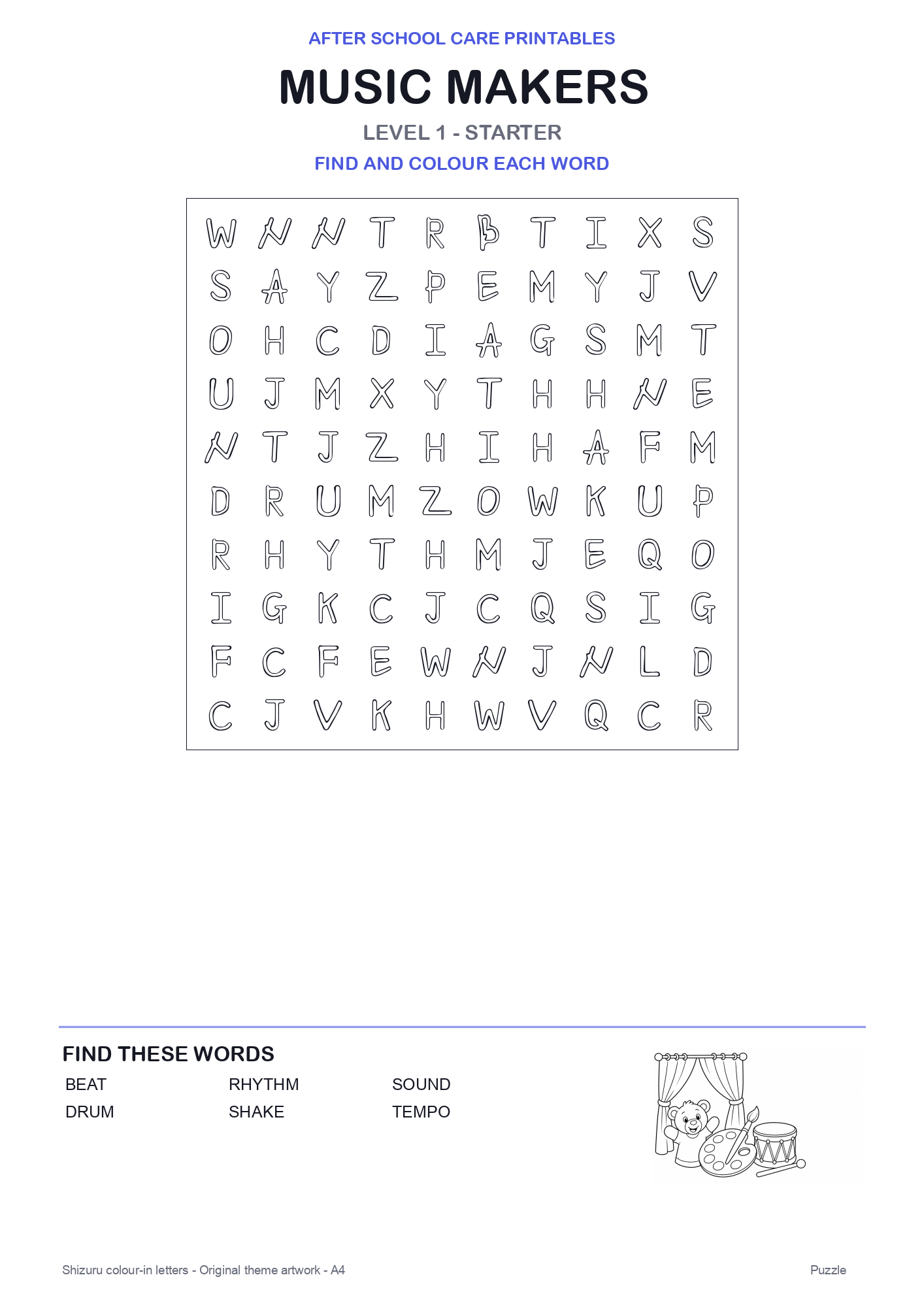
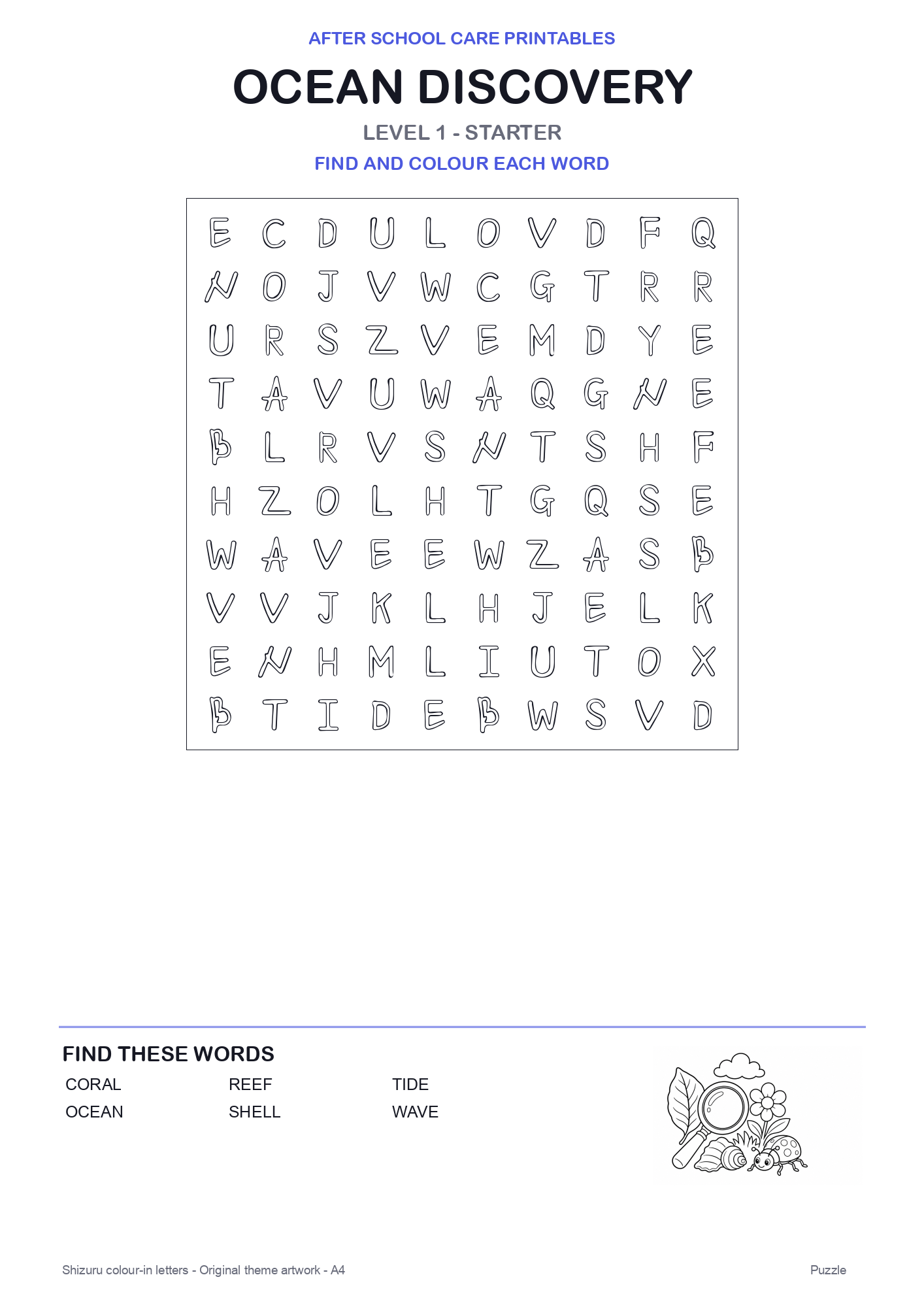
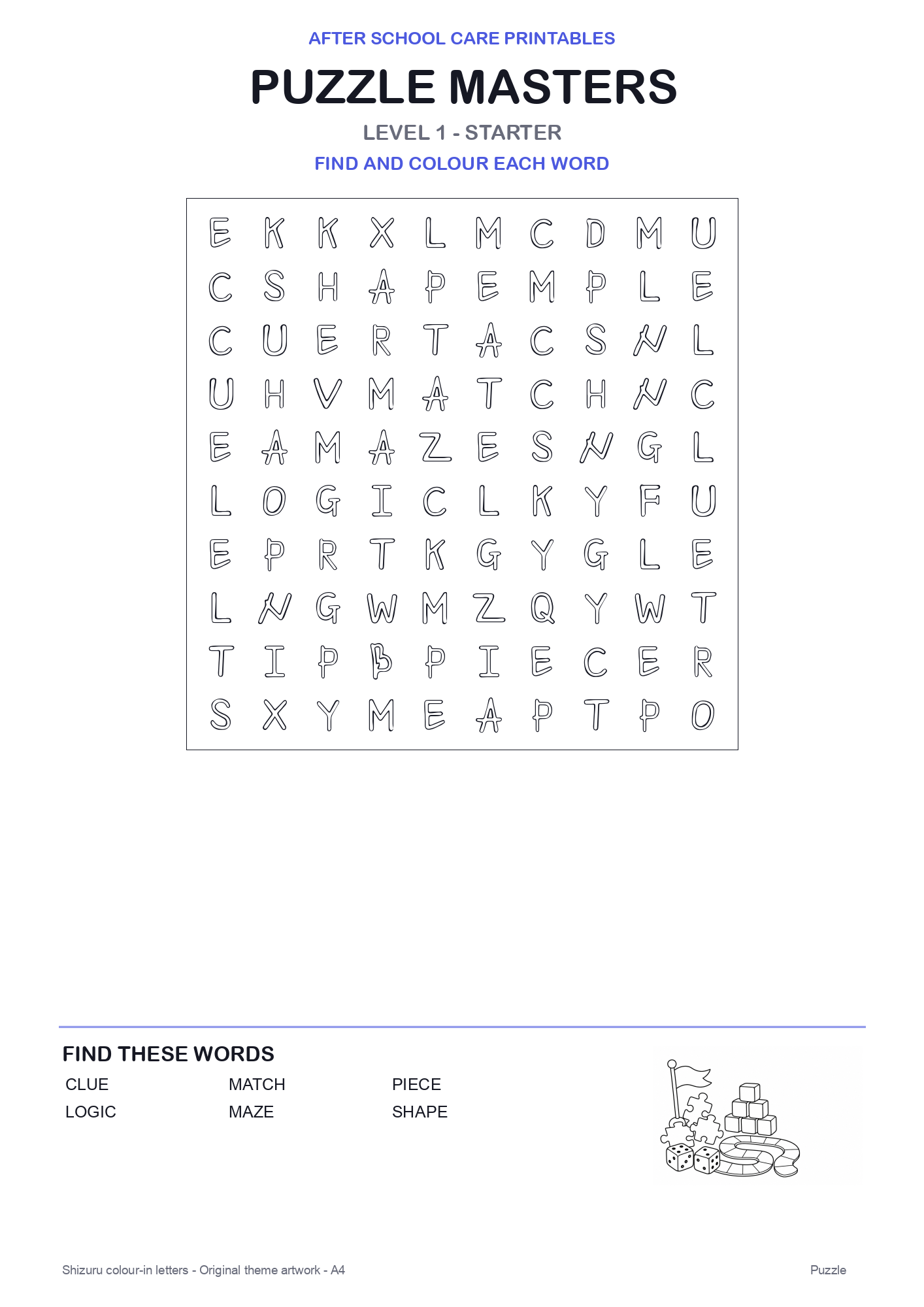
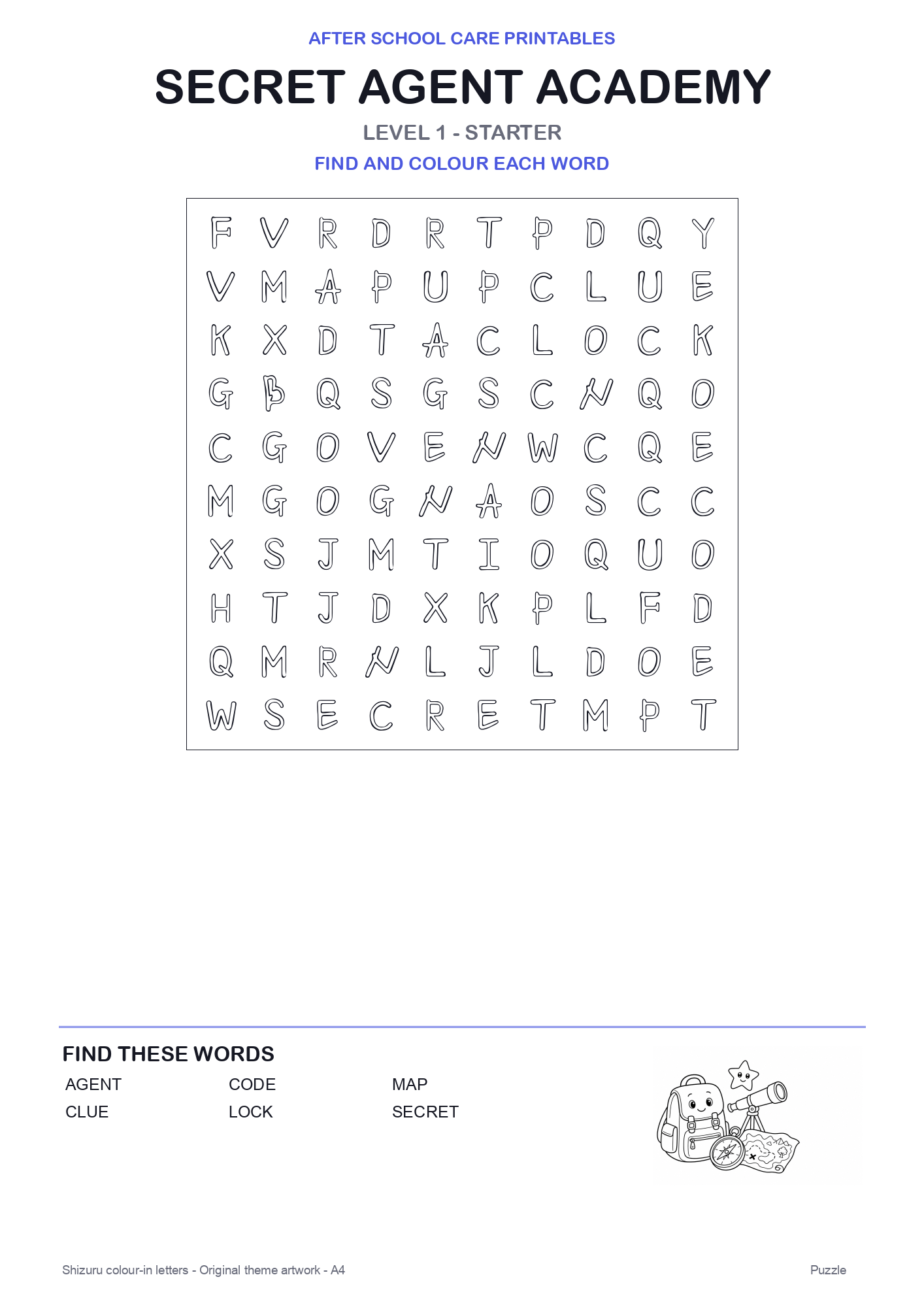
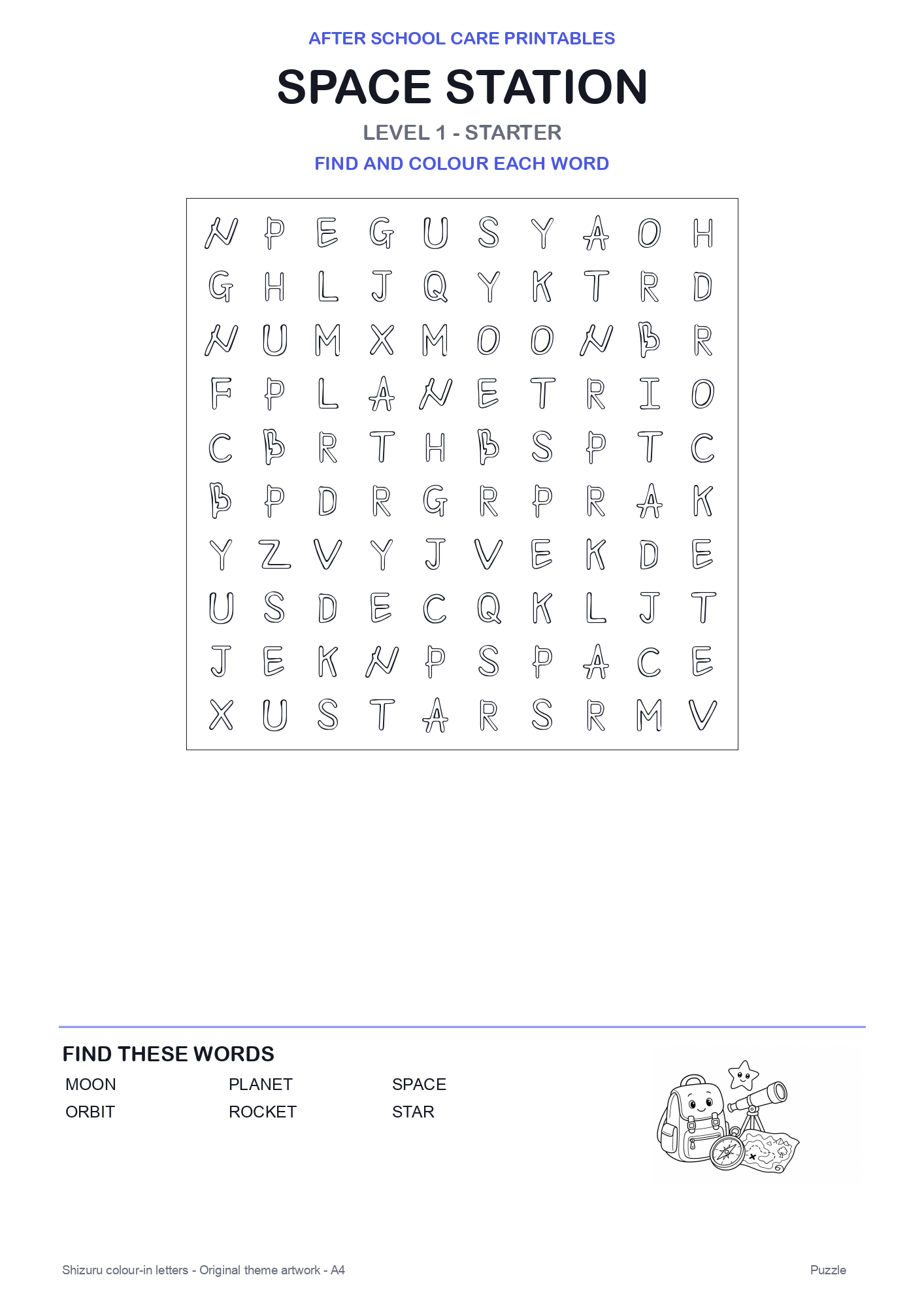
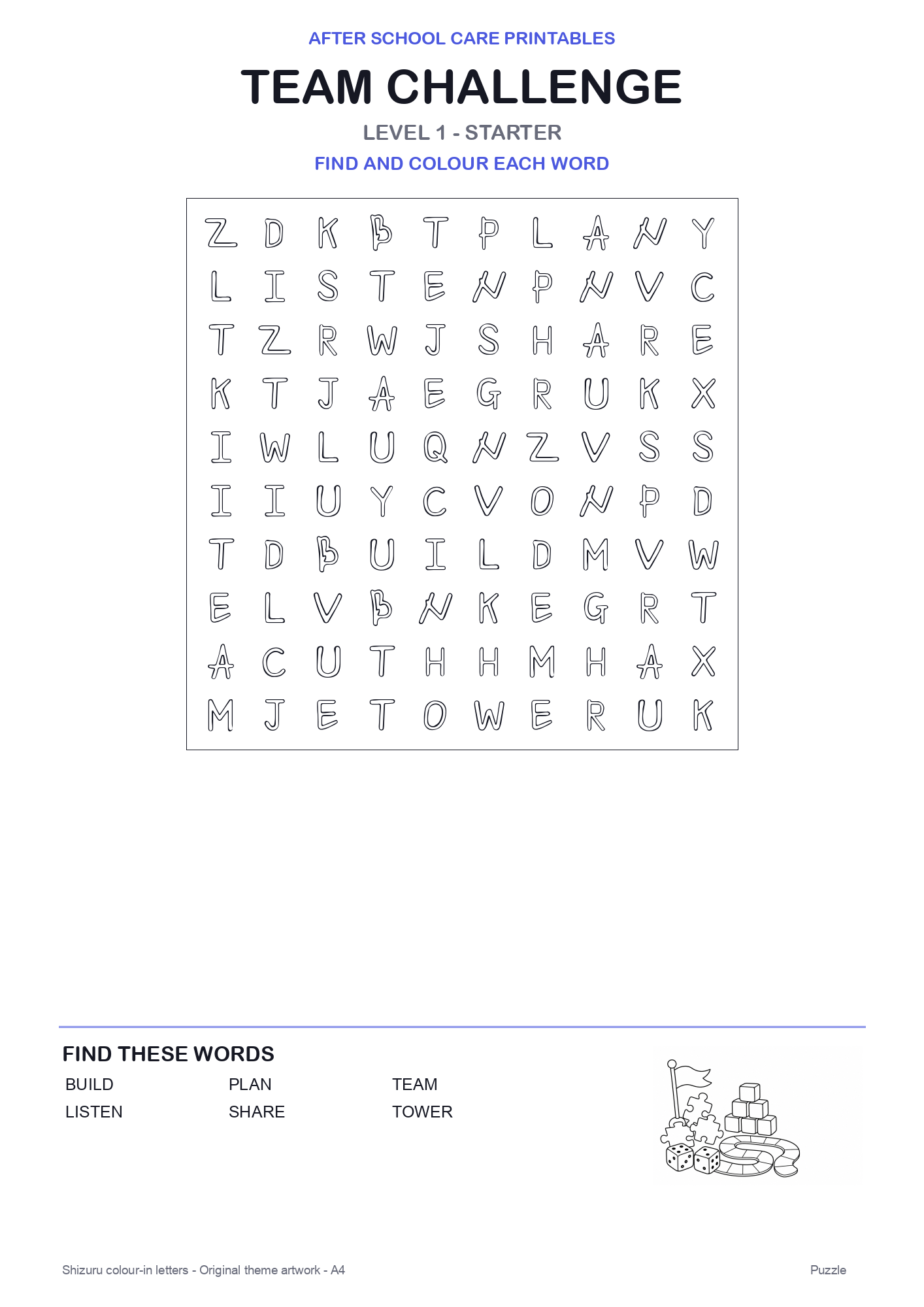
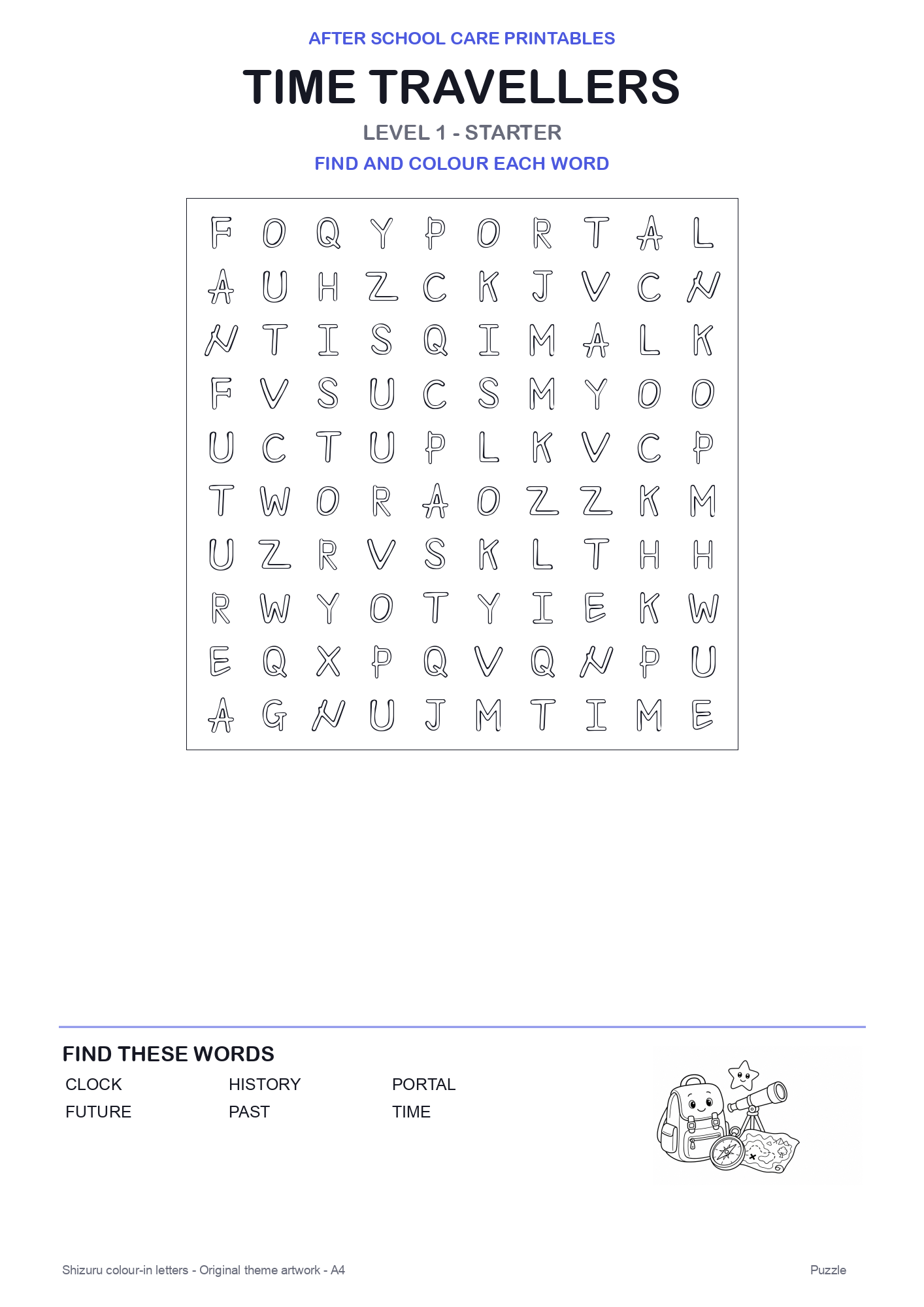
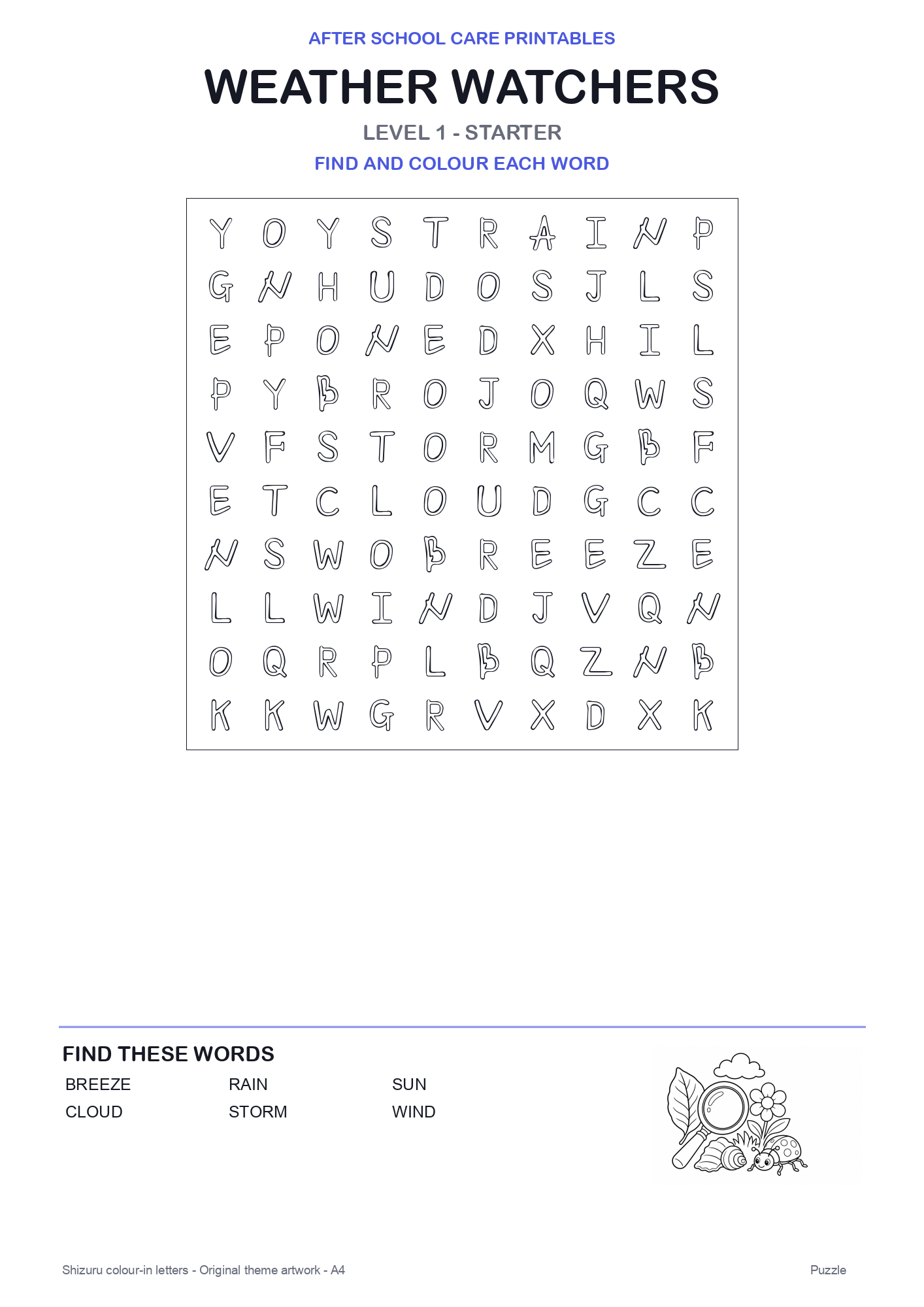
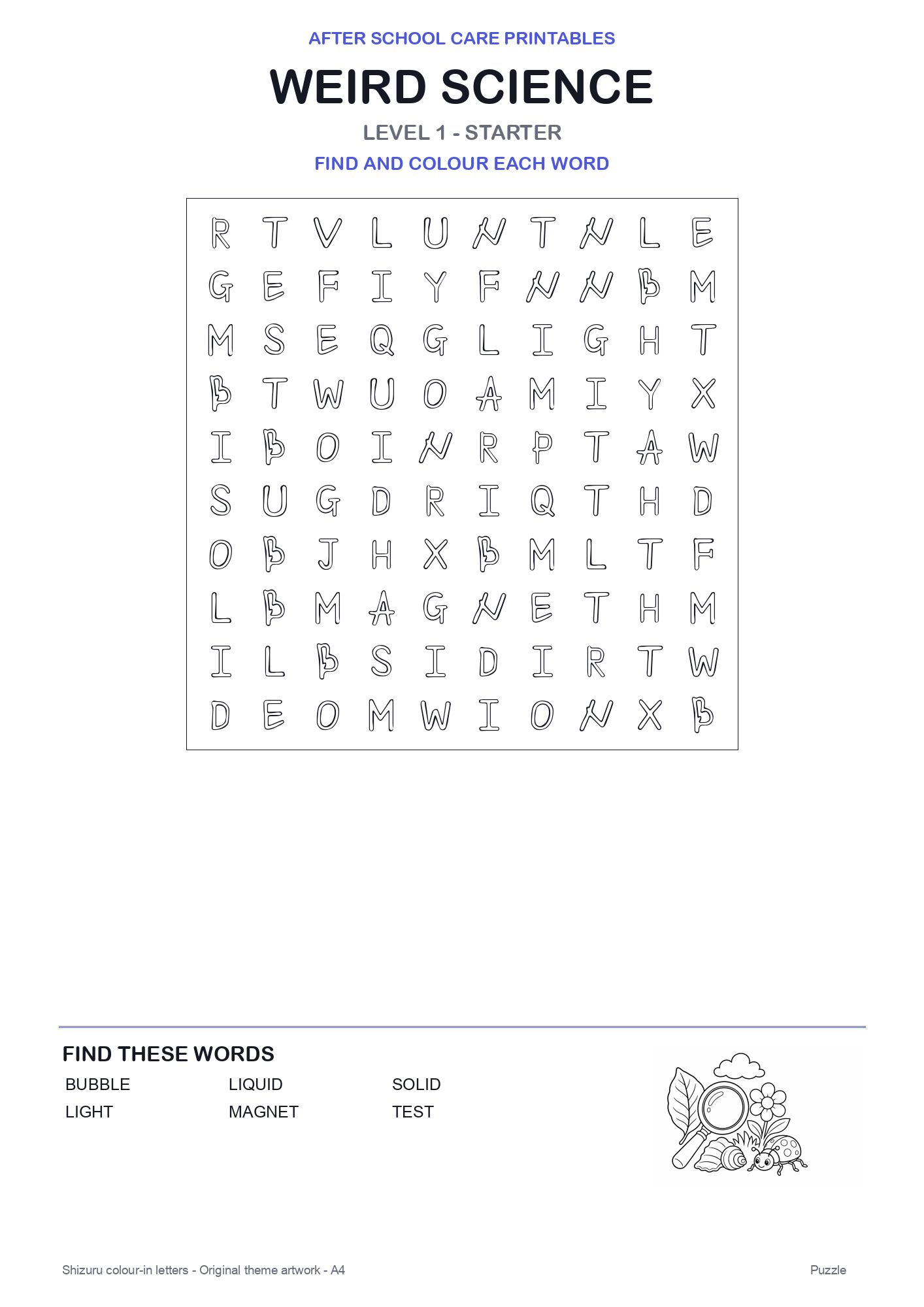
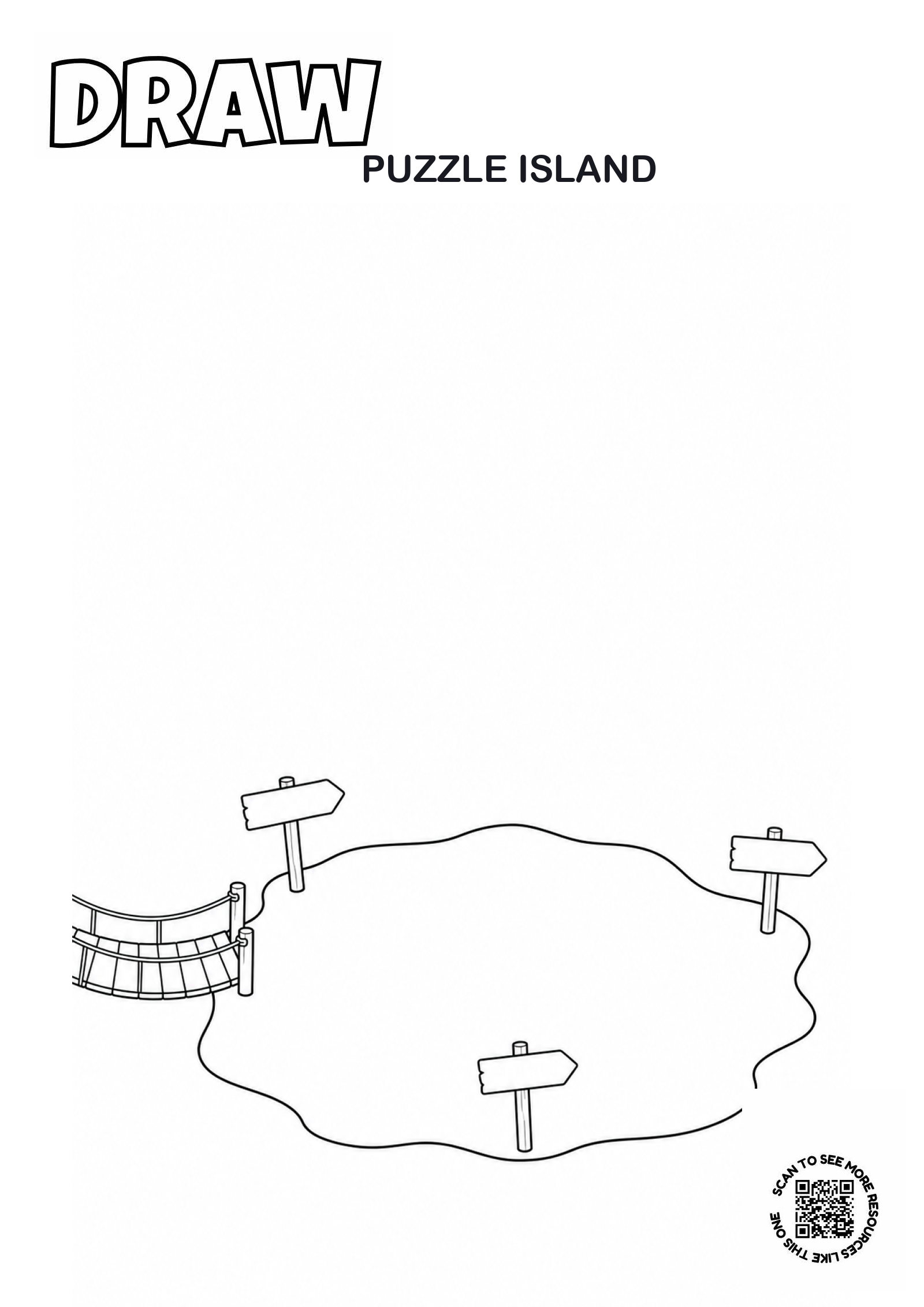
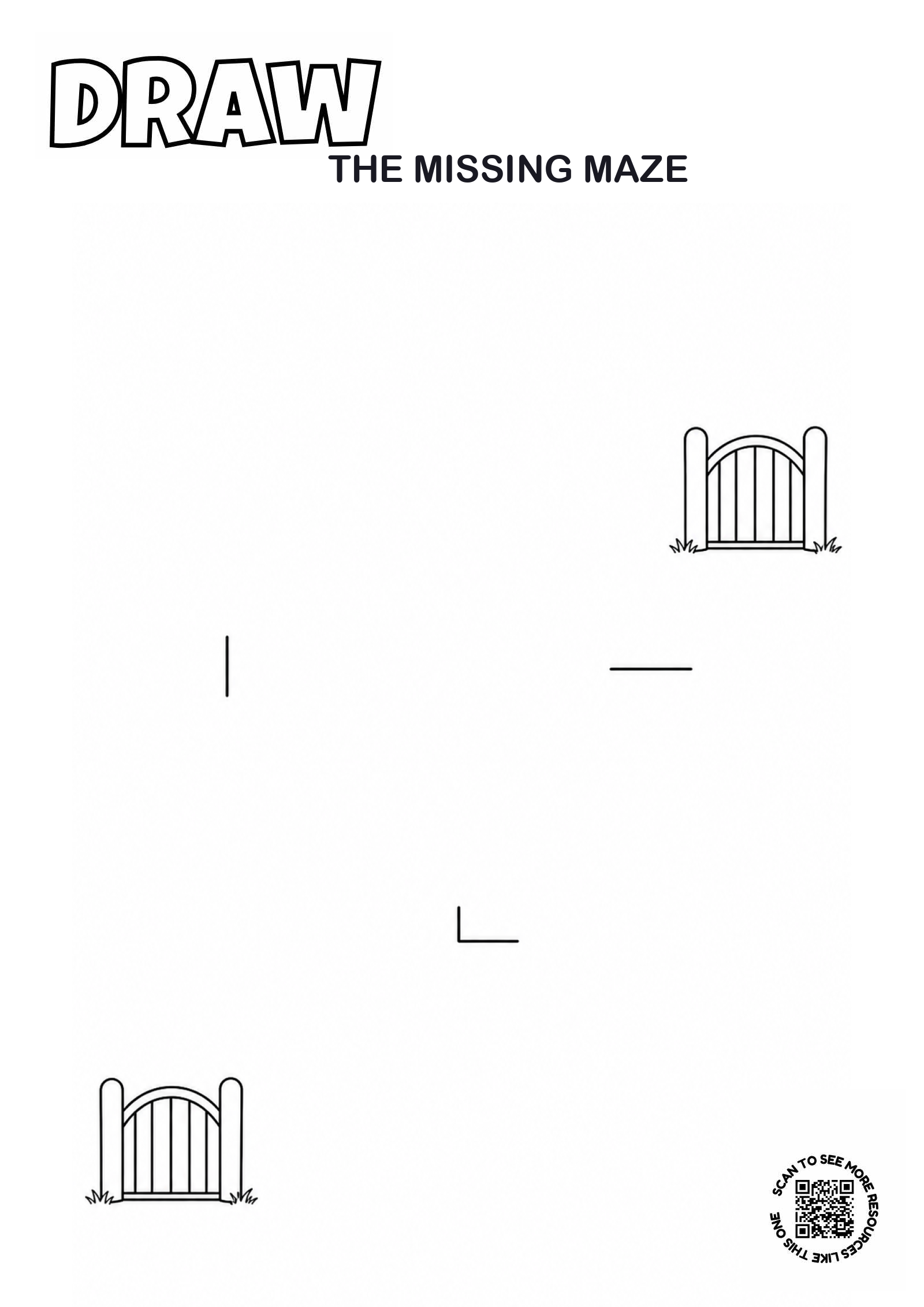
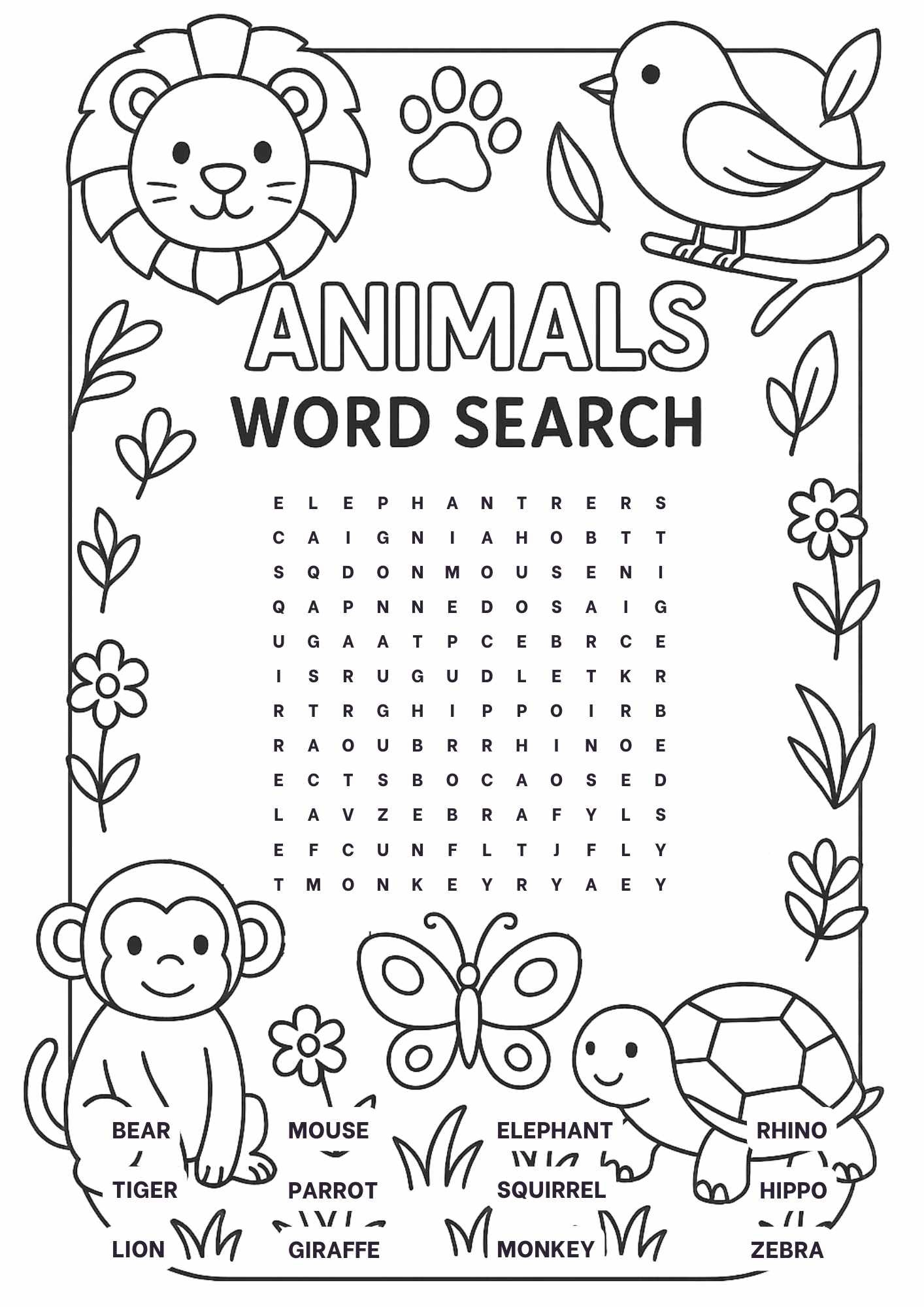
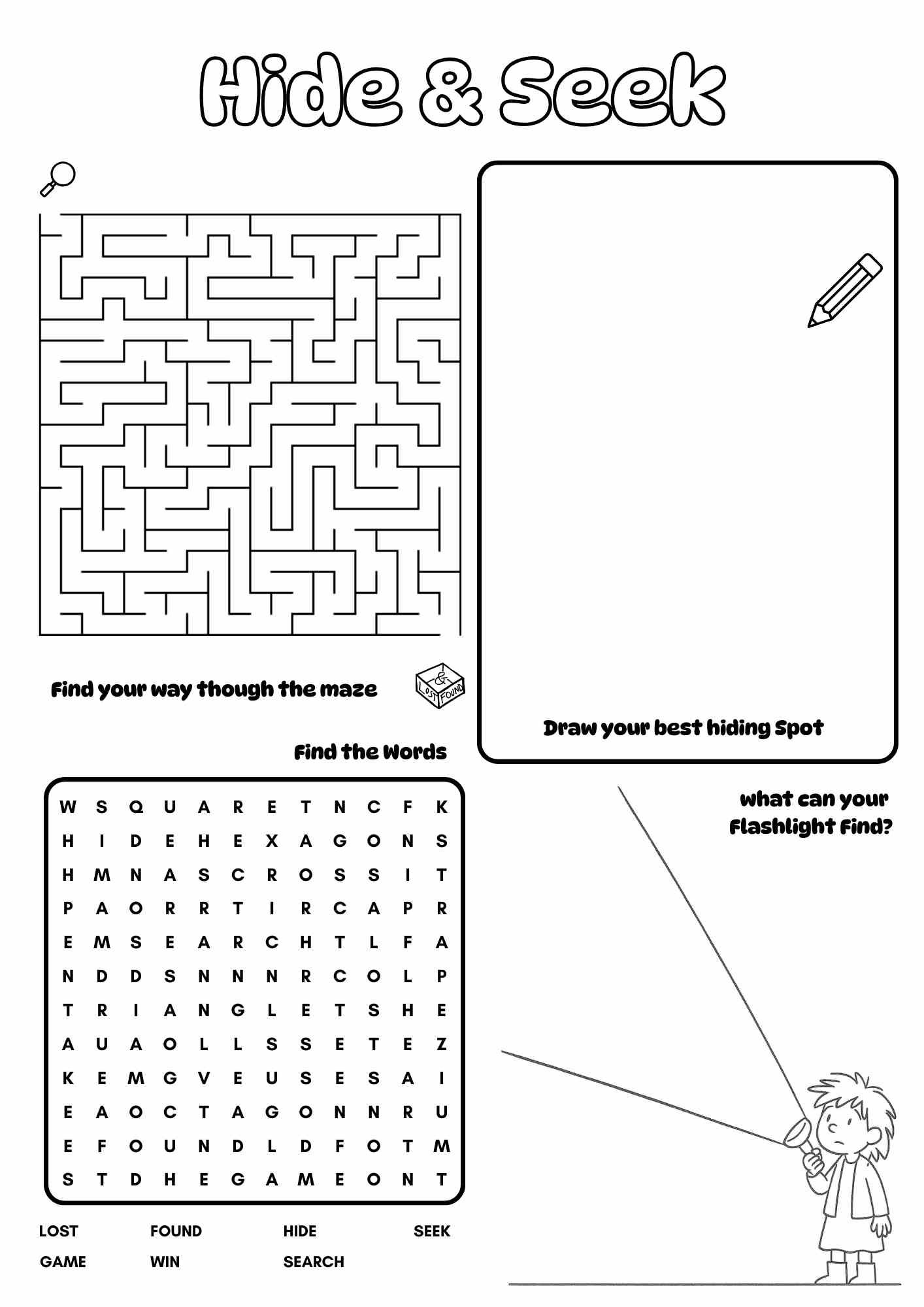
Put out a small number of Puzzle Masters Colouring Pack pages with pencils and blank paper. Children can use the table, talk, read or choose another available arrival activity; print more only if the first copies are used.
- 2Explain the choices · 5 min
Point out the printable table, the Giant floor puzzle – Puzzle Masters Major Activity materials and the game area. Show where finished work and reusable materials go. Tell children they can change activities under the service’s usual routine.
- 3Main activity · 45–60 min
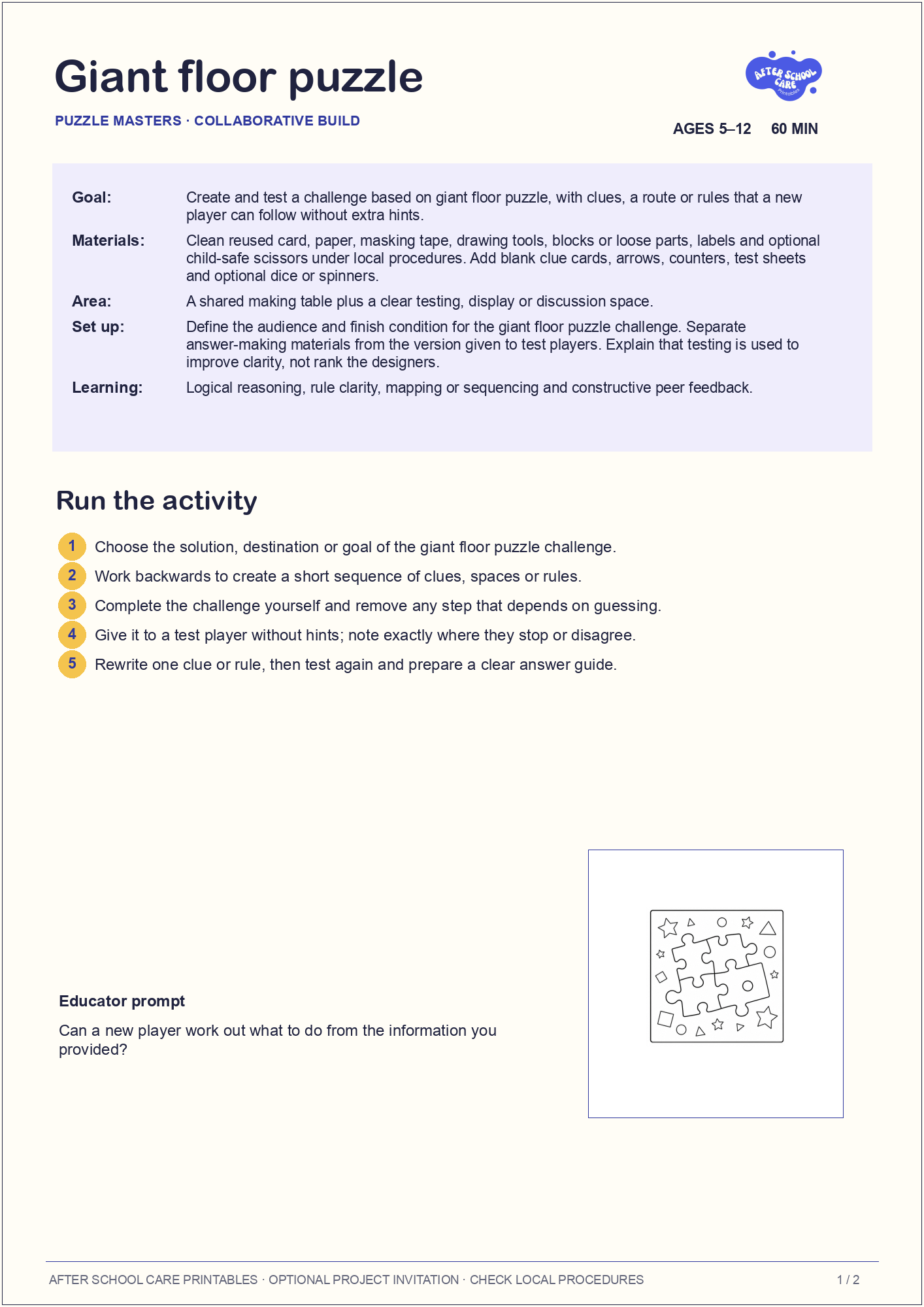
Use the two-page Giant floor puzzle – Puzzle Masters Major Activity guide. Prepare only the listed materials, read the goal aloud and begin with steps 1–3. Keep planning, making, testing, materials-helper and observing roles available.
- 4Movement break · 15–25 min
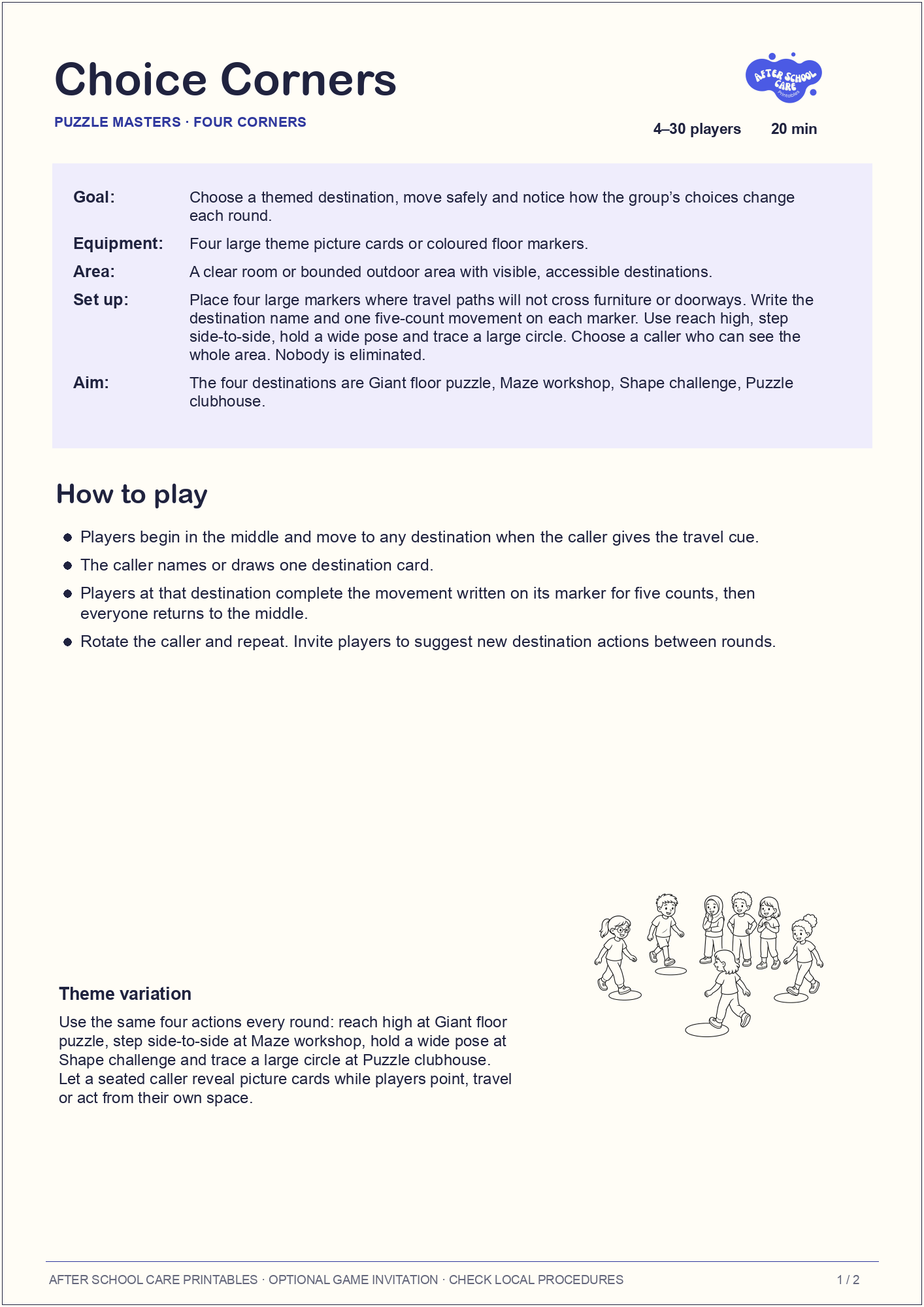
Set up Choice Corners – Puzzle Masters Printable Game using its printed boundaries and equipment list. Explain the no-elimination rule, run several short rounds and stop while the game is still controlled. Children may join, call, manage equipment or keep using another activity.
- 5Drink, reset and choose · 10 min
Give a five-minute warning, return game equipment and clear travel paths. Offer the usual drink or bathroom transition, then reopen the quiet printable table while educators reset the main materials.
- 6Continue or open one more activity
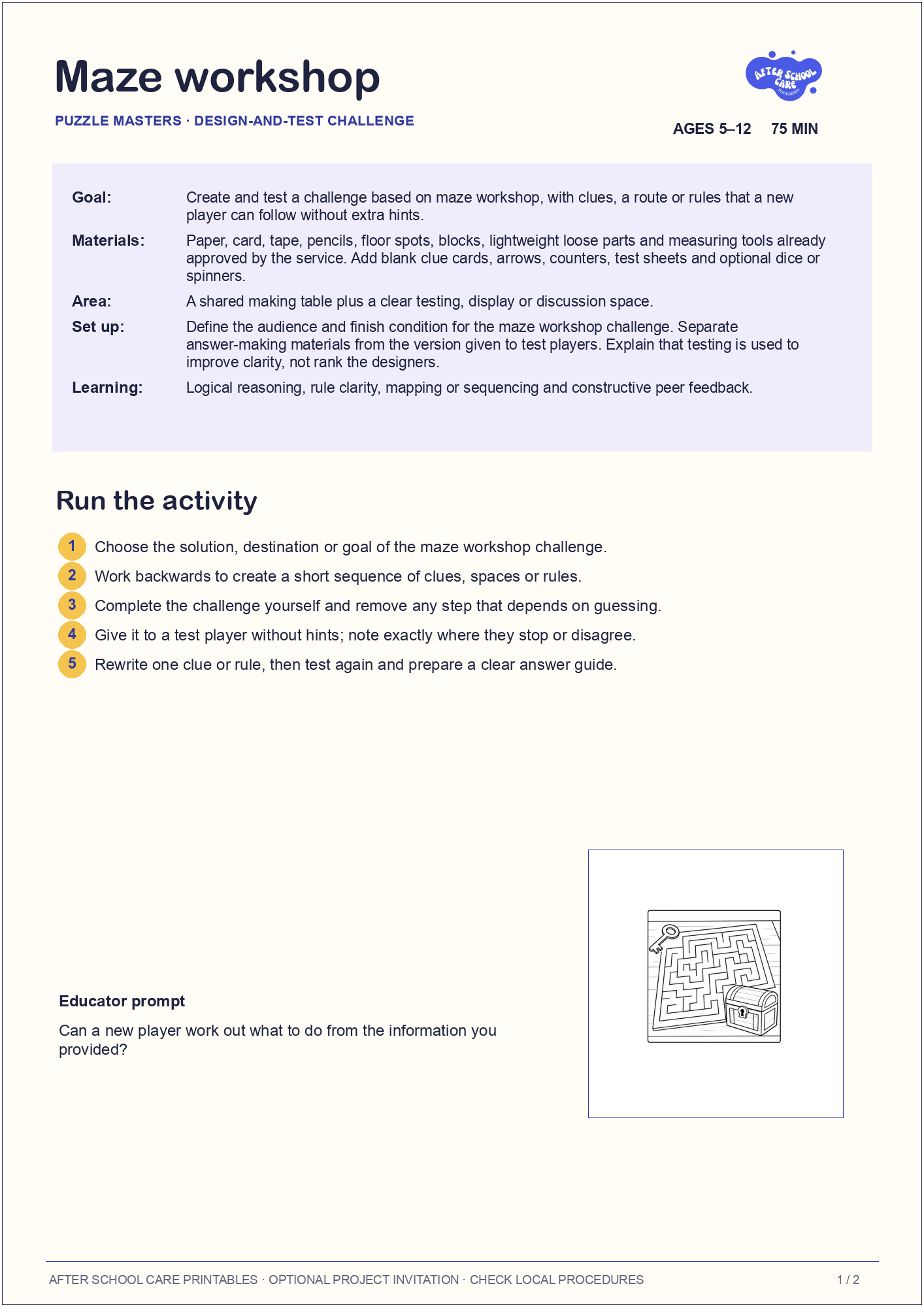
If time, staffing and interest allow, open Maze workshop – Puzzle Masters Major Activity; otherwise keep the first activity available. Ten minutes before collection, stop starting new builds, sort reusable pieces and place unfinished group work in a labelled storage spot. Put individual work in the service’s usual take-home or collection area.
Easy entry points
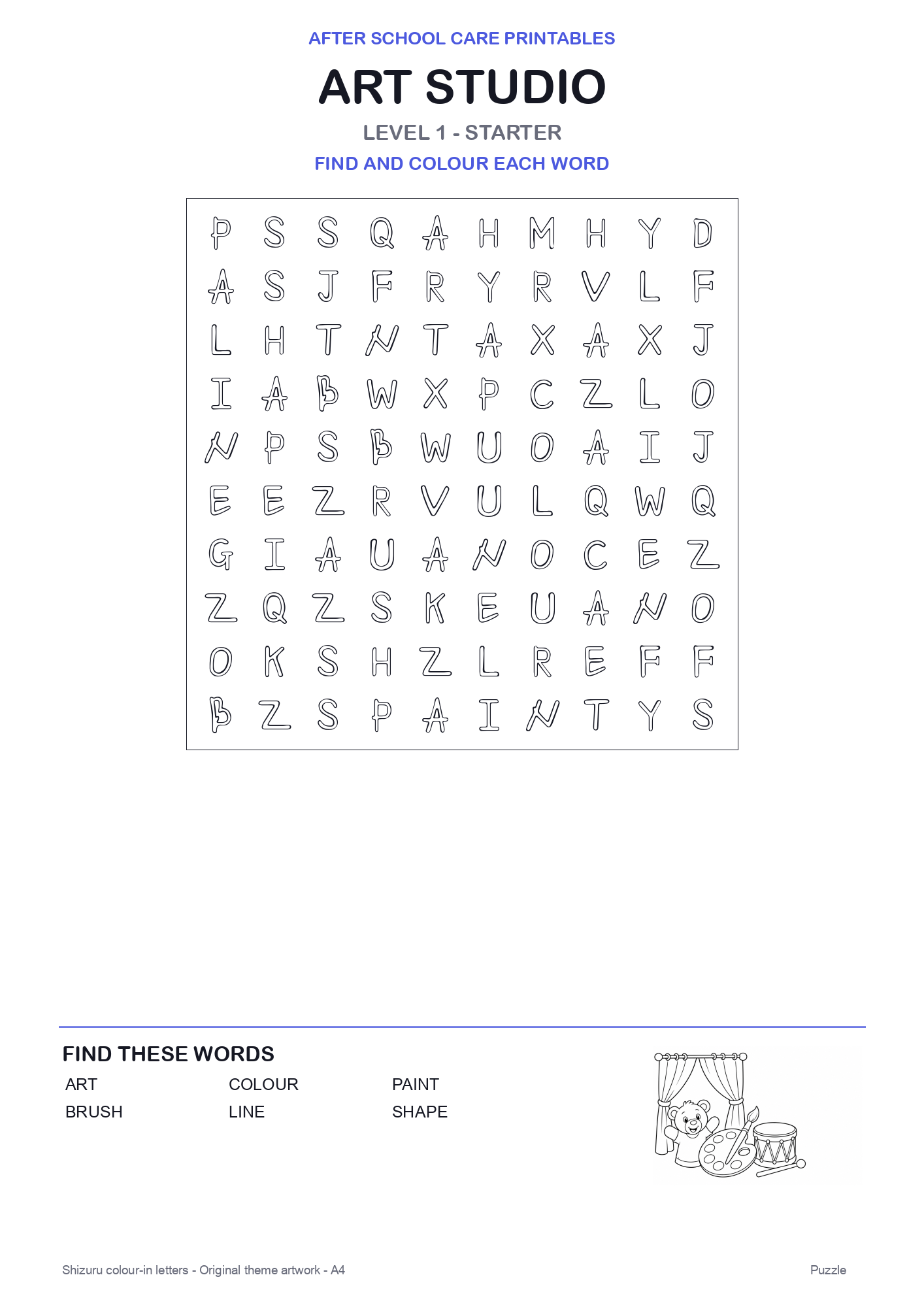
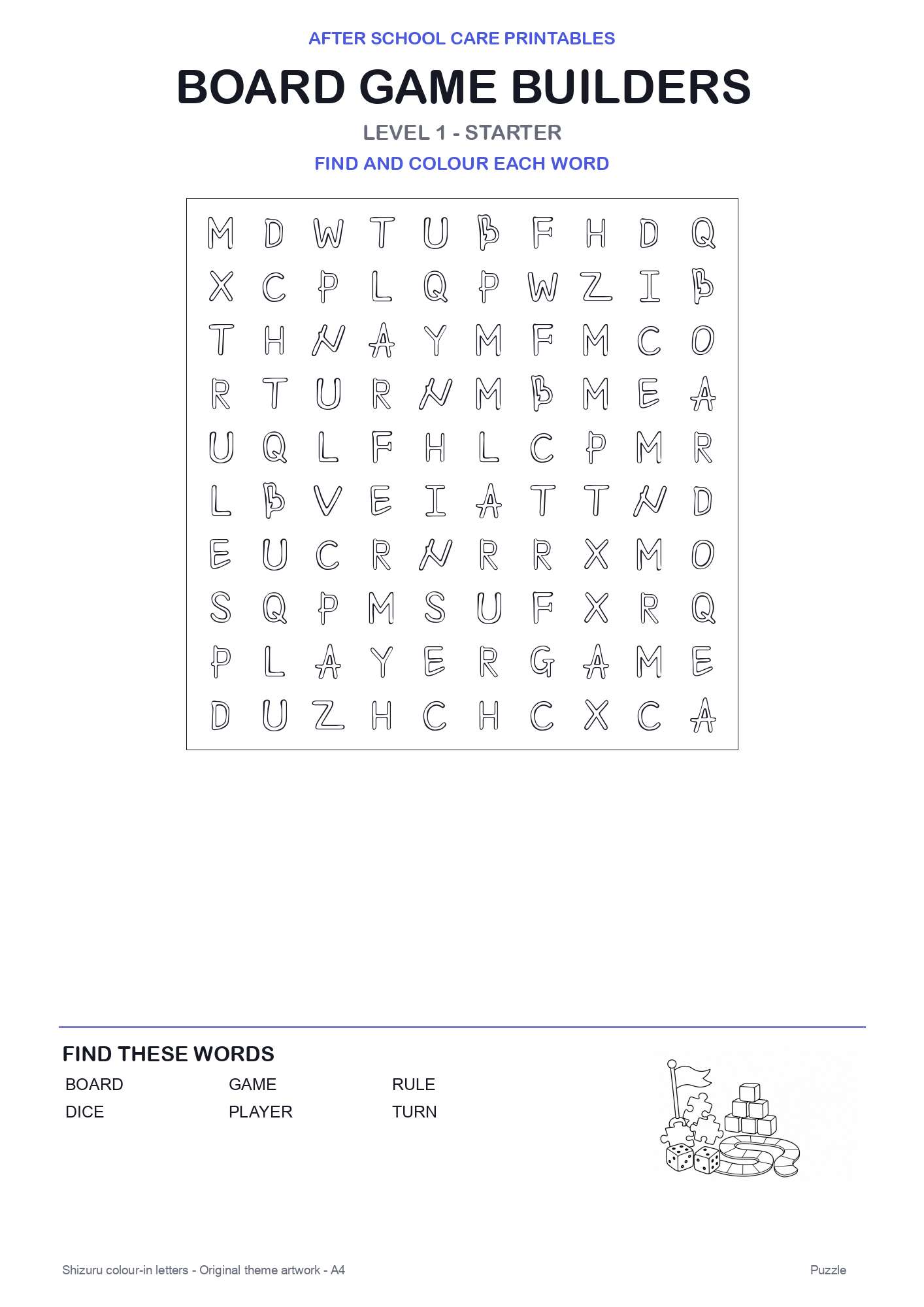
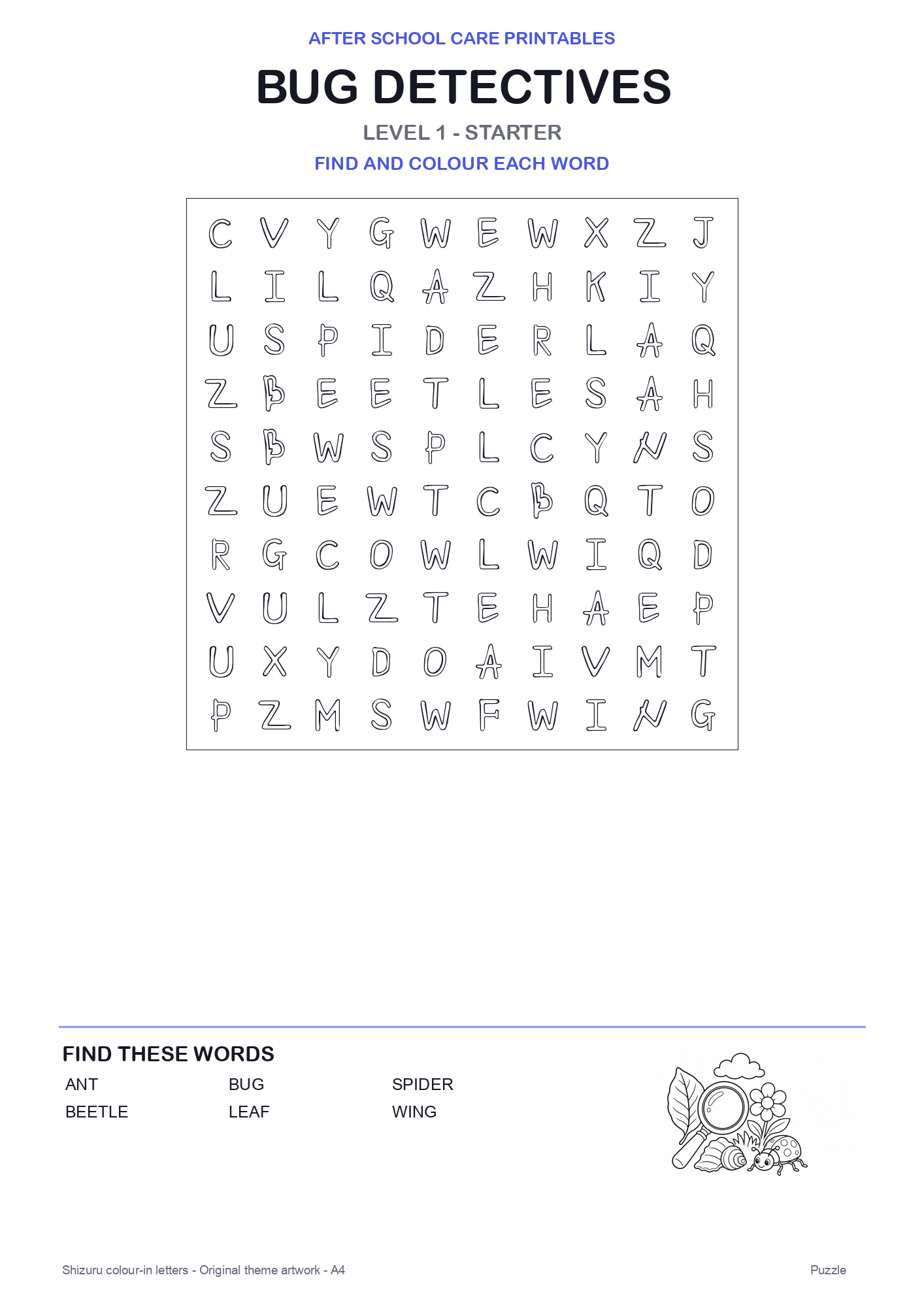
Low-prep activities
Useful for arrivals, quieter moments, wet weather and children who prefer to work independently or with one partner.



Specific program needs
Practical activity printables
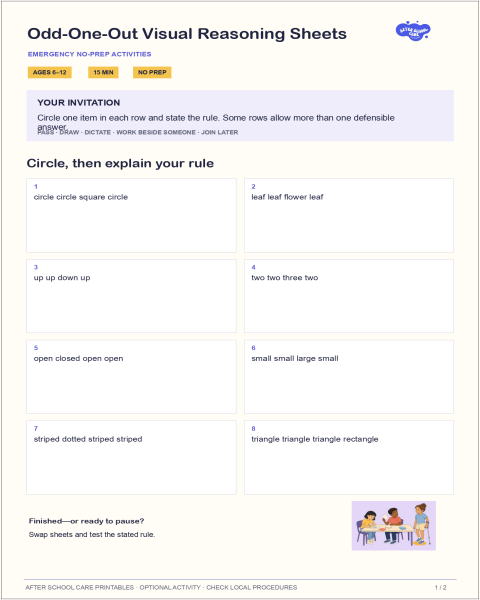
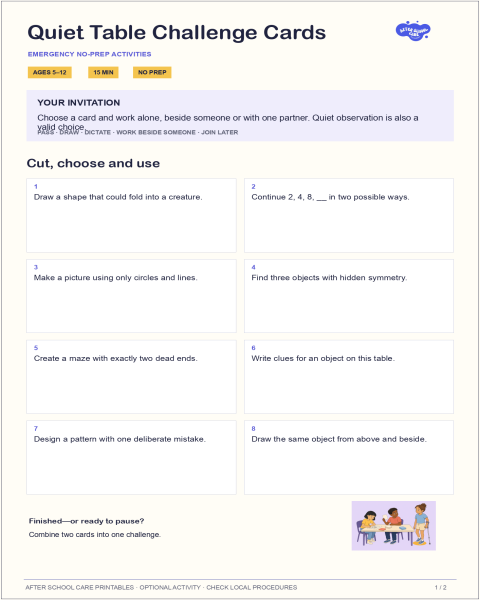
Use these two-page resources when their stated purpose, timing and participation options fit the group in front of you.
Move together
Physical games
Use generous boundaries, remove elimination and keep caller, equipment and watching roles available.
Longer investigations
Major activity printables
Each substantial project has its own illustrated two-page guide, adaptations, safety checks and a cut-off quick-reference card.
Prepare once
Shared materials table
Start with paper, pencils, clean reused card, masking tape, child-safe scissors under local procedures, blocks or loose parts, floor markers and the selected printables. Add theme-specific materials only when they are genuinely available and suitable for the group.
Participation
Keep several roles open
Offer drawing, building, explaining, collecting materials, calling a game, observing or joining later. Printables and group games remain choices rather than compulsory rotations.
Ten-minute close
Stop, sort and store
Stop starting new construction ten minutes before collection. Return game equipment, sort reusable materials, recycle clean scraps and place unfinished shared work in a labelled storage location. Move individual work to the service’s normal take-home area.