Resource
Draw Humpty Dumpty’s Wall – Nursery Rhyme Drawing Worksheet
A free, ink-friendly Draw Humpty Dumpty’s Wall worksheet inspired by Humpty Dumpty, with a spacious scene for child-led OSHC drawing and storytelling.
Download printableCheck the preview, printing notes and licence before use.
A familiar rhyme, an open drawing
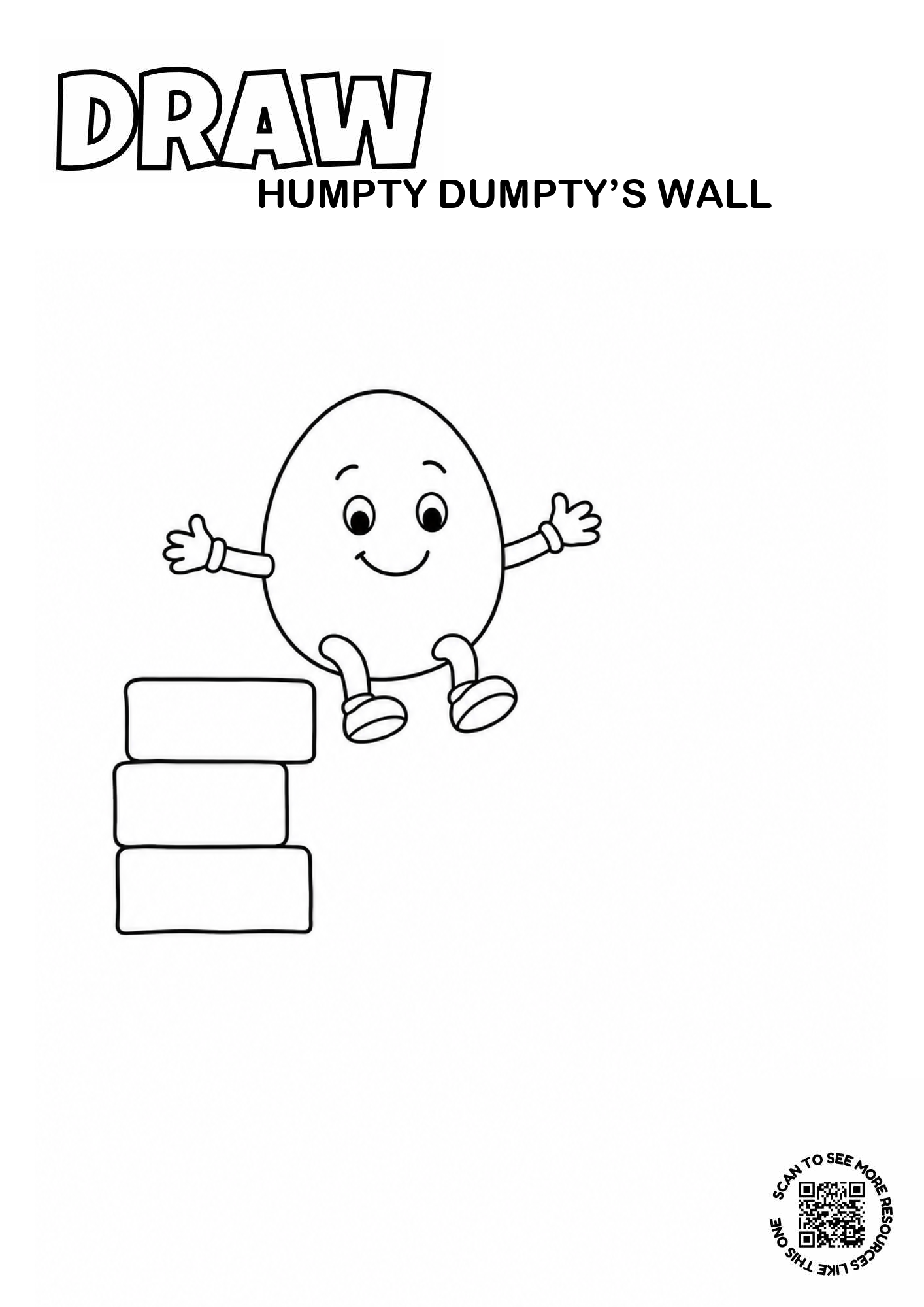
This original one-page worksheet takes Humpty Dumpty, a traditional public-domain nursery rhyme or children’s song, as its starting point. It shows a friendly egg character and a few starting bricks with the rest of the wall left to design. The scene is intentionally incomplete, so children decide what belongs in the picture rather than copying a fixed answer. No lyrics or sheet music are reproduced on the page.
OSHC setup
Offer a few copies at an arrival, quiet-choice or wet-weather table with pencils, crayons or markers and blank paper beside them. If it suits the group, an educator can say or sing a service-selected version of the traditional rhyme before inviting ideas. Singing is optional: children can draw independently, tell a story, work alongside a friend or choose another activity. Allow about 10–30 minutes and extend the invitation only while interest remains.
Ways to extend the idea
- Story sequence: add a second page showing what happens before or after this scene.
- Group variation: compare several possible adventures without choosing a single correct version.
- Performance option: invite willing children to add movement, sound effects or simple percussion using equipment already approved by the service.
- Design challenge: older children can add labels, a route, a useful object or a constraint that changes the story.
Inclusive adaptations
Print at A3 or offer broad drawing tools for easier access. A child can point, gesture or describe additions while an educator or peer scribes selected details. Do not require solo singing, public performance, neat colouring or completion. Different families may know different words or tunes; treat those variations respectfully and avoid presenting one version as the only correct one.
Conversation prompts
After a child invites conversation, try: “What is happening in your version?”, “Where might the character go next?” or “What sound would fit this part of the picture?” Keep the discussion about the child’s creative choices rather than interpreting the drawing as evidence of feelings or development.
Printing notes
The download is a single-page, ink-friendly A4 PDF with black line art on white. The outlined DRAW heading and circular QR resource badge match the original worksheet style. Print at actual size or fit to your printer’s printable area.