Resource
Little Star Story Sky – Nursery Rhyme Adventures Major Activity
Help children explore oral storytelling, descriptive language, sequencing and visual composition through Little Star Story Sky, with a purposeful setup, clear educator prompts and flexible ways to participate.
Ready to plan and make
Preview the two-page activity guide
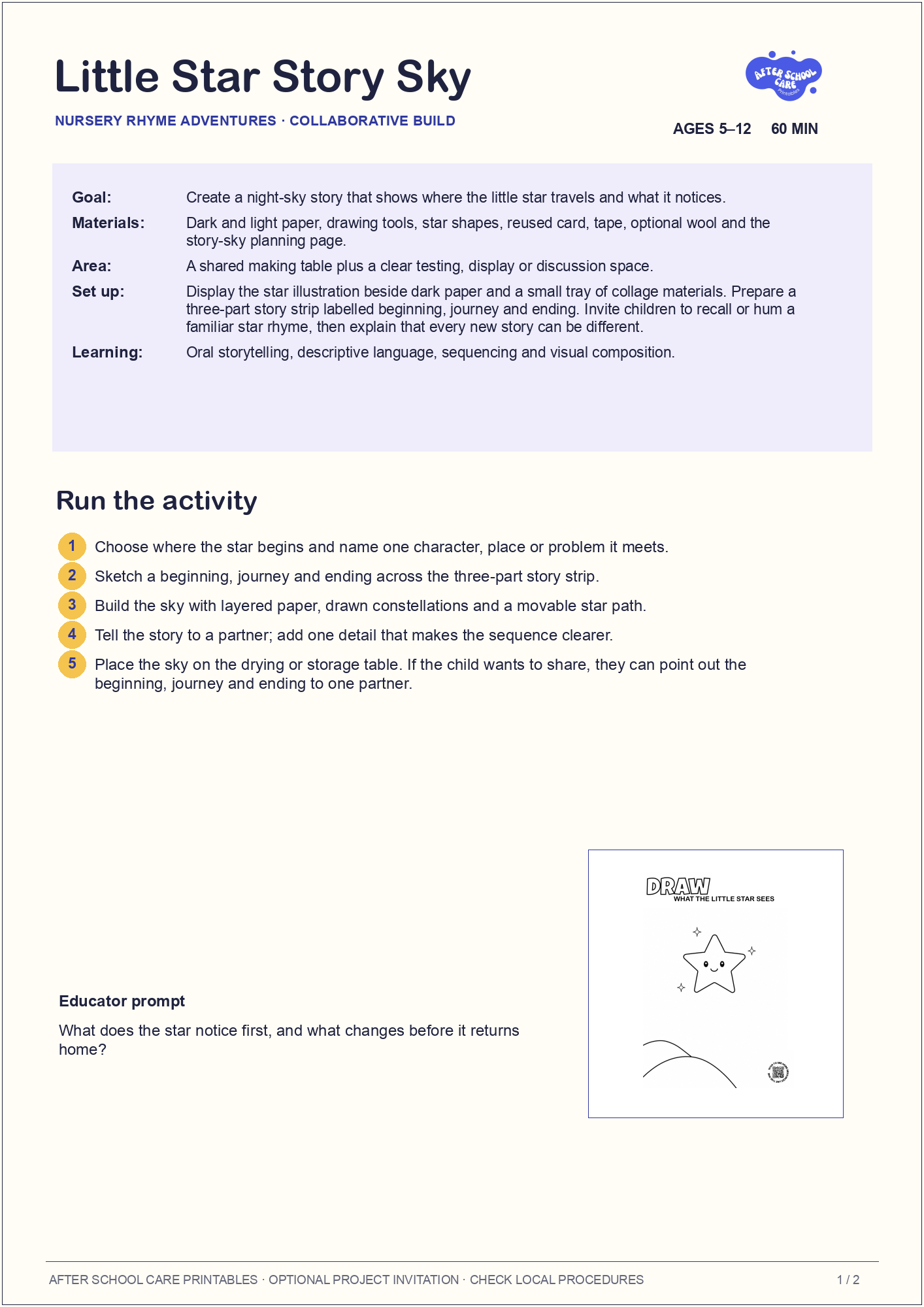
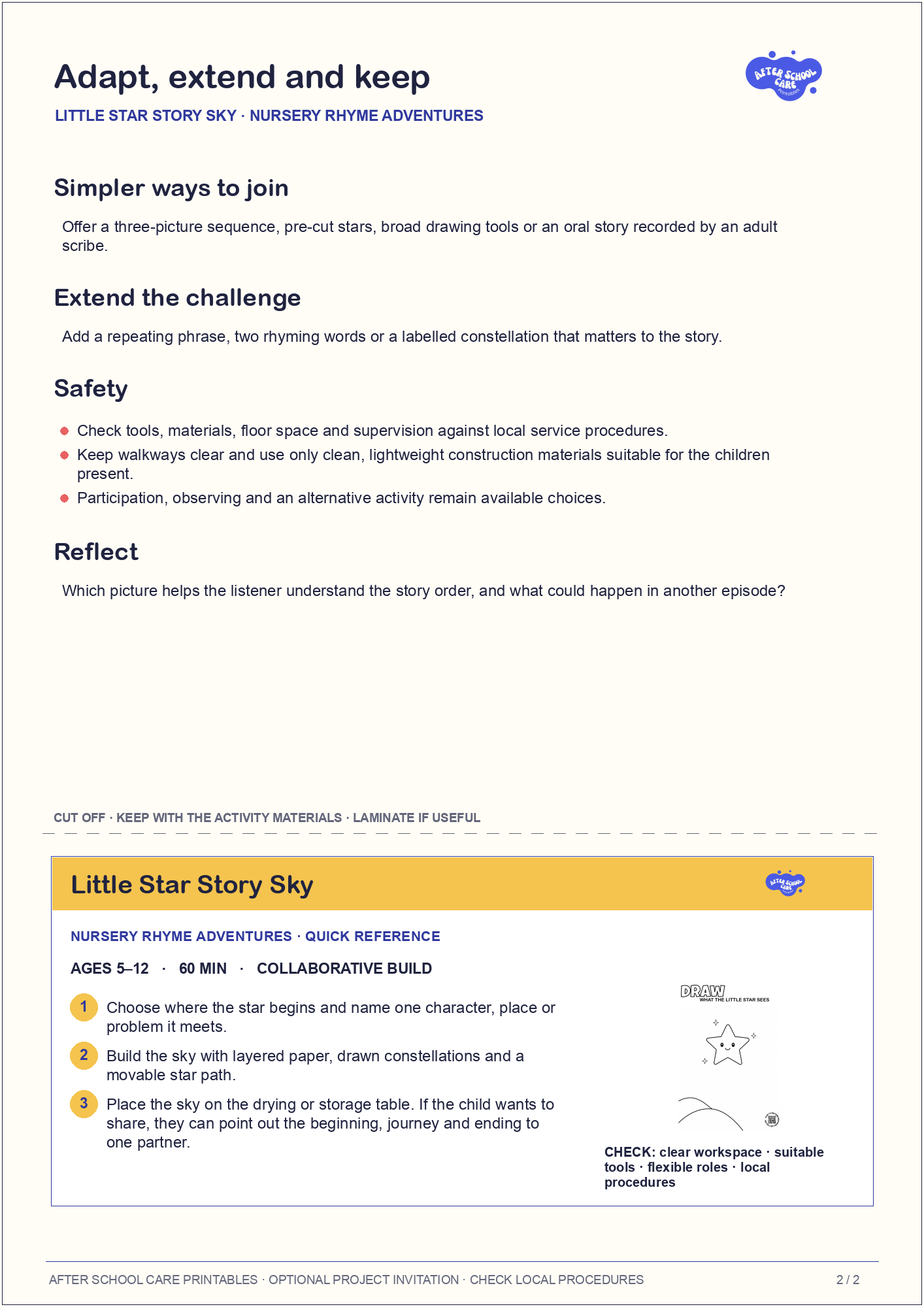
Download 2-page activity guideCheck the preview, printing notes and licence before use.
A substantial Nursery Rhyme Adventures project
Little Star Story Sky is a Collaborative build designed to stay available for about 60 minutes. Children investigate oral storytelling, descriptive language, sequencing and visual composition through a concrete shared task rather than completing identical work.
Educational purpose
This invitation gives children opportunities to develop oral storytelling, descriptive language, sequencing and visual composition. Look for the decisions children make, the language they use to explain an idea and the evidence they notice after trying it. A finished model is optional; the planning, testing and discussion are valuable parts of the experience.
Goal
Create a night-sky story that shows where the little star travels and what it notices.
Materials
Dark and light paper, drawing tools, star shapes, reused card, tape, optional wool and the story-sky planning page.
Set up
- Display the star illustration beside dark paper and a small tray of collage materials.
- Prepare a three-part story strip labelled beginning, journey and ending.
- Invite children to recall or hum a familiar star rhyme, then explain that every new story can be different.
Run the activity
- Choose where the star begins and name one character, place or problem it meets.
- Sketch a beginning, journey and ending across the three-part story strip.
- Build the sky with layered paper, drawn constellations and a movable star path.
- Tell the story to a partner; add one detail that makes the sequence clearer.
- Place the sky on the drying or storage table. If the child wants to share, they can point out the beginning, journey and ending to one partner.
Educator prompt
What does the star notice first, and what changes before it returns home?
Adapt participation
Offer a three-picture sequence, pre-cut stars, broad drawing tools or an oral story recorded by an adult scribe.
Extend the challenge
Add a repeating phrase, two rhyming words or a labelled constellation that matters to the story.
Safety
- Check tools, materials, floor space and supervision against local service procedures.
- Keep walkways clear and use only clean, lightweight construction materials suitable for the children present.
- Participation, observing and an alternative activity remain available choices.
Reflection
Which picture helps the listener understand the story order, and what could happen in another episode?
Printing notes
The two-page A4 guide follows the same clean format as the printable physical games. Page two includes a cut-off quick-reference card that can be stored with the activity materials or laminated.