
Resource
Farmyard Rhyme Stage – Nursery Rhyme Adventures Major Activity
Help children explore rhythm, character development, collaborative storytelling and performance choices through Farmyard Rhyme Stage, with a purposeful setup, clear educator prompts and flexible ways to participate.
Ready to plan and make
Preview the two-page activity guide
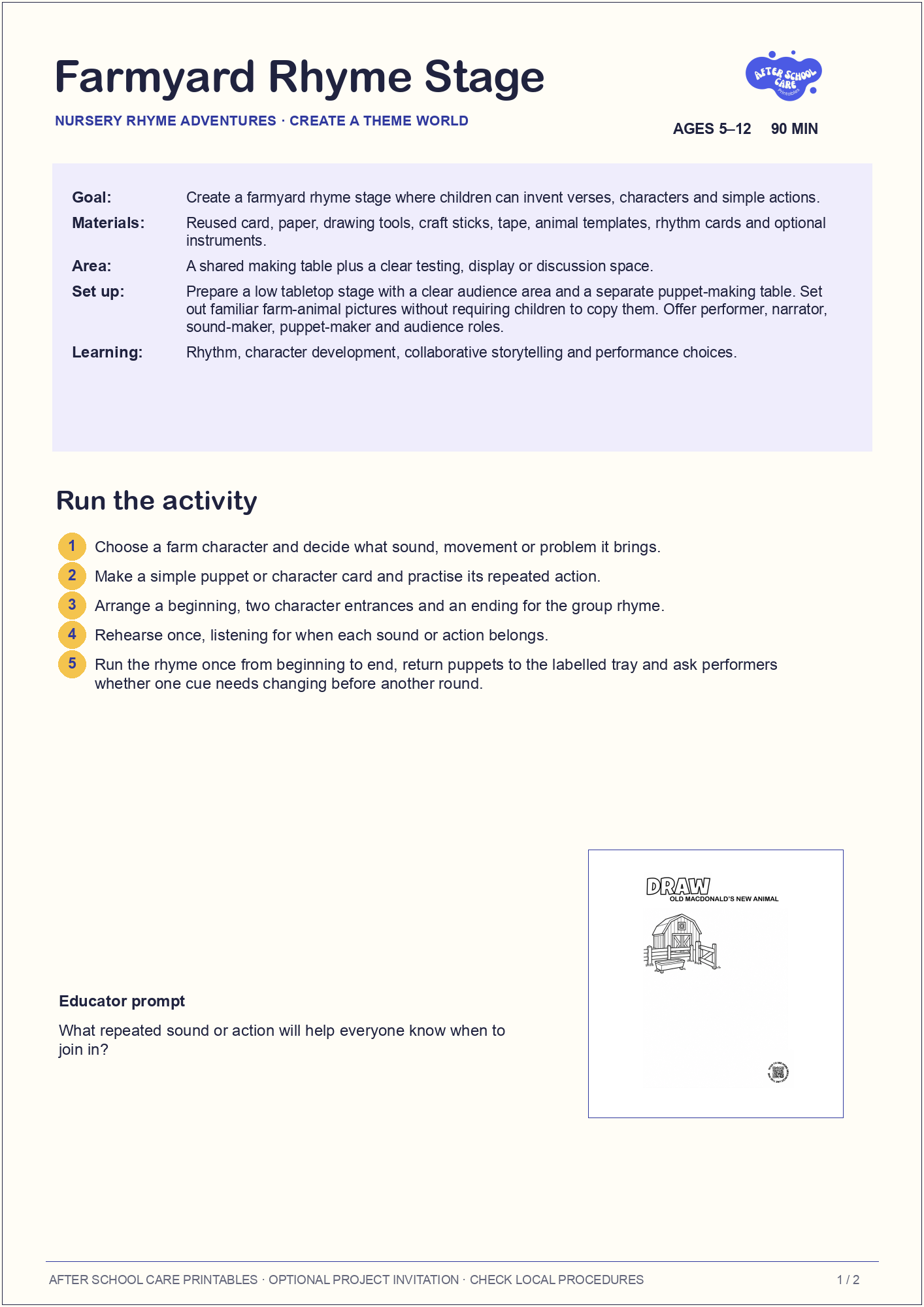
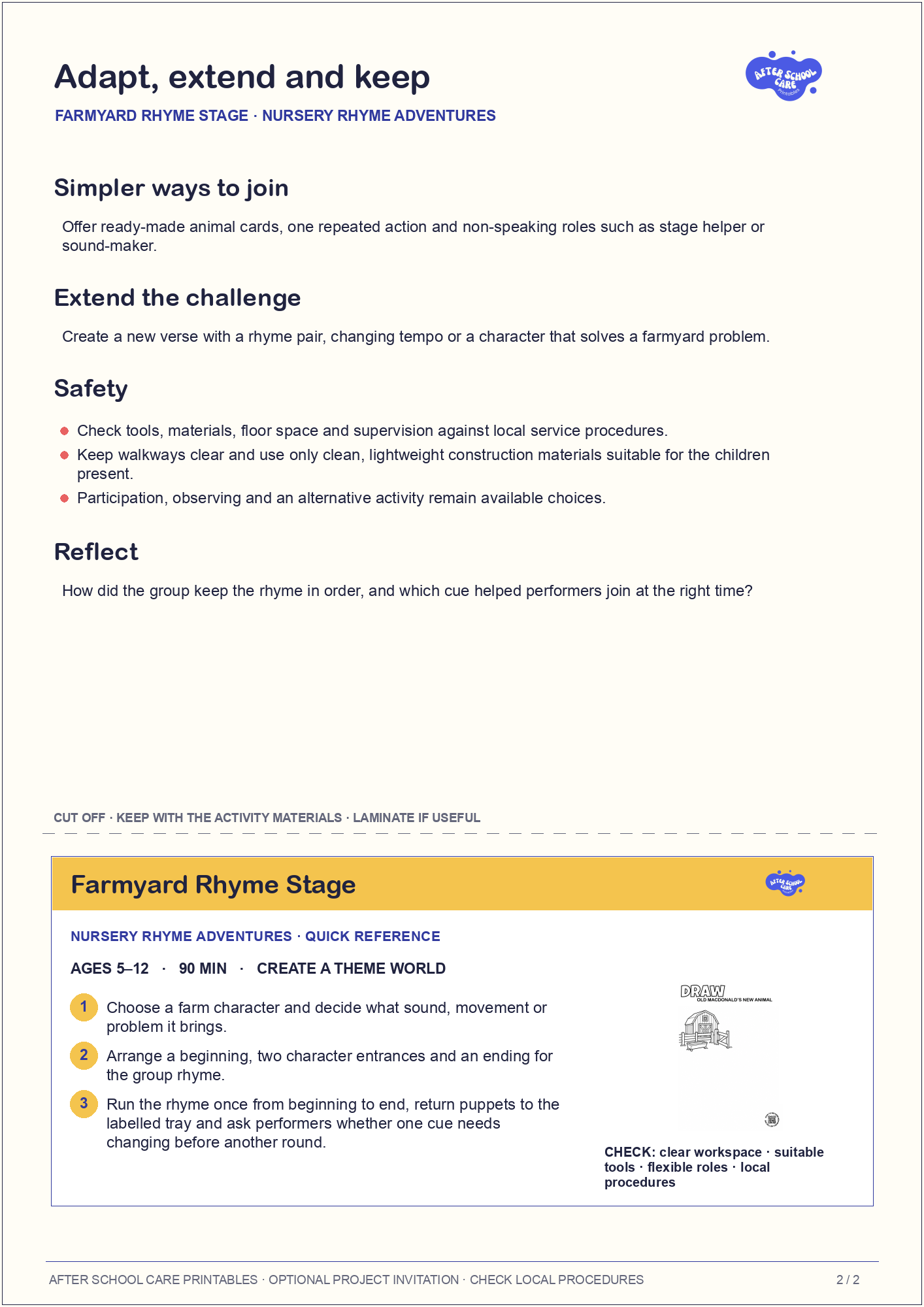
Download 2-page activity guideCheck the preview, printing notes and licence before use.
A substantial Nursery Rhyme Adventures project
Farmyard Rhyme Stage is a Create a theme world designed to stay available for about 90 minutes. Children investigate rhythm, character development, collaborative storytelling and performance choices through a concrete shared task rather than completing identical work.
Educational purpose
This invitation gives children opportunities to develop rhythm, character development, collaborative storytelling and performance choices. Look for the decisions children make, the language they use to explain an idea and the evidence they notice after trying it. A finished model is optional; the planning, testing and discussion are valuable parts of the experience.
Goal
Create a farmyard rhyme stage where children can invent verses, characters and simple actions.
Materials
Reused card, paper, drawing tools, craft sticks, tape, animal templates, rhythm cards and optional instruments.
Set up
- Prepare a low tabletop stage with a clear audience area and a separate puppet-making table.
- Set out familiar farm-animal pictures without requiring children to copy them.
- Offer performer, narrator, sound-maker, puppet-maker and audience roles.
Run the activity
- Choose a farm character and decide what sound, movement or problem it brings.
- Make a simple puppet or character card and practise its repeated action.
- Arrange a beginning, two character entrances and an ending for the group rhyme.
- Rehearse once, listening for when each sound or action belongs.
- Run the rhyme once from beginning to end, return puppets to the labelled tray and ask performers whether one cue needs changing before another round.
Educator prompt
What repeated sound or action will help everyone know when to join in?
Adapt participation
Offer ready-made animal cards, one repeated action and non-speaking roles such as stage helper or sound-maker.
Extend the challenge
Create a new verse with a rhyme pair, changing tempo or a character that solves a farmyard problem.
Safety
- Check tools, materials, floor space and supervision against local service procedures.
- Keep walkways clear and use only clean, lightweight construction materials suitable for the children present.
- Participation, observing and an alternative activity remain available choices.
Reflection
How did the group keep the rhyme in order, and which cue helped performers join at the right time?
Printing notes
The two-page A4 guide follows the same clean format as the printable physical games. Page two includes a cut-off quick-reference card that can be stored with the activity materials or laminated.