Resource
Table setting – Mini Café Major Activity
Help children explore functional literacy, everyday numeracy, role-play communication and collaborative planning through Table setting, with a purposeful setup, clear educator prompts and flexible ways to participate.
Ready to plan and make
Preview the two-page activity guide
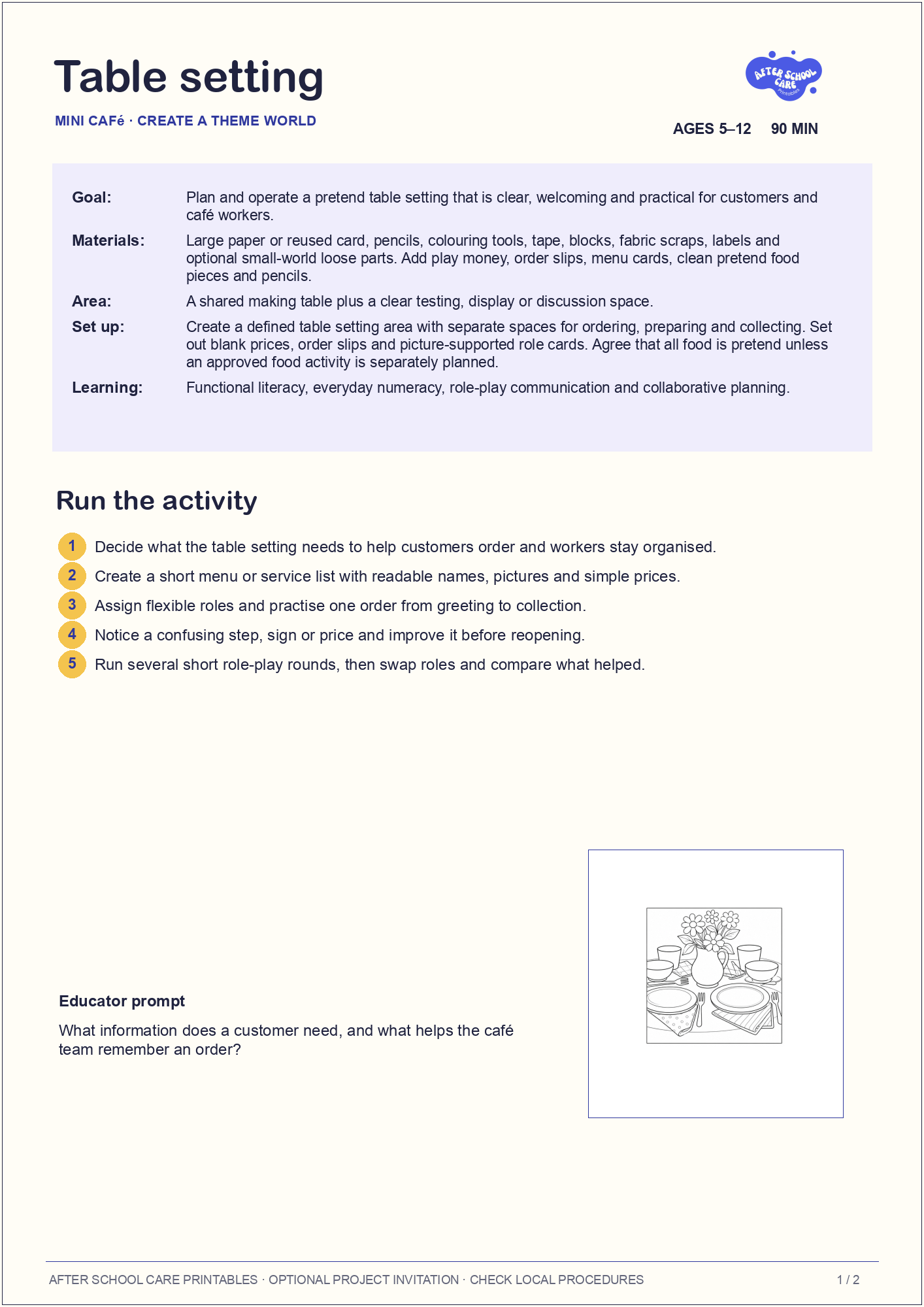
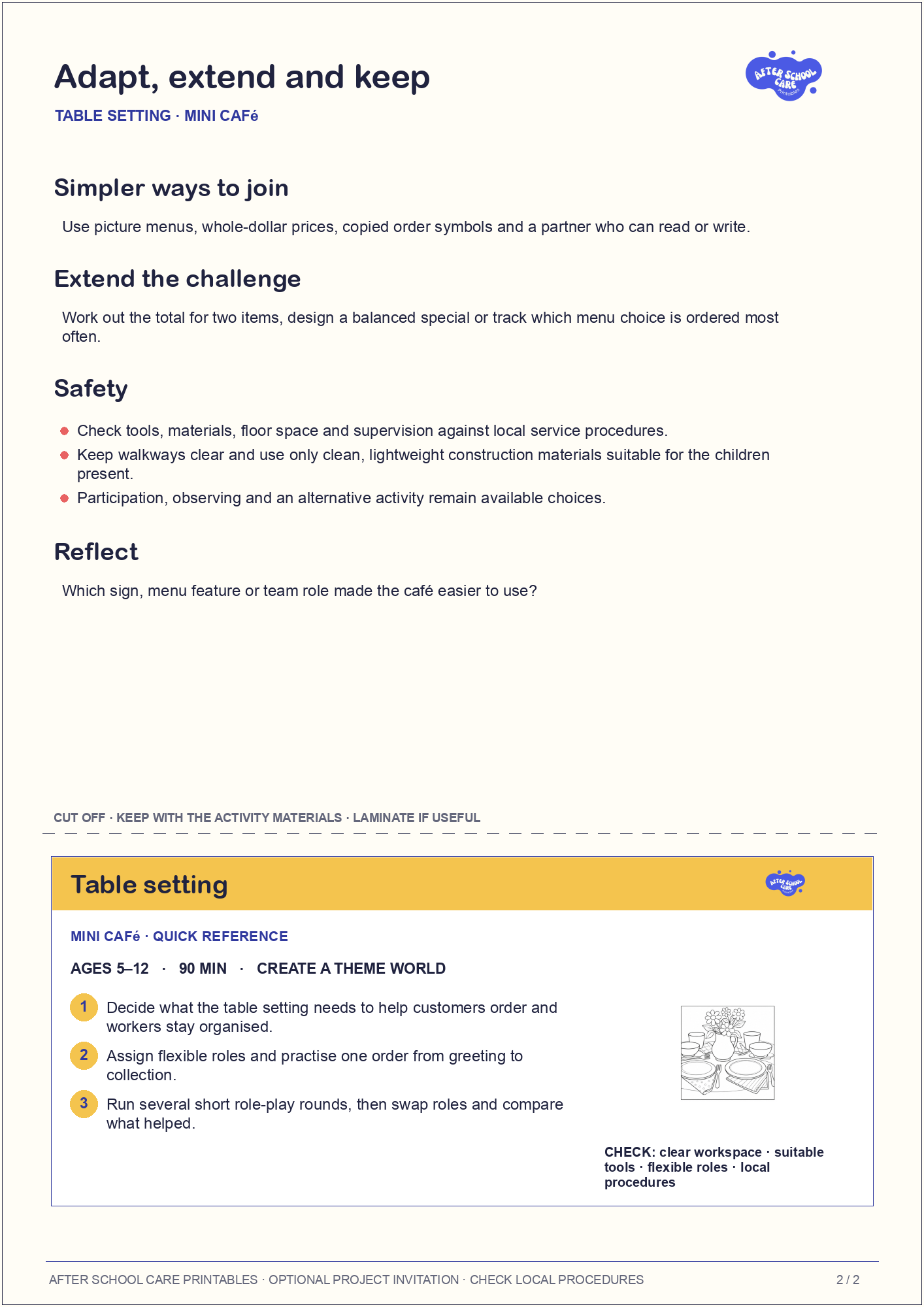
Download 2-page activity guideCheck the preview, printing notes and licence before use.
A substantial Mini Café project
Table setting is a Create a theme world designed to stay available for about 90 minutes. Children investigate functional literacy, everyday numeracy, role-play communication and collaborative planning through a concrete shared task rather than completing identical work.
Educational purpose
This invitation gives children opportunities to develop functional literacy, everyday numeracy, role-play communication and collaborative planning. Look for the decisions children make, the language they use to explain an idea and the evidence they notice after trying it. A finished model is optional; the planning, testing and discussion are valuable parts of the experience.
Goal
Plan and operate a pretend table setting that is clear, welcoming and practical for customers and café workers.
Materials
Large paper or reused card, pencils, colouring tools, tape, blocks, fabric scraps, labels and optional small-world loose parts. Add play money, order slips, menu cards, clean pretend food pieces and pencils.
Set up
- Create a defined table setting area with separate spaces for ordering, preparing and collecting.
- Set out blank prices, order slips and picture-supported role cards.
- Agree that all food is pretend unless an approved food activity is separately planned.
Run the activity
- Decide what the table setting needs to help customers order and workers stay organised.
- Create a short menu or service list with readable names, pictures and simple prices.
- Assign flexible roles and practise one order from greeting to collection.
- Notice a confusing step, sign or price and improve it before reopening.
- Run several short role-play rounds, then swap roles and compare what helped.
Educator prompt
What information does a customer need, and what helps the café team remember an order?
Adapt participation
Use picture menus, whole-dollar prices, copied order symbols and a partner who can read or write.
Extend the challenge
Work out the total for two items, design a balanced special or track which menu choice is ordered most often.
Safety
- Check tools, materials, floor space and supervision against local service procedures.
- Keep walkways clear and use only clean, lightweight construction materials suitable for the children present.
- Participation, observing and an alternative activity remain available choices.
Reflection
Which sign, menu feature or team role made the café easier to use?
Printing notes
The two-page A4 guide follows the same clean format as the printable physical games. Page two includes a cut-off quick-reference card that can be stored with the activity materials or laminated.