Why This Printable Matters for NAIDOC
NAIDOC Week is a vital time to honour and recognise the cultures, stories, and contributions of First Nations people. It’s also an opportunity to learn about the land — and one way to connect is through the unique creatures that share this country with us.
The NAIDOC Australian Animal Colouring Page brings together cultural respect and environmental awareness. While children colour in beloved Australian species, educators can weave in conversations about Indigenous knowledge, country, caring for Country, and the connection between land, animals, and people.
Find your next printable activity fast
Browse educator-friendly resources built for OSHC, after school care, and homeschool activity planning.
This activity aligns beautifully with My Time, Our Place outcomes, especially Outcome 2 (Community) and Outcome 5 (Communication) — helping children understand their place within a shared ecosystem and building respect for First Nations culture.
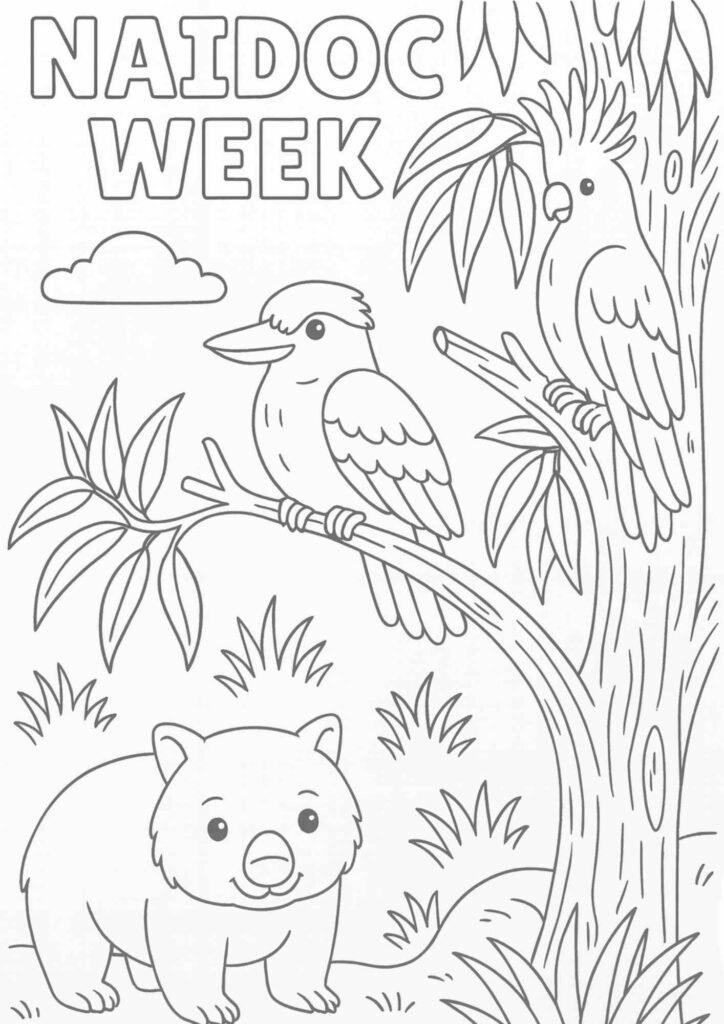
Download the NAIDOC Week Australian Animal Colouring Page
Print it, craft it, and enrich it with story, learning, and connection. Use it during NAIDOC Week or any time you want to highlight Australia’s incredible biodiversity and First Nations culture.
🖍 How to Use the Colouring Page in a Lesson
- Introduction & Acknowledgement (5 minutes)
Begin with an Acknowledgement of Country. Share with children that NAIDOC Week celebrates First Nations culture, history, and connection to Country. Mention how animals, plants, and country are part of those stories. - Show Animal Examples (5 minutes)
Introduce the animals in the printable (kangaroo, platypus, wombat, kookaburra, etc.). Share some Indigenous names or Dreaming stories if available in your area. You might show photos or books of those animals in habitat. - Colouring & Annotation (10–15 minutes)
Distribute the colouring sheets. Encourage children to:- Use colours that represent those animals in nature.
- Annotate: write the name of the animal, habitat, an interesting fact, or an Indigenous name if known.
- Optionally add patterns or Indigenous art symbols (dots, lines, waves) alongside the drawing.
- Sharing & Storytelling (5–10 minutes)
Invite children to explain their colours, patterns, and facts. Ask:- Where does this animal live?
- What does it eat?
- Why might people protect it?
- Extension Ideas
- Research & Story: Assign each child an animal to research and present a short “Dreaming” or cultural connection (if available).
- Habitat Diorama: Use craft materials to build the animal’s habitat next to the drawing.
- Nature Walk: If safe, take a walk and look for evidence of local wildlife. Compare with the colouring page.
- Language Connection: Learn the Indigenous name(s) for each animal in your region, asking local elders or language resources.
🌱 Learning, Culture & Community Links
- Outcome 2 (Community / Belonging): Understanding that animals and land are part of shared heritage and responsibility.
- Outcome 4 (Learning): Investigating species, habitats, adaptations, and Indigenous knowledge.
- Outcome 5 (Communication): Describing artistic choices, learning new language (Indigenous names, scientific names), storytelling.
- Outcome 3 (Wellbeing): Colouring is calming, and connection to Country builds respect, empathy, and emotional grounding.
✅ Download & Celebrate
👉 Download the NAIDOC Week Australian Animal Colouring Page
Print it, craft it, and enrich it with story, learning, and connection. Use it during NAIDOC Week or any time you want to highlight Australia’s incredible biodiversity and First Nations culture.
Find your next printable activity fast
Browse educator-friendly resources built for OSHC, after school care, and homeschool activity planning.