Article
Build Your Own Burger — Imagining Healthier Choices Through Art
Why Using a Burger Activity is Powerful Using the Burger Worksheet in a Health-Focused Activity Here’s a plan you can deploy in OSHC or a classroom to link the drawing printable to real-world nutrition: Health & Learning Connections (MTOP Outcomes) Tips & Differentiation Download 👉 Download the Build Your Own Burger Imagination Drawing ActivityPrint this […]
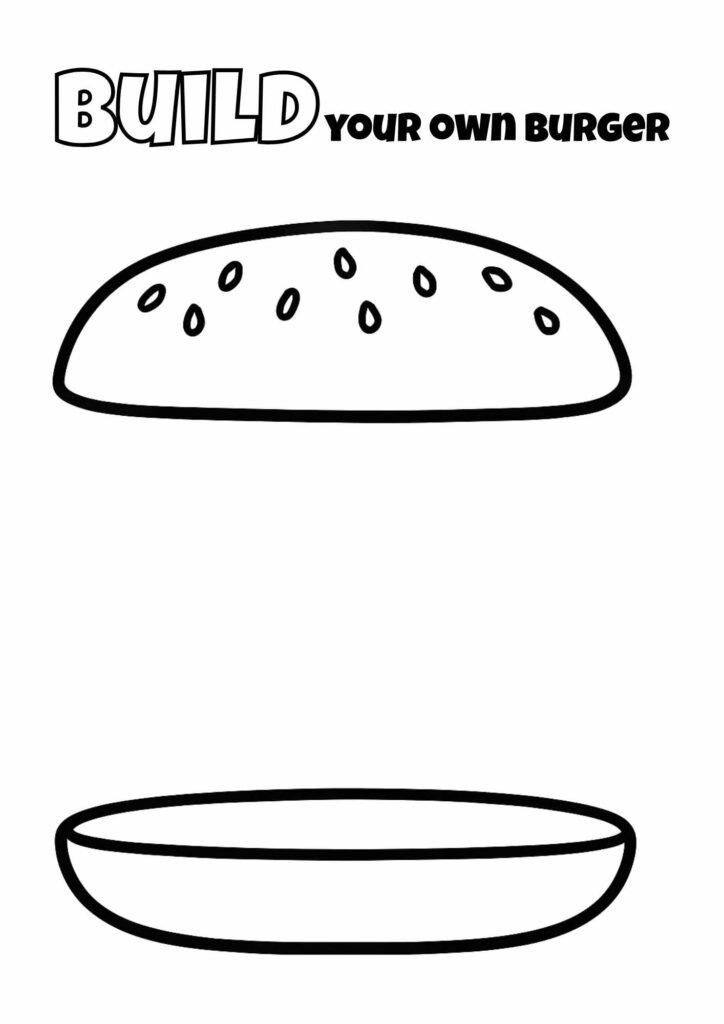
Food isn’t just nourishment — it’s identity, culture, play, and choice. The Build Your Own Burger Imagination Drawing Activity invites children to design a burger from the bun up — selecting ingredients, imagining combinations, and visually representing their ideal meal. But this is more than a fun drawing task: it’s a bridge into health conversations about balance, nutrition, and agency over what we eat.
Download the Build Your Own Burger Imagination Drawing Activity
Why Using a Burger Activity is Powerful
- It meets children where they are. Burgers are familiar, approachable, and fun. From there, you can deepen thinking about what ingredients make a meal nourishing.
- It encourages thoughtful decision-making. Children must choose which ingredients to include (or exclude), think about proportions, and balance flavour with health.
- It combines creativity and learning. Drawing the burger engages visual and fine motor skills; reflection and discussion weave in health vocabulary and reasoning.
- It embeds personal agency. When children “build” their own meal, they practice ownership of food, rather than being passive consumers.
Using the Burger Worksheet in a Health-Focused Activity
Here’s a plan you can deploy in OSHC or a classroom to link the drawing printable to real-world nutrition:
- Introduction & Brainstorm (5–8 mins)
Begin by discussing favourite burger ingredients. Ask: Which ingredients are “healthy” and why? Jot responses (vegetables, lean meats, whole grains, sauces). - Drawing Phase (10–12 mins)
Distribute the Build Your Own Burger printable. Children draw layers — bun, protein, veggies, sauces, extras. Encourage creativity: “Could your burger have avocado, grilled vegetables, or beetroot?” - Ingredient Labels & Health Talk (5 mins)
Have children label their ingredients (or paste images). Ask them to explain one “healthy swap” they made (e.g. lettuce instead of fried chips, low-fat cheese instead of full-fat). - Real Plate Comparison (5–10 mins)
Show or bring a real burger sample or images. Compare to theory vs reality. Discuss: Which ones are close to your dream burger? What would you change? - Nutrition Reflection (5 mins)
In groups or pairs, have children discuss: What makes a meal balanced? How much of each food group should be on a plate? - Extension / Cooking Link
If possible, run a mini burger or wrap workshop, using healthier ingredients. Children build their drawn designs into edible versions (e.g. wholegrain bun, lean meat or plant-based patty, fresh salad toppings, minimal sauce).
Health & Learning Connections (MTOP Outcomes)
- Outcome 3 (Wellbeing): Encourages awareness around healthy eating, body care, and nutrition as part of wellbeing.
- Outcome 4 (Learning): Promotes classification, decision-making, cause/effect — if I add more sauce, is that better?
- Outcome 5 (Communication): Children explain their ingredient choices, compare ideas, and use health vocabulary.
- Outcome 1 (Identity): Food choices often reflect culture, preferences, and identity — this draws that out.
Tips & Differentiation
- Younger children: Provide a limited palette of ingredient images to cut- and paste, instead of free drawing.
- Older children: Challenge them to calculate macros or calories, or compare versions of their burger to dietary guidelines (e.g. “Does your burger meet 1/3 of your veggie intake?”).
- Mixed groups: Pair older and younger children to scaffold explanations and swap ideas.
- Visual support: Use posters or cards showing food groups (protein, vegetables, grains) to assist ingredient classification.
Download
👉 Download the Build Your Own Burger Imagination Drawing Activity
Print this fun worksheet today and guide children to imagine, design, and reflect on healthier meals through creative play.